St. Pius V
The 225th Pope1566 to 1572
About
Dominican saint who carried out Trent: the Catechism, Breviary and Missal; the victory of Lepanto.
His gift to the ChurchHe turned the decisions of the Council of Trent into daily life: the catechism, breviary and Missal he gave the Church shaped Catholic worship for four hundred years.
- Pope
- 7 January 1566 to 1 May 1572
- Born
- 17 January 1504, Bosco Marengo, Piedmont
- Died
- 1 May 1572
- Secular name
- Antonio (Michele) Ghislieri
- Buried
- Santa Maria Maggiore
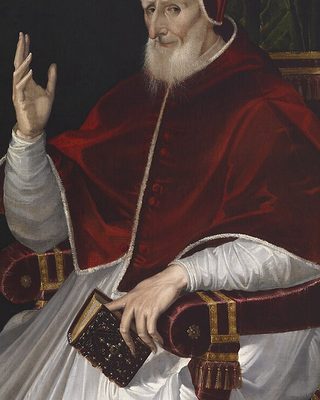
Portrait: Wikimedia Commons, public domain, file page
Life
Michael Ghislieri, a shepherd boy who became a Dominican friar and Grand Inquisitor, lived as a friar while pope. He put the Council of Trent into effect: the Roman Catechism (1566), the Breviary (1568) and the Roman Missal (Quo primum, 1570), which remained in use until 1970. He named St. Thomas Aquinas a Doctor of the Church. He formed the Holy League that defeated the Ottoman fleet at Lepanto (7 October 1571), asked Christians to pray the Rosary for victory, and established the feast of Our Lady of Victory, now Our Lady of the Rosary. He excommunicated Elizabeth I of England (1570). Canonized in 1712.
Key moments
- 17 January 1504Antonio Ghislieri is born at Bosco, in Piedmont, to a poor family; he tends sheep as a boy
- 1518Joins the Dominicans at 14, taking the name Michele
- 1528Ordained a priest
- 1556Bishop of Sutri and Nepi
- 1557Created a cardinal
- 7 January 1566Elected pope
- 1566Publishes the Roman Catechism of the Council of Trent
- 1567Declares St. Thomas Aquinas a Doctor of the Church
- 1568Publishes the reformed Roman Breviary
- 14 July 1570Publishes the Roman Missal with the bull Quo primum
- 7 October 1571The Holy League he formed wins at Lepanto; he gives thanks with a new feast of Our Lady
- 1 May 1572Dies in Rome
- 1712Canonized by Clement XI
In his words
We grant and concede in perpetuity that, for the singing or reading of Mass in any church whatsoever, this Missal may be followed absolutely.
Did you know?
- He kept wearing his white Dominican habit as pope; tradition says this is why popes wear white.
- He walked barefoot in Rome’s processions and kept a friar’s fasts throughout his reign.
- Tradition says that on the day of Lepanto he broke off a meeting, went to the window and told those present that the Christian fleet had won, long before any messenger arrived.
- His body rests in a glass and silver tomb in St. Mary Major, where pilgrims can see it.
- The feast he founded for Lepanto became the feast of Our Lady of the Rosary, kept on 7 October.
His legacy
- Roman Catechism (1566), Breviary (1568) and Missal (1570)
- Holy League and the victory of Lepanto (1571); feast of the Rosary
- Declared St. Thomas Aquinas a Doctor of the Church (1567)