Emblem: The shamrock
Patron Saint of Ireland · c. 385-461
Saint Patrick
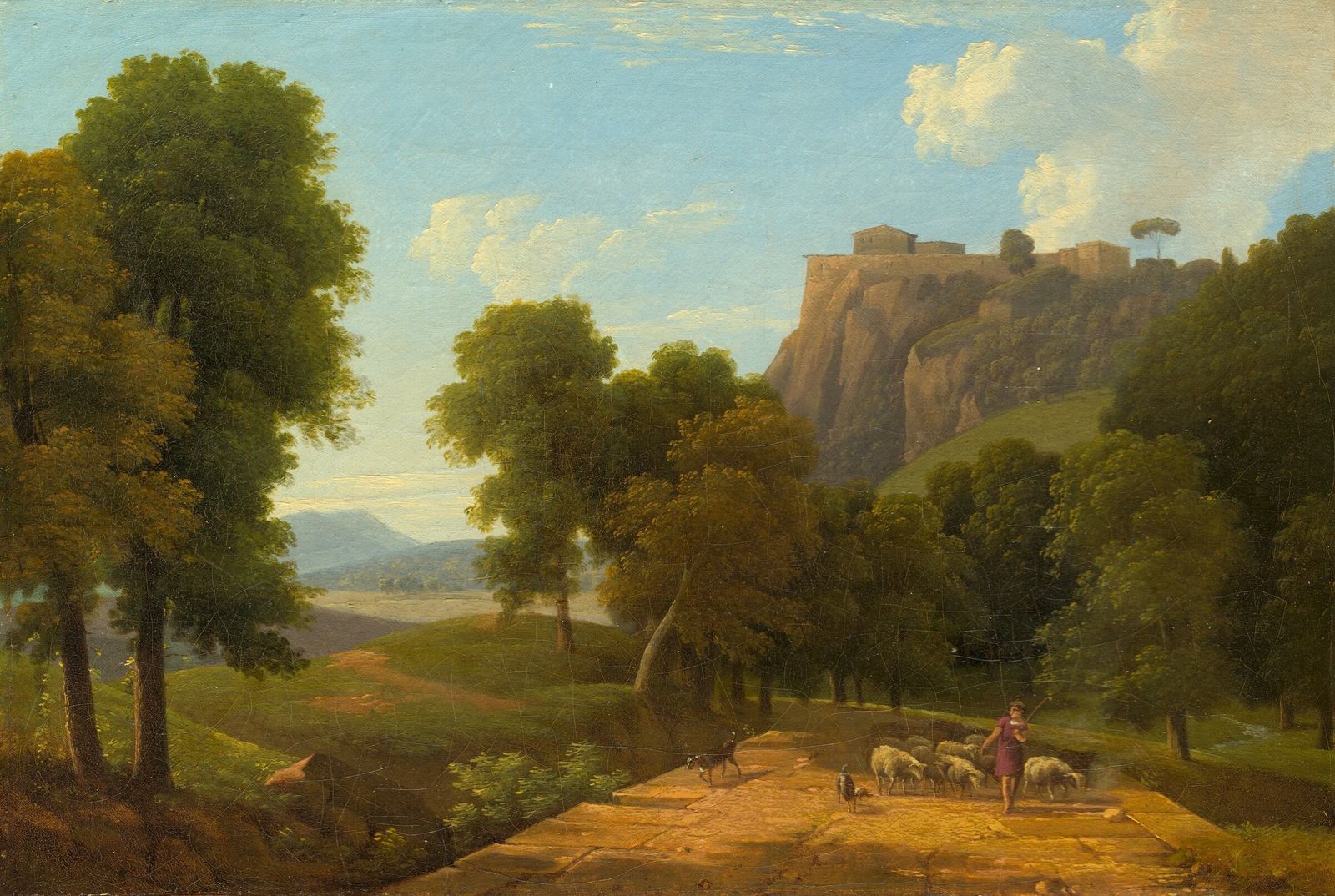
Jean-Victor Bertin · Shepherd with His Flock
Patrick was born into a Christian family in Roman Britain, though by his own account he didn’t take his faith very seriously as a boy. At sixteen he was kidnapped by Irish raiders, carried off to Ireland and sold as a slave. For six years he worked as a shepherd, alone and in harsh conditions, and it was then, he says, that he first really began to pray.
A Dream and an Escape
One night a voice in a dream told him to escape and board a ship. He walked hundreds of miles to the coast, talked sailors he didn’t know into taking him on board, and eventually made it home to his family. But that wasn’t the end of the story. Years later, after he had become a priest, he dreamed that the people of Ireland were calling to him, "Come and walk among us once more." With great courage he decided to go back, this time as a free man and a missionary, to the very people who had once enslaved him.
The Shamrock and the Snakes
Ireland was still mostly pagan, and Patrick preached there for more than thirty years, founding churches and monastic schools. Tradition says he used the three-leafed shamrock to explain the Holy Trinity, three Persons in one God, and the shamrock is still the symbol of Ireland today. Another legend says he drove all the snakes out of Ireland into the sea. Historians think this is a picture of his driving out paganism, since Ireland has had no native snakes since the Ice Age.
Patrick’s own short Confession, the story of his life and his faith, is one of the oldest documents in Irish history. Nobody knows the exact date of his death, but tradition gives it as March 17, and today Saint Patrick’s Day is celebrated around the world, by Catholics and by anyone who loves Irish culture.