Confession
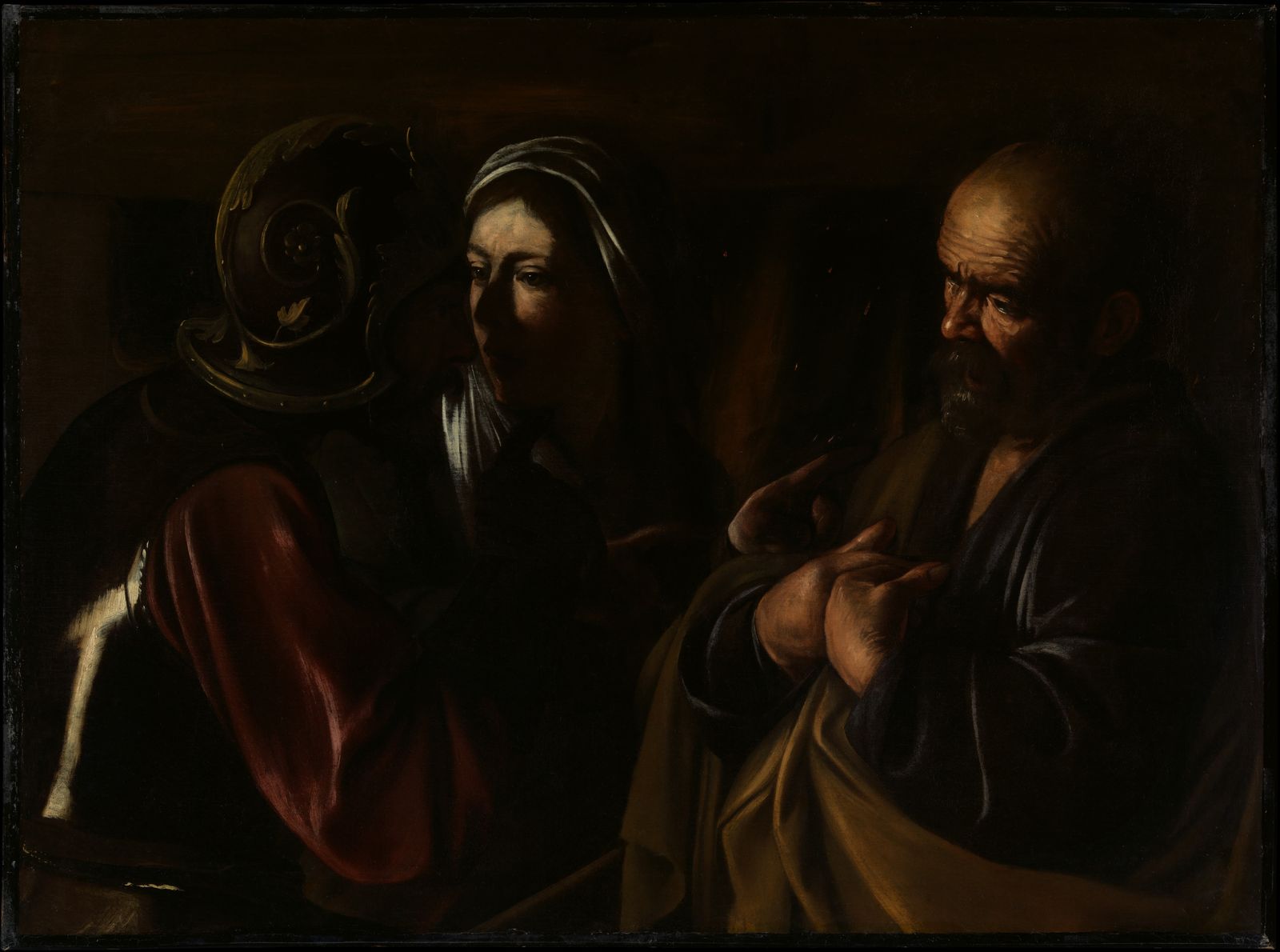
Caravaggio · The Denial of Saint Peter
Confession is the sacrament people dread most, and the one that sets them freest. Jesus gave it to the apostles on the evening of the Resurrection: “If you forgive the sins of any, they are forgiven” (John 20:22-23). The priest is only the instrument. The one you actually meet in there is God.
How the rite unfolds
Step by step
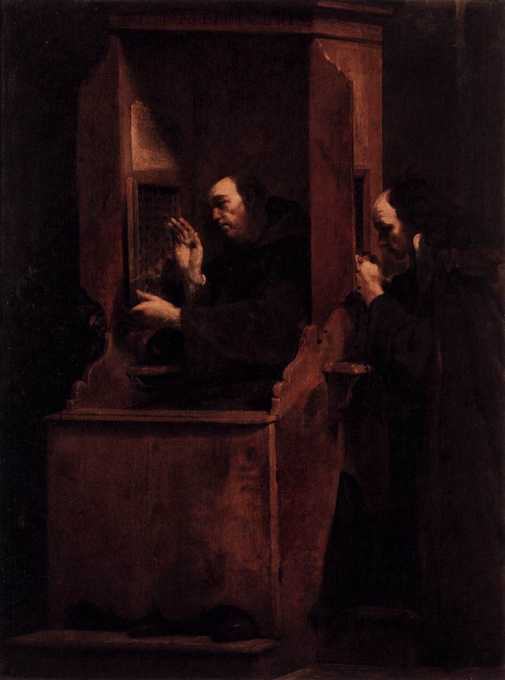
- 1
Examination of Conscience
In a quiet moment, think back over how you've failed God, others and yourself since your last confession. The list below can help.
- 2
Entering the Confessional
You can kneel behind a screen, where the priest can’t see you, or sit face to face. Both are fine; it’s your call.
- 3
Sign of the Cross and Opening
Make the Sign of the Cross and begin: "Bless me, Father, for I have sinned. It has been [this long] since my last confession." If it’s your first time, just say so and the priest will help you.
- 4
Confessing Your Sins
Say your sins simply and plainly. For serious sins, say what they were and, if you can, roughly how many times. You don’t need to explain or defend yourself: the priest is there to forgive, not to judge.
- 5
Counsel and Penance
The priest may give you a word of advice, then a penance, usually a prayer or a good deed. It isn’t a punishment; it’s a first concrete step back toward God.
- 6
Act of Contrition
Express your sorrow in your own words or with the traditional prayer: "O my God, I am heartily sorry for having offended thee, and I detest all my sins because of thy just punishments, but most of all because they offend thee, my God, who art all good and deserving of all my love. I firmly resolve, with the help of thy grace, to sin no more, and to avoid the near occasions of sin. Amen." (see the Appendix for the full text and other prayers)
- 7
Absolution
The priest raises his hand and absolves you in God's name: "...and I absolve you from your sins, in the name of the Father, and of the Son, and of the Holy Spirit." With these words your sins are truly and completely forgiven (CCC 1441-1442), even before the penance is fulfilled.
- 8
Fulfilling the Penance
Do your penance as soon as you can, and take the peace you’ve found back into your everyday life.
Preparation
Examination of conscience
The questions follow the Ten Commandments. Read through them slowly before you go.
1. I am the LORD your God: you shall not have other gods before me
God comes first. You don’t have to bow to an idol to break this one: putting money, success, fame or a person in God’s place does it too. So do superstitions like fortune-telling, horoscopes, magic and lucky charms (CCC 2110-2128).
- Have I neglected prayer? Did I remember God only in hard times?
- Have I put my trust in fortune-tellers, horoscopes, magic or lucky charms?
- Have money, career, being liked or a relationship taken God’s place in my life?
- Have I been ashamed of my faith or hidden it?
- Have I knowingly and stubbornly rejected a truth the Church teaches?
- Have I despaired of God’s mercy, or sinned deliberately thinking “he’ll forgive me anyway”?
2. You shall not take the name of the Lord your God in vain
It asks for reverence for God’s name and for what is holy. Blasphemy, swearing by God’s name needlessly or falsely, breaking a vow made to God and mocking religion go against it (CCC 2142-2159).
- Have I used the name of God, Jesus or Mary in anger, or blasphemed?
- Have I sworn by God’s name needlessly or falsely?
- Have I broken a promise or vow I made to God?
- Have I mocked religion, holy things or believers, or laughed along when others did?
3. Remember to keep holy the Lord's Day
It asks us to give Sunday to God and to rest. For Catholics this means taking part in Mass on Sundays and holy days of obligation. Avoiding needless work and making time for family, rest and good works are part of it too (CCC 2180-2188).
- Have I missed Mass on a Sunday or holy day of obligation without a valid reason?
- Have I come late to Mass on purpose, or spent it on my phone?
- Did I spend Sunday on work, shopping and screens? Did I make time for my family and for rest?
- Have I kept others (employees, family) from resting on Sunday?
4. Honor your father and your mother
It starts with our parents and extends to everyone with responsibility over us, at home, at work and in society. It runs both ways: parents owe their children, employers owe their workers, and grown children owe their aging parents (CCC 2197-2233).
- Have I been rude, disrespectful or ungrateful to my parents? Have I neglected to call or visit them?
- Have I given elderly or sick family members the care they need?
- If I am a parent, have I made time for my children and given them the faith and a good example?
- Have I treated my spouse and family with patience and love?
- Have I respected my teachers, my superiors and the law, as long as they don’t ask me to act against my conscience?
5. You shall not kill
It covers not only murder but everything that harms human life and health: anger, hatred and the wish for revenge, humiliating or bullying someone, abortion, drugs, drunkenness, reckless driving and neglecting one’s own health. Jesus says that whoever is angry with his brother will also be judged (Matthew 5:21-22; CCC 2258-2317).
- Have I shouted at, insulted or humiliated someone in anger? Have I held on to hatred or a wish for revenge?
- Have I deliberately excluded or bullied someone (online too)?
- Have I harmed my own health through excessive alcohol, smoking, drugs or carelessness?
- Have I endangered myself and others by speeding or driving carelessly?
- Have I had an abortion, or pushed someone toward having one?
- Have I led someone into sin by my bad example?
6. You shall not commit adultery
It teaches that sexuality belongs to the lifelong, total gift of love between husband and wife in marriage. Sex outside marriage, adultery, pornography, masturbation, artificial contraception in marriage and treating one’s spouse as an object go against it. Married or single, everyone is called to live chastely according to their state of life (CCC 2337-2359, 2380-2391).
- Have I watched pornography or looked for explicit content?
- Have I had sexual relations outside marriage?
- If I am married, have I been unfaithful to my spouse? Have I treated my spouse as an object?
- Have I masturbated?
- Have I led others into sin by the way I dress, my jokes or my messages?
7. You shall not steal
Respect what belongs to others, and their work. Stealing isn’t only taking things: slacking off on the clock, cheating customers, dodging taxes, not paying debts, pirating software or films and keeping something you found all count. Helping the poor and caring for creation are part of it too (CCC 2401-2449).
- Have I taken something that belongs to someone else, failed to return what I borrowed or to pay a debt?
- Have I taken pay without working, wasted work time, or used my employer’s property for myself?
- Have I cheated in buying, selling or my taxes? Have I paid my employees fully and on time?
- Have I used pirated software, films or music?
- Have I neglected my family’s needs through gambling or needless spending?
- Have I helped the poor and those in need as much as I can?
8. You shall not bear false witness against your neighbor
It asks for respect for the truth. Lying, slander and detraction (needlessly telling others about someone’s real but hidden faults) go against it. Judging someone without hearing them out, revealing secrets and spreading unverified claims on social media belong here too (CCC 2475-2492).
- Have I lied, or twisted or exaggerated the truth?
- Have I talked behind someone’s back, needlessly telling others their faults?
- Have I slandered someone or accused them unjustly?
- Have I judged someone without hearing them out, only from what I had heard?
- Have I revealed a secret entrusted to me?
- Have I shared things on social media without being sure they were true?
9 and 10. You shall not covet your neighbor's spouse or goods*
The last two commandments look not at actions but at the heart. The ninth forbids desiring another person’s spouse; the tenth forbids envy of other people’s goods and greed. Jesus says that whoever looks at a woman with lust has already committed adultery in his heart (Matthew 5:28; CCC 2514-2557).
- Have I deliberately dwelt on lustful thoughts and fantasies?
- Have I looked with desire at someone else’s spouse or partner?
- Have I envied other people’s homes, cars, jobs or lives? Have I grown discontented looking at others’ lives on social media?
- Have I been too attached to money and things? Have I thanked God for what I have?
* Why are 9 and 10 together? The Bible doesn’t number the commandments, so different traditions count them differently. Catholics follow St. Augustine: the ban on other gods and on idols is one commandment, the first, and the ban on coveting is split in two, your neighbor’s spouse (ninth) and your neighbor’s goods (tenth) (Deuteronomy 5:21). Most Orthodox and Protestant churches count idols separately and join the two on coveting. We put the last two together here because both are about what goes on in the heart before anything is done (CCC 2514-2557).
What people ask
Common questions and fears
Will the priest tell anyone what I say?
Never. The "seal of confession" is absolute: a priest may never reveal anything he hears there, to anyone, for any reason. Some priests have died rather than break it.*
What if I forget what to say or get confused?
That’s fine. The priest will help, and ask you questions if needed. You can also write your list on paper or on your phone and read from it. Nobody expects a polished speech, only honesty.
It's been years, and I don't even know how to begin.
Just tell the priest: "Father, it’s been a long time. Can you help me?" He’s heard it many times before. He’ll be glad you came, and he’ll walk you through it.
I keep confessing the same sins over and over; is that a problem?
No, that’s completely normal. Holiness takes time. The point isn’t being perfect; it’s coming back to God every time.
Should I confess behind a screen or face to face?
Whichever you prefer. Both are valid and both are common.
Will the priest judge me or get angry?
No. The priest acts in the person of Christ (in persona Christi), not in his own name; the forgiveness you hear is Christ’s. An experienced priest has heard it all, and most are genuinely glad you found the courage to come.
How long does it take, and how should I prepare?
Usually a few minutes. A quiet examination of conscience beforehand is all the preparation you need.
Can I go to confession if I'm not baptized yet, or belong to another denomination?
Confession is for baptized Catholics. If you're thinking of becoming Catholic, see the Becoming Catholic page or talk to a priest.
What's the difference between mortal and venial sin?
A sin is mortal when three conditions come together: the matter is grave, the person knows it, and they choose it freely and fully (CCC 1857). If any is missing, the sin is venial. If you're unsure, ask your priest.
This page is grounded in the Catechism of the Catholic Church's teaching on the Sacrament of Penance and Reconciliation (CCC 1420-1498) and canon law; the exact wording of the rite can vary slightly from region to region. For practical details (such as confession times), ask your nearest parish.