Emblem: The cup with the serpent
The Father of Western Monasticism · c. 480-547
Saint Benedict of Nursia
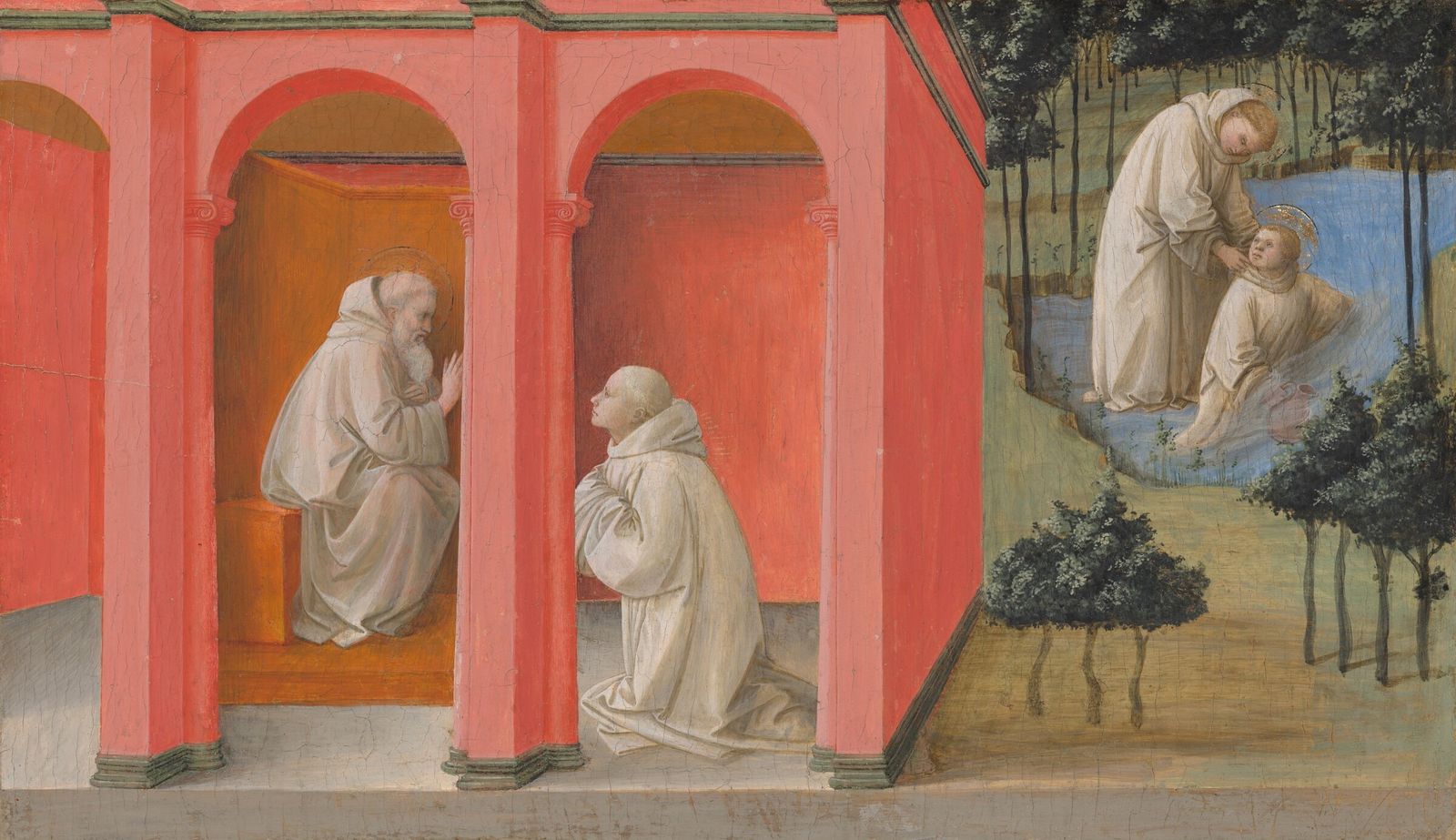
Fra Filippo Lippi · Saint Benedict Orders Saint Maurus to the Rescue of Saint Placidus
Benedict was born in the Italian town of Nursia, not long after the Western Roman Empire had officially come to an end. He was sent to Rome to study, but the moral decay of the city disgusted him, and while still young he went off to live alone in a cave near Subiaco, where he spent three years in prayer and hardship. A group of monks who had heard of him asked him to be their abbot, but they found his discipline too strict and tried to poison him. Tradition says that when Benedict blessed the cup, it shattered, and the poison was discovered.
Ora et Labora
In the end Benedict founded his own monastery at Monte Cassino, in Italy, and wrote a short but remarkably balanced rule for it, the Rule of Saint Benedict, which became the foundation of all monastic life in the West. It is often summed up in three words, "ora et labora" (pray and work): the monk’s day is shared out between prayer in common (the ancestor of today’s Liturgy of the Hours), manual work and sacred reading. It avoids extremes; in the prologue Benedict says he hopes to lay down "nothing harsh, nothing burdensome."
How a Rule Saved a Civilization
That sense of balance is why the Rule has lasted so long. In the chaos and invasions that followed the fall of Rome, Benedictine monasteries all over Europe became islands of order: they copied and kept ancient books, improved farming and ran schools. Historians often stress how much these monasteries did to carry Western civilization through the Dark Ages and into the Middle Ages. Benedict’s twin sister, Saint Scholastica, also founded a monastery, and tradition says the two met once a year and spent the whole night talking and praying. Benedict died at Monte Cassino in 547. In 1964 Pope Paul VI named him patron saint of Europe. His feast day is July 11.