Miracles
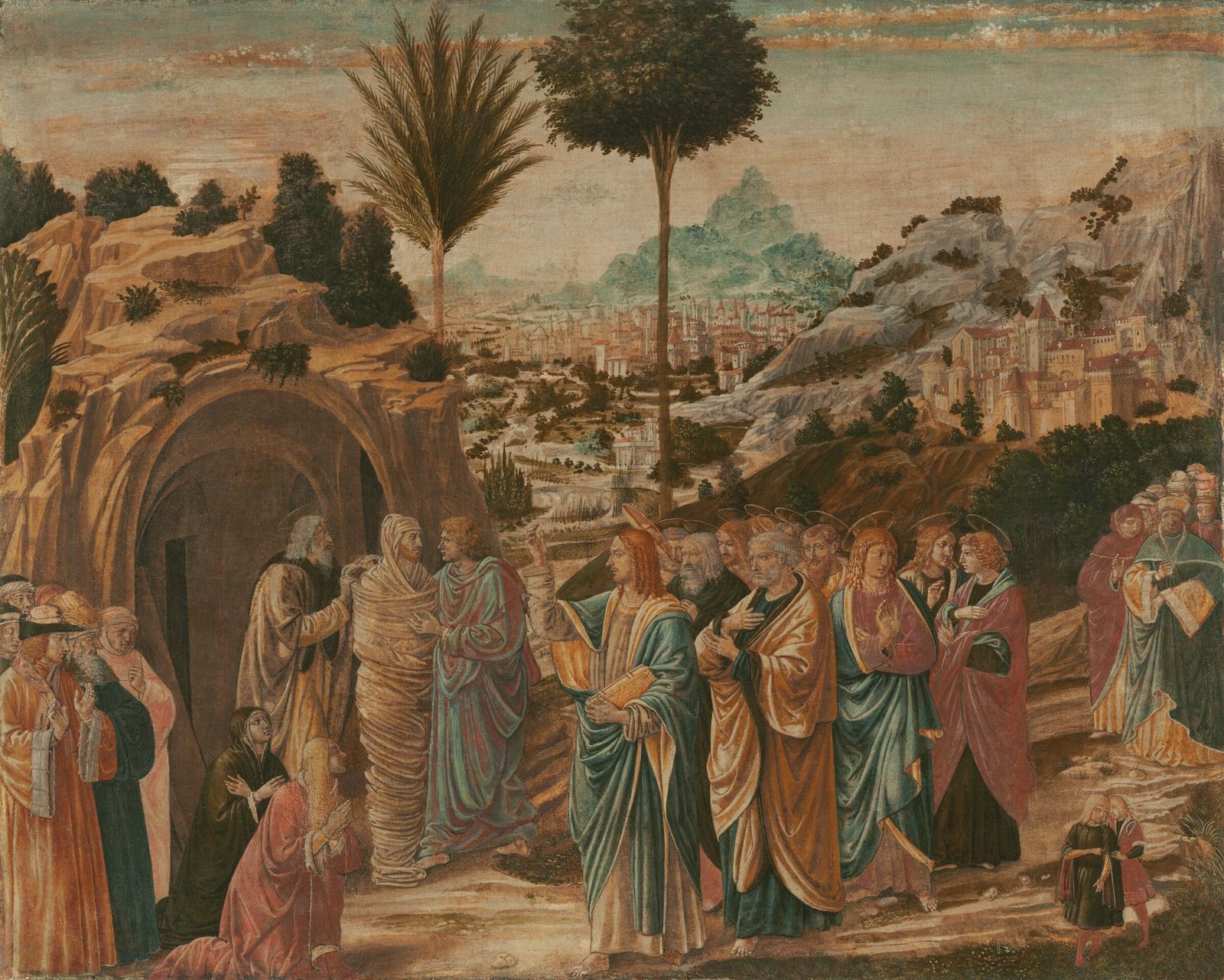
Benozzo Gozzoli · The Raising of Lazarus
Apparitions, relics, bleeding hosts, bodies that didn’t decay. None of this is required belief: the Church calls it “private revelation”, which adds nothing to the faith. But each case below was investigated closely, and the Church judged it worthy of belief. Here they are, in date order, with the most striking scientific findings.
Fatima · Cairo · Mexico City · Lourdes
Marian Apparitions
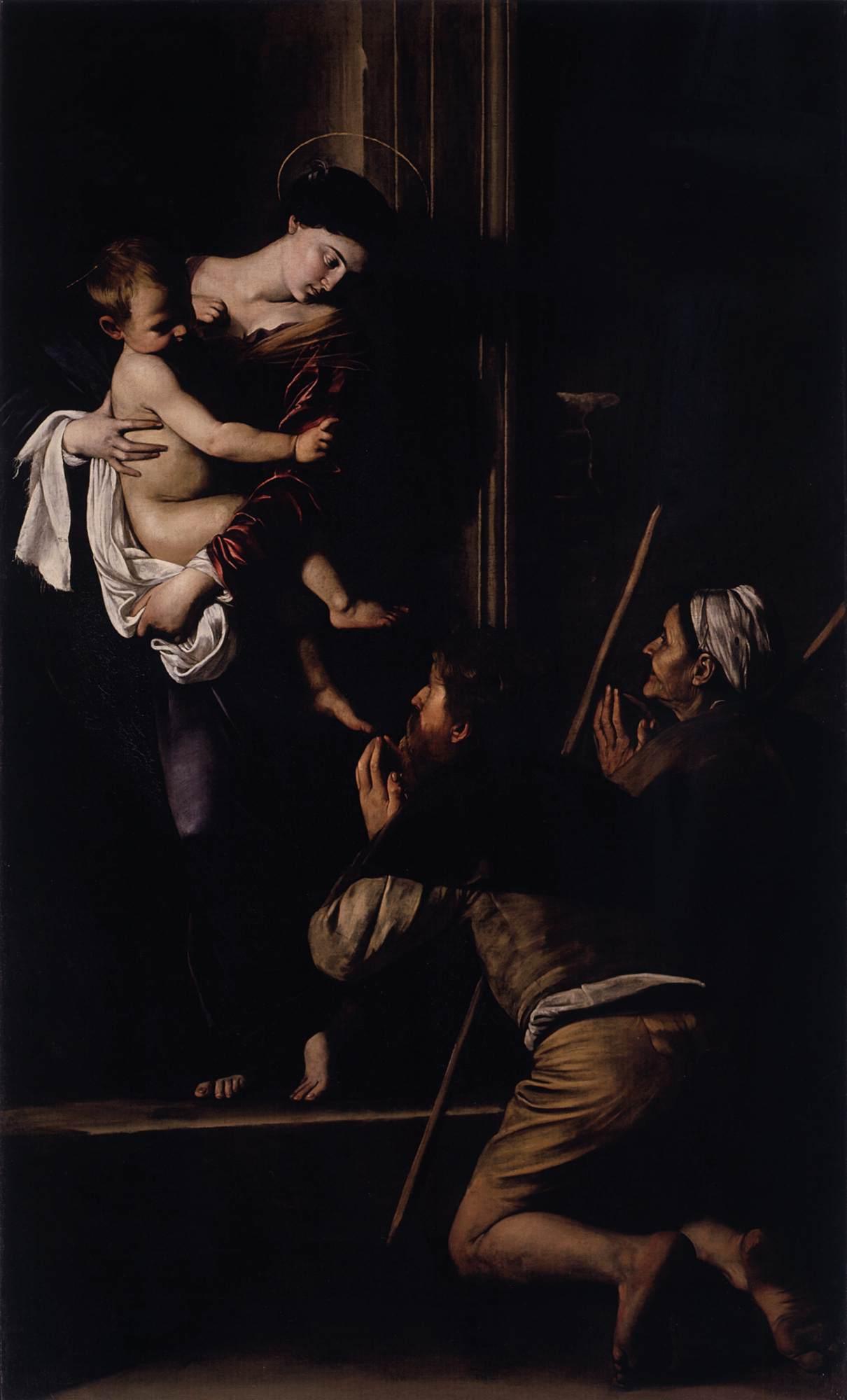
Four of the most famous apparitions in the world, each approved after a long investigation.
Our Lady of FatimaFatima, Portugal · 1917
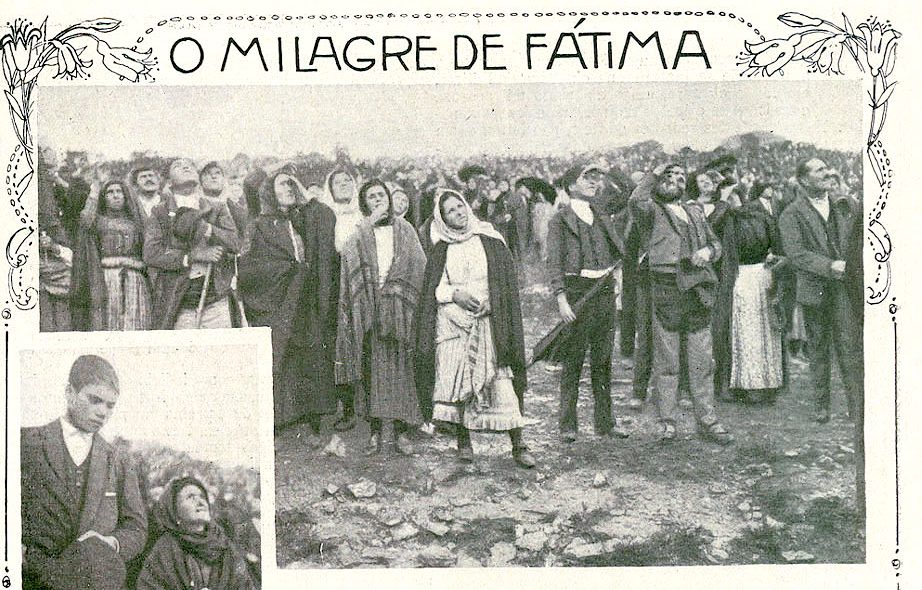
On 13 May 1917, three shepherd children in Portugal, Lucia (10), Francisco (9) and Jacinta (7), saw a woman of light above a small holm oak. She asked them to come back to the same place on the thirteenth of each month for six months. In July she said that in October she would work a miracle “so that everyone will believe.”
At noon on 13 October, between 30,000 and 100,000 people gathered in pouring rain. The rain stopped, the clouds parted, and a pale, silvery disc like the sun spun in the sky, threw off colors in every direction and plunged three times toward the crowd. Avelino de Almeida, a reporter for the anticlerical newspaper O Século, wrote the next day that the sun had “danced.” The Church approved the apparitions in 1930.
Why it can’t be explained away
- The children were not lying. They were questioned again and again, separately, by priests, lawyers, doctors and hostile officials. The local administrator arrested them and threatened them with death; they cried, but they didn’t change their story.
- It wasn’t hallucination. Hallucinations are private and don’t keep a schedule announced in advance. All three children saw the same figure in the same place, on the days they had named months before. Lucia kept looking away because the light dazzled her; an imagined light doesn’t dazzle.
- It wasn’t the sun. No one can look at the noon sun for more than a few seconds. The crowd looked at the disc comfortably for ten minutes, and not a single case of eye damage was reported.
- It was seen from far away. People in villages miles away, some of them facing away from the sun, described the same event. Fr. Philippe Dalleur, a priest and scientist, used the shadows in photographs taken that day to calculate that the light source stood lower in the sky than the sun.
- Soaked clothes dried in minutes. On a cool, damp day, that would have taken hours.
- Everything had been foretold. Lucia’s words were written down in a priest’s interview notes weeks before, and the event came at exactly the place and day announced.
The skeptics’ objections
- “It was a mass illusion.” There were unbelievers in the crowd, and people miles away who expected no miracle saw the same thing. No illusion shows tens of thousands of people the same thing, in the same order, from different angles. Even the skeptical writer Scott Alexander, who studied the case at length, wrote that at times during his research he was “genuinely scared and confused.”
- “Some said they saw nothing.” Among tens of thousands of witnesses there are one or two known exceptions, and they too say they could look at the disc without pain. If the event was real, a few exceptions are no surprise; if it was imagined, it is surprising there were so few.
You can watch a video in English on Fatima and Padre Pio.
Our Lady of ZeitounCairo, Egypt · 1968-1971
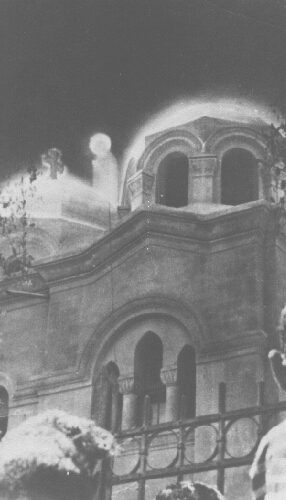
On the night of 2 April 1968, a figure of light appeared on the dome of a Coptic church in the Zeitoun district of Cairo. The first to see it were two Muslim bus mechanics, who thought a woman was about to jump and shouted for help.
The apparitions went on for three years. Close to a million people, including Christians, Muslims and foreign journalists, saw a glowing figure and dove-shaped lights above the dome. She never spoke and gave no message.
The Coptic Orthodox Church formally approved the apparitions. They never went through the Catholic Church’s process, but both Churches honor them.
Our Lady of GuadalupeMexico City, Mexico · 1531
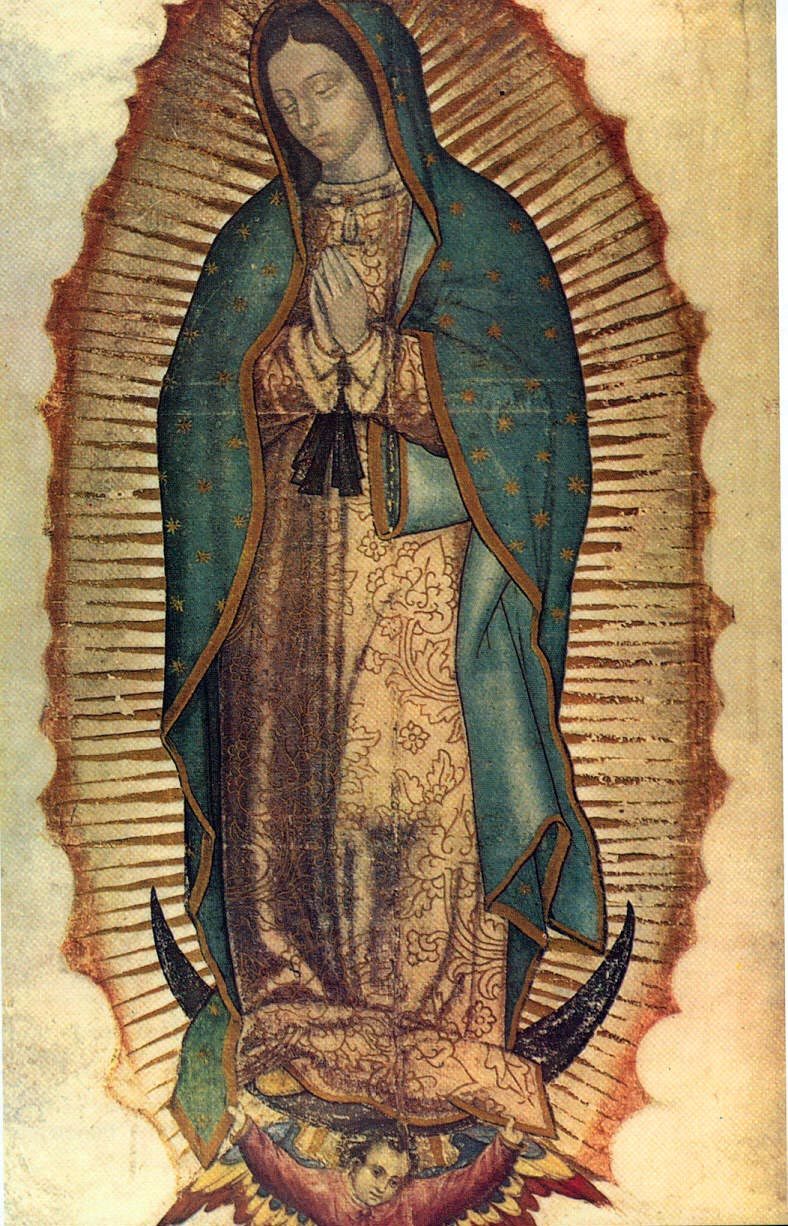
In December 1531, Juan Diego, a newly baptized Aztec, saw a woman on Tepeyac hill near Mexico City. Speaking in Nahuatl, she asked for a church to be built there.
When the bishop wanted a sign, she sent Juan Diego to gather roses that were blooming on the hill in midwinter. He carried them to the bishop in his cloak (tilma); when he opened it, the roses fell out and the image of Mary, still visible today, appeared on the cloth.
The image played a major part in the conversion of millions of native people in the years that followed. The basilica in Mexico City is the most visited Marian shrine in the world.
Our Lady of LourdesLourdes, France · 1858
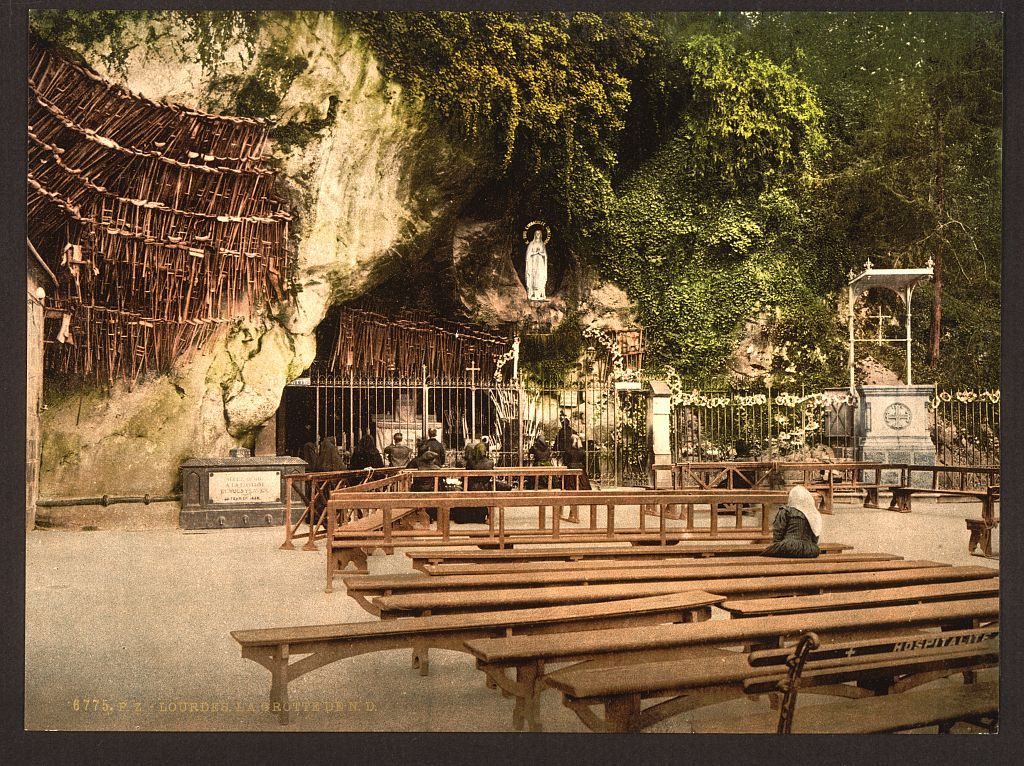
On 11 February 1858, in Lourdes in southern France, Bernadette Soubirous, a poor, sickly fourteen-year-old, saw a young woman dressed in white at the entrance to a grotto. Over eighteen apparitions the woman called her to prayer and penance.
Asked her name, she answered: "I am the Immaculate Conception." A peasant girl with no theological training could hardly have known the phrase, and it weighed heavily in the Church’s decision to take the apparitions seriously.
Millions of pilgrims now visit the spring that appeared where Bernadette pointed. Out of thousands of reported cures, only about seventy have been recognized as miracles, after independent doctors found them medically inexplicable.
Turin · Mexico City
Relics and Sacred Objects
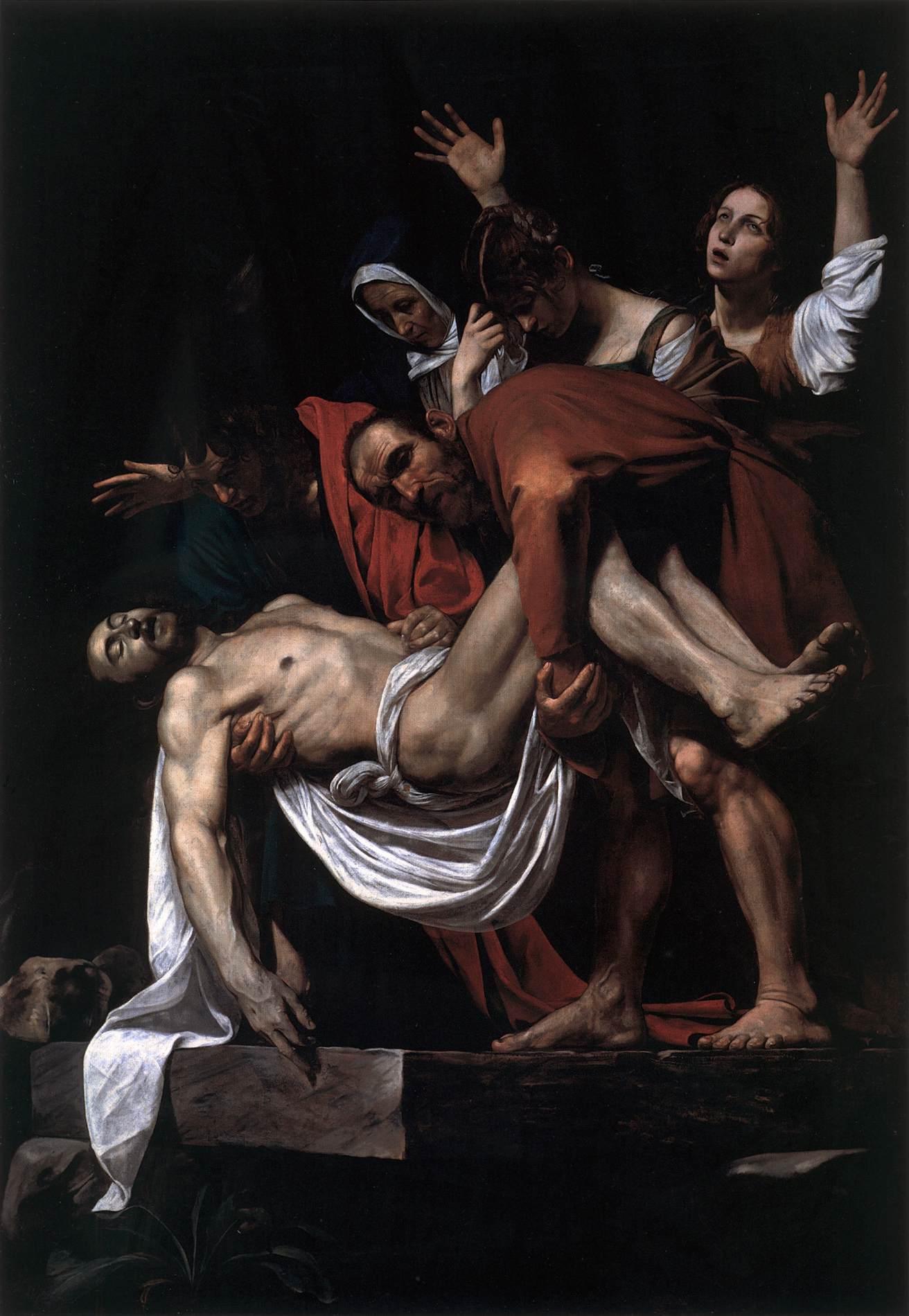
The two objects scientists have studied most over the centuries.
The Shroud of TurinTurin, Italy
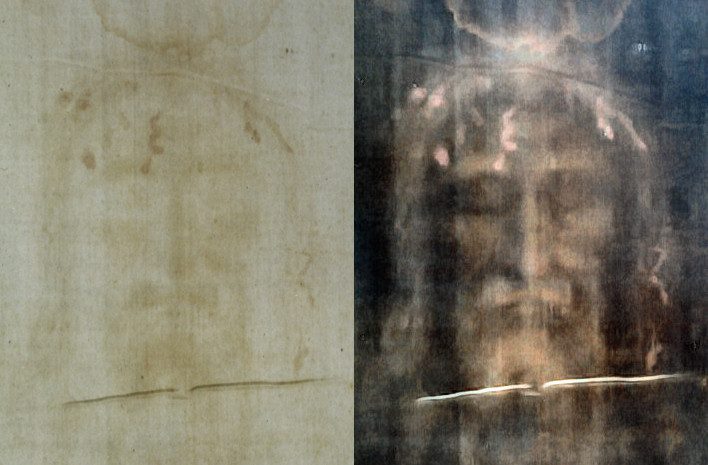
The Shroud of Turin is a 4.4-meter linen cloth bearing the front and back image of a crucified man. Tradition holds it to be Jesus' burial cloth. It is documented from the 1350s and has been kept in Turin since 1578.
When it was first photographed in 1898, the negative showed a strikingly clear human face: the image on the cloth behaves like a photographic negative. In 1978 the STURP team of about thirty scientists showed that the image isn't made with paint, pigment or brushstrokes. The color sits only on the outermost surface of the linen fibers, in a layer thinner than a wavelength of light.
When it was analyzed in 1976 with the VP-8, a device built for space photographs, the image produced a consistent three-dimensional relief, which ordinary paintings and photos don't. The bloodstains are real human blood, and there is no image beneath them: the blood reached the cloth before the image formed.
The 1988 radiocarbon test dated the cloth to 1260-1390, but the sample came from a corner repaired after a fire in 1532; in 2005 chemist Raymond Rogers found cotton fibers and dye in the sample that are absent from the rest of the shroud. Researchers at Italy's ENEA could reproduce similar coloring only with extremely powerful ultraviolet laser pulses.
The Church hasn't declared the shroud "authentic," because that is a scientific question, not a matter of faith; but popes visit it with deep reverence.
The Guadalupe TilmaMexico City, Mexico
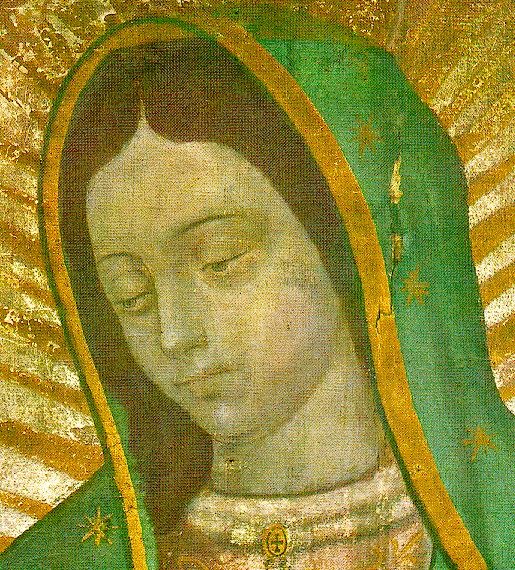
Juan Diego's cloak is a coarse cloth woven from maguey fiber, which normally rots within a few decades. Yet despite being displayed for centuries without glass, the image is still clear today.
In 1979, biophysicist Philip Callahan's infrared study found no underdrawing or layers of paint in the main part of the image, while showing that some details, such as the moon, the angel and the rays, were added later. Engineer José Aste Tonsmann reported seeing tiny reflected figures of people standing before her in Mary's pupils, as a living eye would reflect them.
The tilma is Mexico's most sacred object, visited by more than twenty million pilgrims a year.
Lanciano · Bolsena / Orvieto · Buenos Aires
Eucharistic Miracles
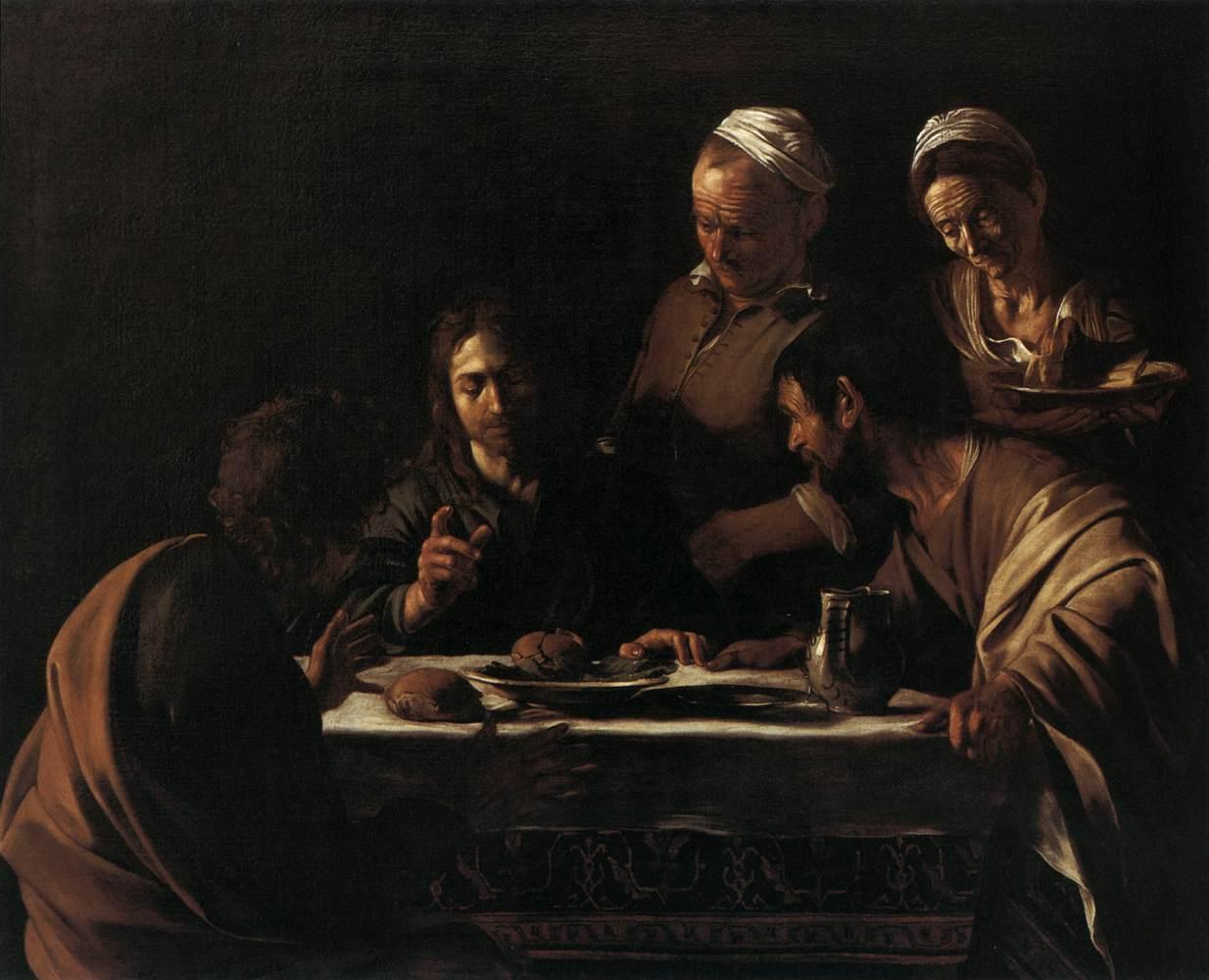
In the Eucharist, bread and wine become Christ’s Body and Blood while looking exactly the same. In these three cases, tradition holds, the change became visible.
The Miracle of LancianoLanciano, Italy · 8th century
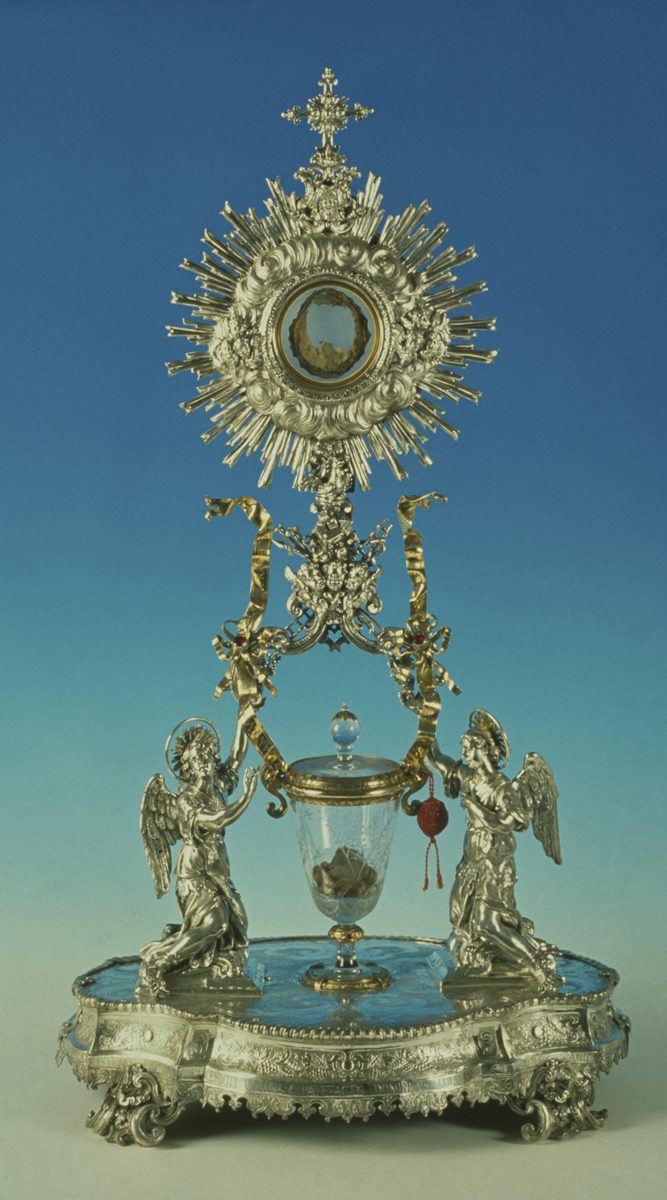
According to tradition, in the 8th century in Lanciano, Italy, a priest who doubted the Eucharist saw the bread turn into flesh and the wine into blood as he spoke the words of consecration. The flesh and the blood, in five clots, are still on display.
In 1970, with the archbishop’s permission, the seals were broken and the pathologist Odoardo Linoli took samples. The flesh proved to be human heart muscle and the blood human blood of type AB. Ruggero Bertelli, an anatomy professor who was not a believer, examined the slides separately and reached the same conclusion. Linoli published his findings in a scientific journal, and the AB result was reproduced at the University of Siena in 1991.
Why it can’t be explained away
- A forger wouldn’t have used a human heart. Back then there was no way to tell human flesh from animal flesh. Cutting a heart from a fresh corpse was hard and risky; animal flesh was cheap and easy.
- The flesh looks like a cross-section of a heart, yet the tradition never says so. It is a round slice, hollow in the middle: the view a cardiologist sees on an ultrasound today. A forger who had done this on purpose would have made a point of it in the story.
- There is no preservative. Linoli found no trace of salt, resin or alcohol. A forger would certainly have salted or treated the flesh, or it would have rotted within days.
- Blood clots normally break down and putrefy within a day or two. Those at Lanciano sat for centuries in vessels open to the air, yet their proteins kept proportions like those of fresh blood.
- The records are old. In the 11th century Guitmund, Archbishop of Aversa, tells of a miracle in Italy in which bread became flesh and wine became blood, and the relics were sealed in the altar. The bishop’s inspection of 1574 is recorded on a marble inscription in the church.
The skeptics’ objections
- “The test can’t tell human from animal.” Linoli used a forensic test that courts relied on to determine species. The reaction was strong and came within minutes; the cattle and rabbit controls were completely negative.
- “Bacteria produced the AB result.” Linoli found no bacterial colonies where the sample was taken. And studies show that bacteria very rarely produce a false AB result.
- “The flesh might simply have dried out and kept.” Heart muscle is watery and spoils fast; flesh left to dry in the open rots before its inside dries. And clotted blood can’t be preserved by drying.
You can watch a video in English about this miracle and the Buenos Aires miracle.
The Miracle of Bolsena-OrvietoBolsena / Orvieto, Italy · 1263
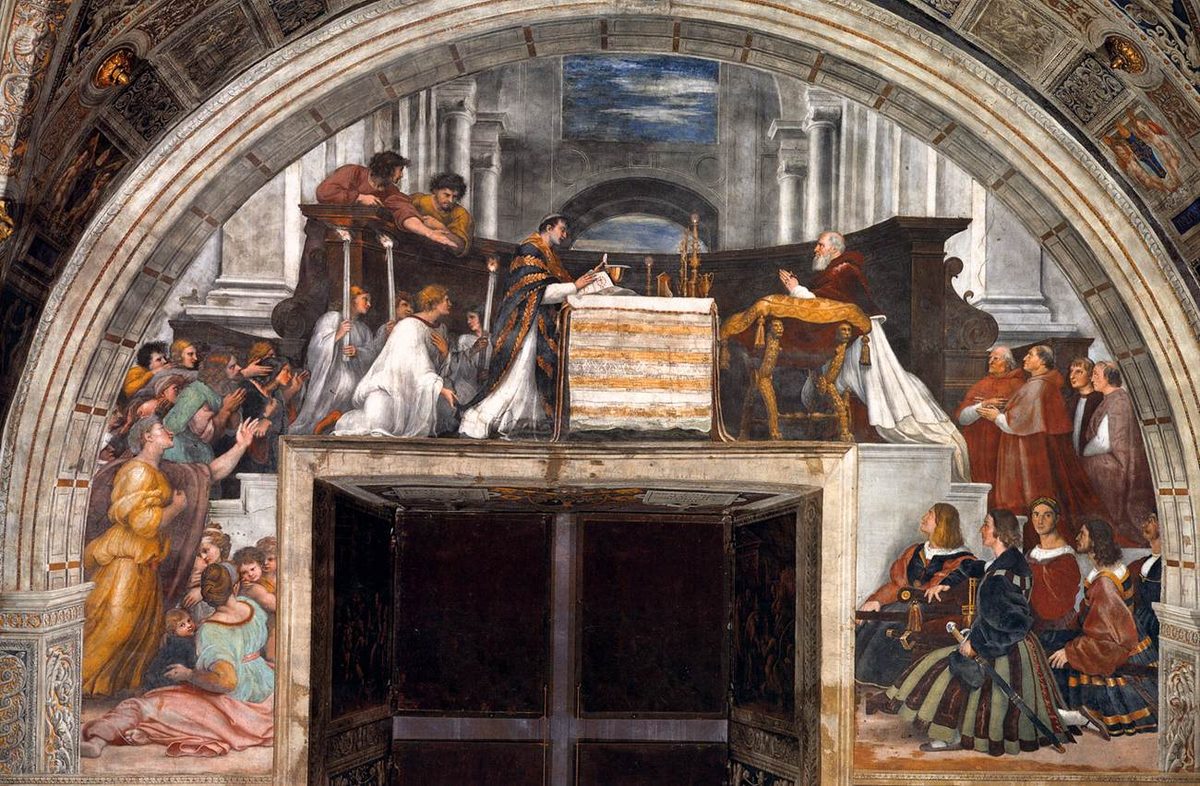
In 1263 a Bohemian priest who doubted the Eucharist was saying Mass in Bolsena when blood seeped from the host he broke onto the altar cloth.
Pope Urban IV had the event investigated and the cloth brought to Orvieto. The next year he established the feast of Corpus Christi for the whole Church and asked St. Thomas Aquinas to write its prayers. The cloth is kept in Orvieto Cathedral and carried in procession every year on the feast.
The Buenos Aires MiracleBuenos Aires, Argentina · 1996
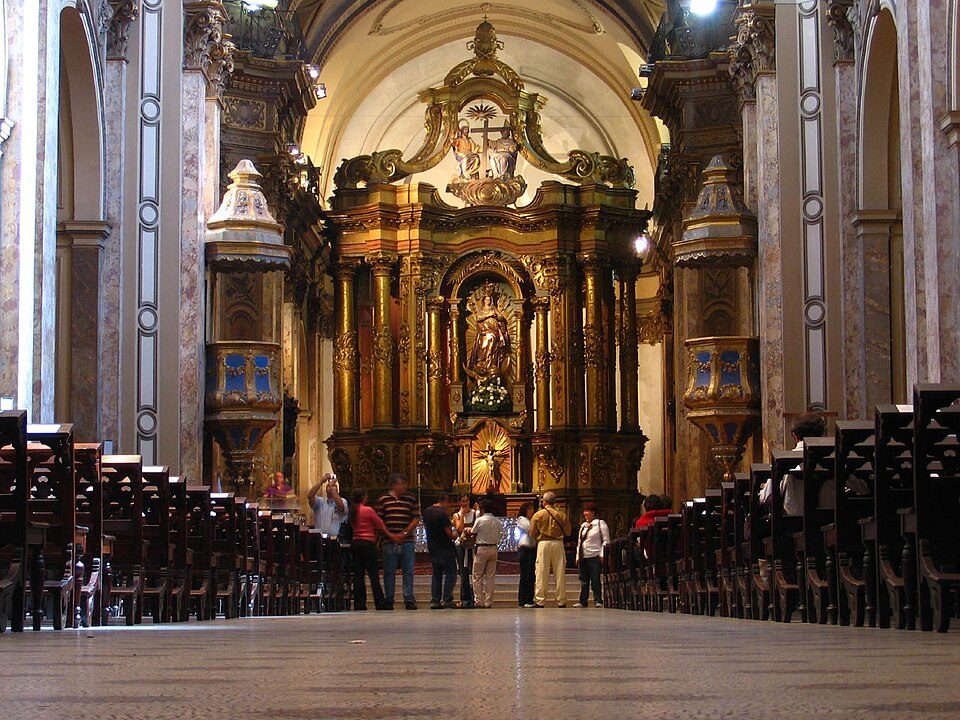
In 1996, in a Buenos Aires church, a consecrated host that had been found discarded was placed in water to dissolve. A few days later red, blood-like spots appeared on it and kept growing.
The archbishop at the time, Jorge Mario Bergoglio, the future Pope Francis, had it studied scientifically. In 1999 in New York, cardiologist Frederick Zugibe, who wasn't told where the sample came from, reported that it was human heart muscle from the left ventricle of an inflamed heart; the blood type was AB, as at Lanciano.
You can watch a video in English about this miracle and the Lanciano miracle.
Nevers · San Giovanni Rotondo · Ars
Incorrupt Saints
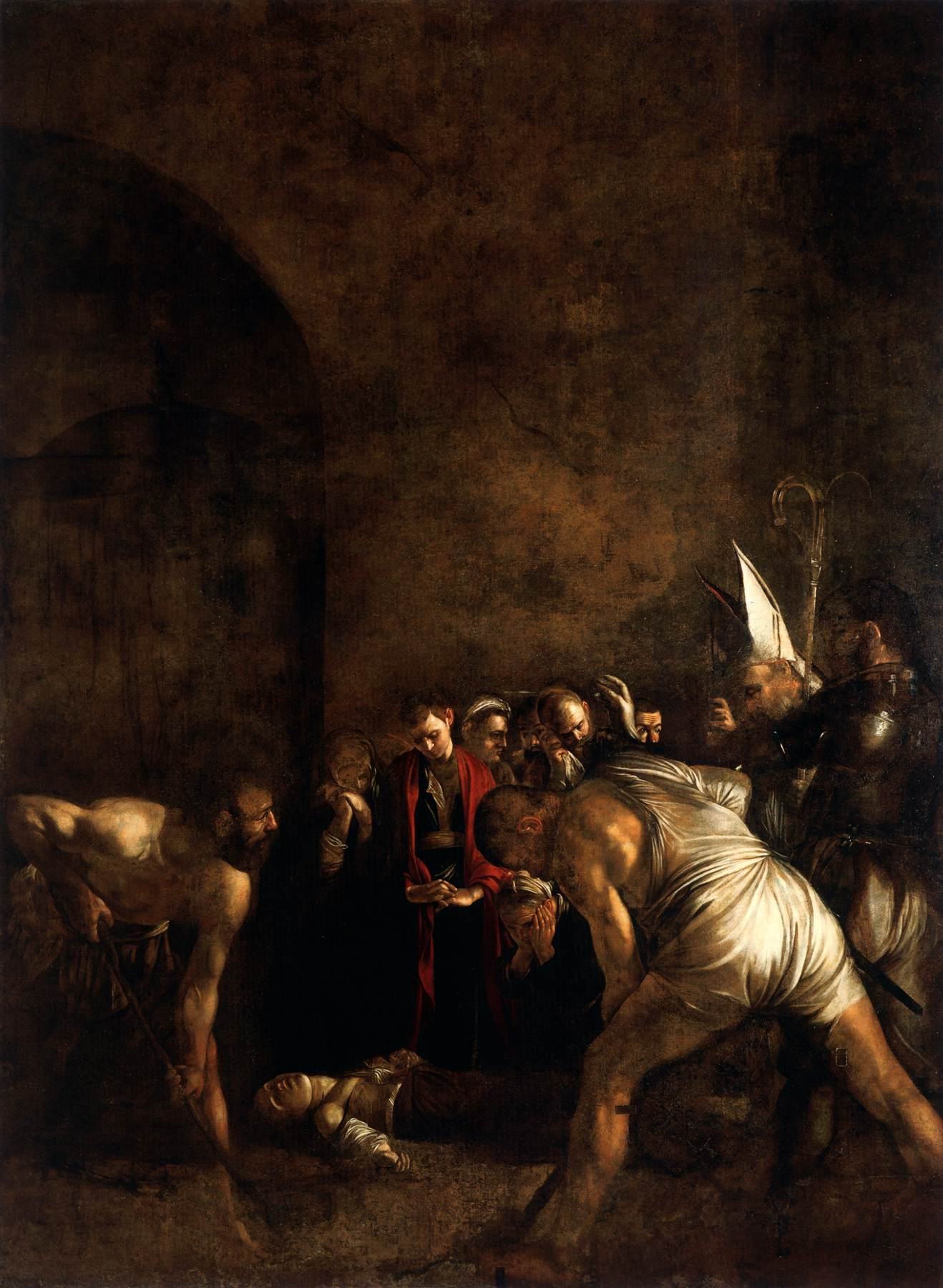
Some saints’ bodies have been found far less decayed than they should be, years or even centuries after death. Bodies on display often have a thin wax or silicone mask over the face to protect them.
St. Bernadette of LourdesNevers, France
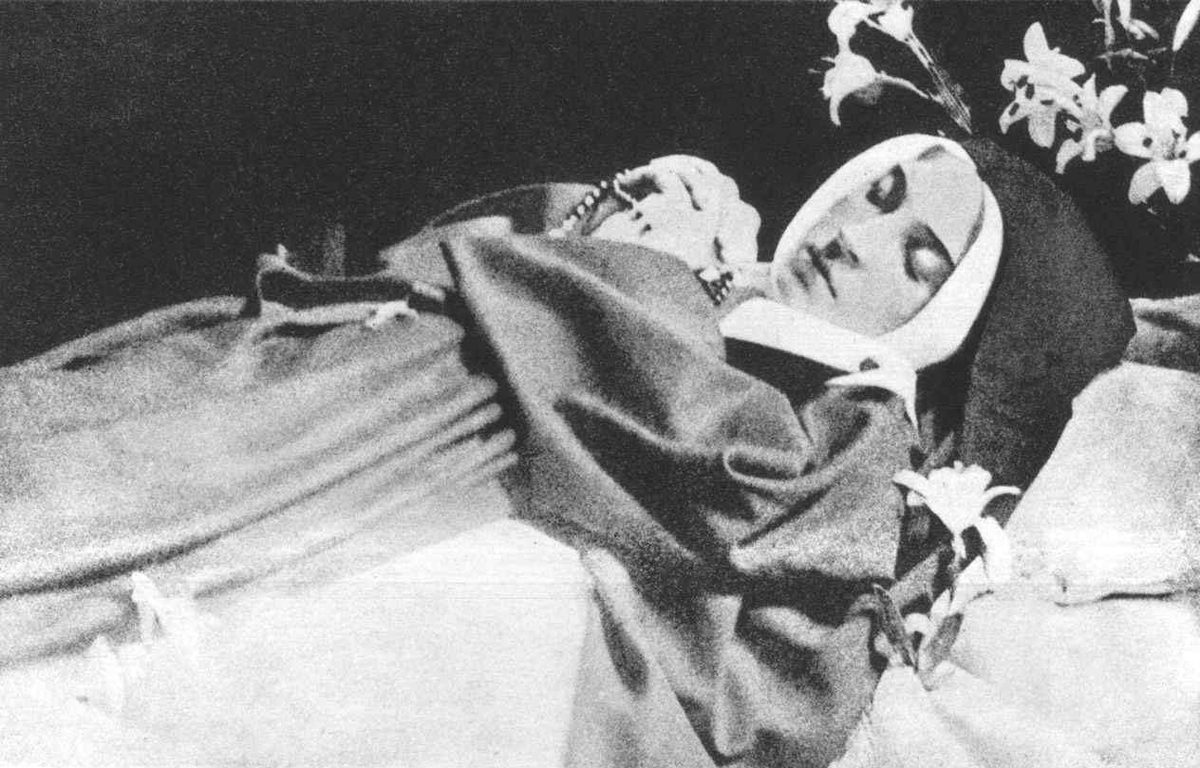
Bernadette, the visionary of Lourdes, died in 1879 at thirty-five. When her body was exhumed in 1909, thirty years after burial, her skin looked astonishingly natural.
When it was decided in 1925 to display the body permanently, her face and hands were covered with a thin wax mask. Today she lies in a glass reliquary in Nevers; beneath the mask is the body that stayed incorrupt for decades. Bernadette was canonized in 1933.
St. Pio of Pietrelcina (Padre Pio)San Giovanni Rotondo, Italy
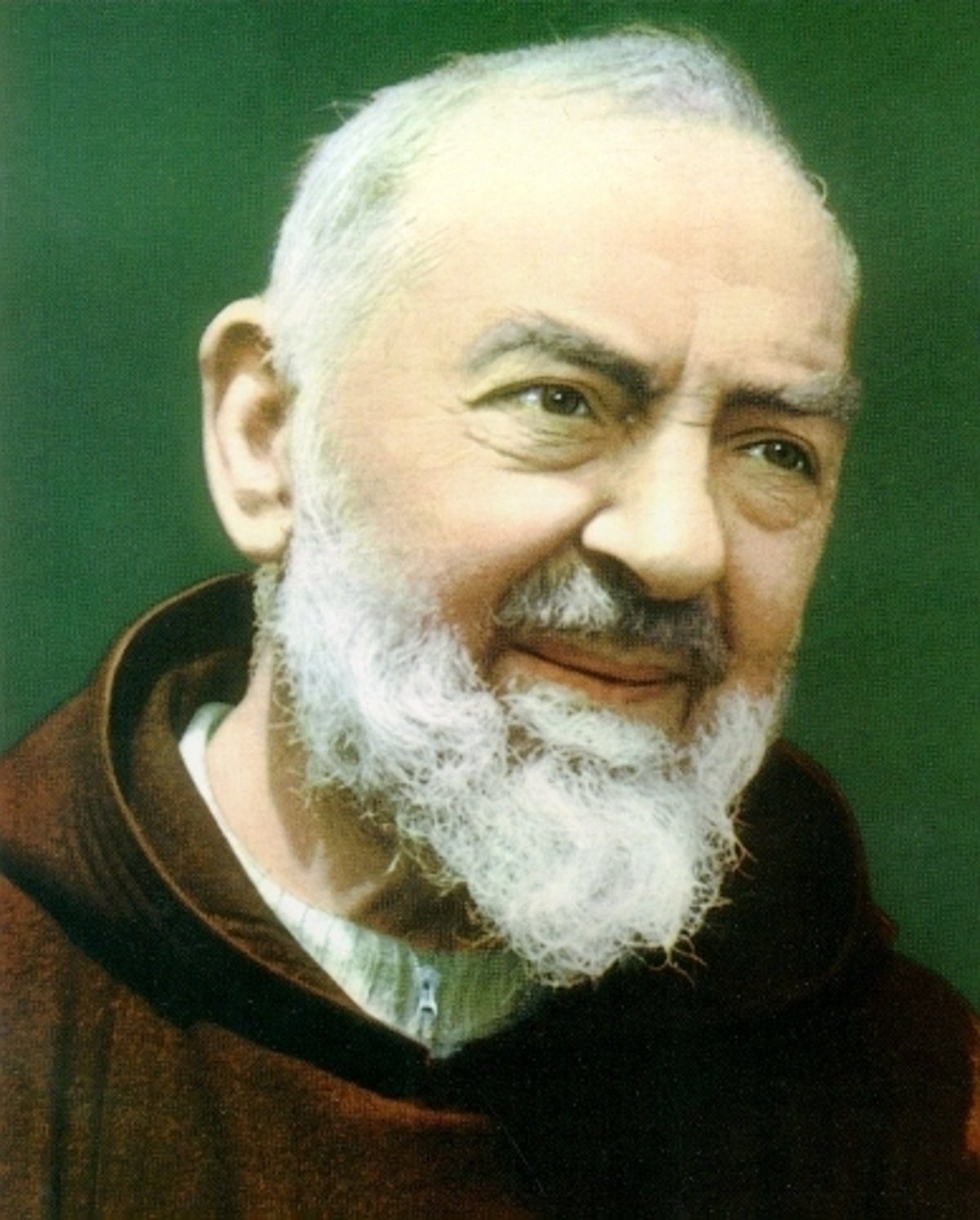
On 20 September 1918, while the Italian Capuchin friar Padre Pio was praying after Mass, wounds like those of Christ appeared on his hands, his feet and his side (the stigmata). They bled for fifty years. When he died on 23 September 1968, his doctor and photographs taken that night showed the wounds had closed without a scar.
Why it can’t be explained away
- The doctors couldn’t explain it. The surgeons Luigi Romanelli and Giorgio Festa wrote that the wounds neither healed nor became infected; an ordinary wound either closes or festers. The atheist professor of pathology Amico Bignami thought the wounds were kept open with iodine tincture. For eight days they were kept under sealed bandages with no medicine at all; they went on bleeding every day.
- There was no anemia. Padre Pio ate very little, yet lost blood every day for years, and his blood tests always came back normal.
- They smelled sweet, not foul. Wounds left open for a long time smell bad. Hundreds of people describe a pleasant fragrance coming from Padre Pio’s wounds and blood. Dr Romanelli at first took it for perfume and thought it unfitting for a friar. Dr Festa, who had no sense of smell, described how the people traveling in his car noticed the fragrance, not knowing he had a bloodstained cloth from the wounds in his case.
- They closed without a scar. A deep wound always leaves a scar when it heals. Padre Pio’s wounds closed after fifty years, just as he died, and left no mark.
- Healings. In 1949 a dynamite accident at the friary shattered Giovanni Savino’s face and destroyed his right eye entirely. When the bandages came off ten days later his face had healed and his right eye was there; he saw with it for the rest of his life. In 2000 a young boy, Matteo Colella, whose meningitis had caused nine of his organs to fail, recovered against all expectations while his mother prayed to Padre Pio. His doctors and ten consulted experts found the recovery inexplicable; it is the miracle accepted for Padre Pio’s canonization.
The skeptics’ objections
- “He kept the wounds open with acid.” A note from 1919 was found in which Padre Pio asked a woman for carbolic acid “for sterilizing.” Carbolic acid was a common disinfectant at the time, and Padre Pio spoke about it openly when questioned. Acid doesn’t explain wounds that stayed the same for fifty years, smelled sweet and closed without a scar; as Dr Festa noted, acid would also have destroyed any fragrance.
- “The famous psychologist Agostino Gemelli thought him a fraud.” Gemelli never examined Padre Pio; he spoke with him for a few minutes in a corridor. In his own 1920 report he admitted that he had seen him without carrying out any medical examination.
When his body was exhumed in 2008, the hands and feet were well preserved; a silicone mask was made for his face. Millions of pilgrims visit his shrine in San Giovanni Rotondo every year. You can watch a video in English on Padre Pio and Fatima.
Read more: Saint Pio of PietrelcinaSt. Jean-Marie Vianney (The Curé of Ars)Ars, France
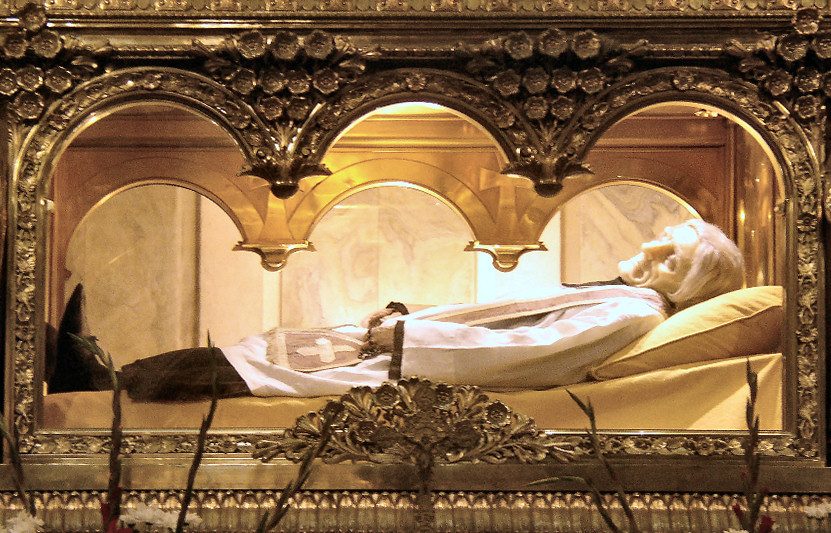
Jean-Marie Vianney, the parish priest of Ars, heard confessions for up to sixteen hours a day, and people flocked to him from all over France. He is now the patron saint of all parish priests.
When his body was exhumed in 1904, forty-five years after his death, it was dried out but intact. His incorrupt heart is displayed in a separate chapel, and his body, its face covered with a wax mask, lies in the basilica at Ars.