Emblem: The keys of the kingdom
The First Pope · 1st century AD (d. c. 64-68)
Saint Peter the Apostle
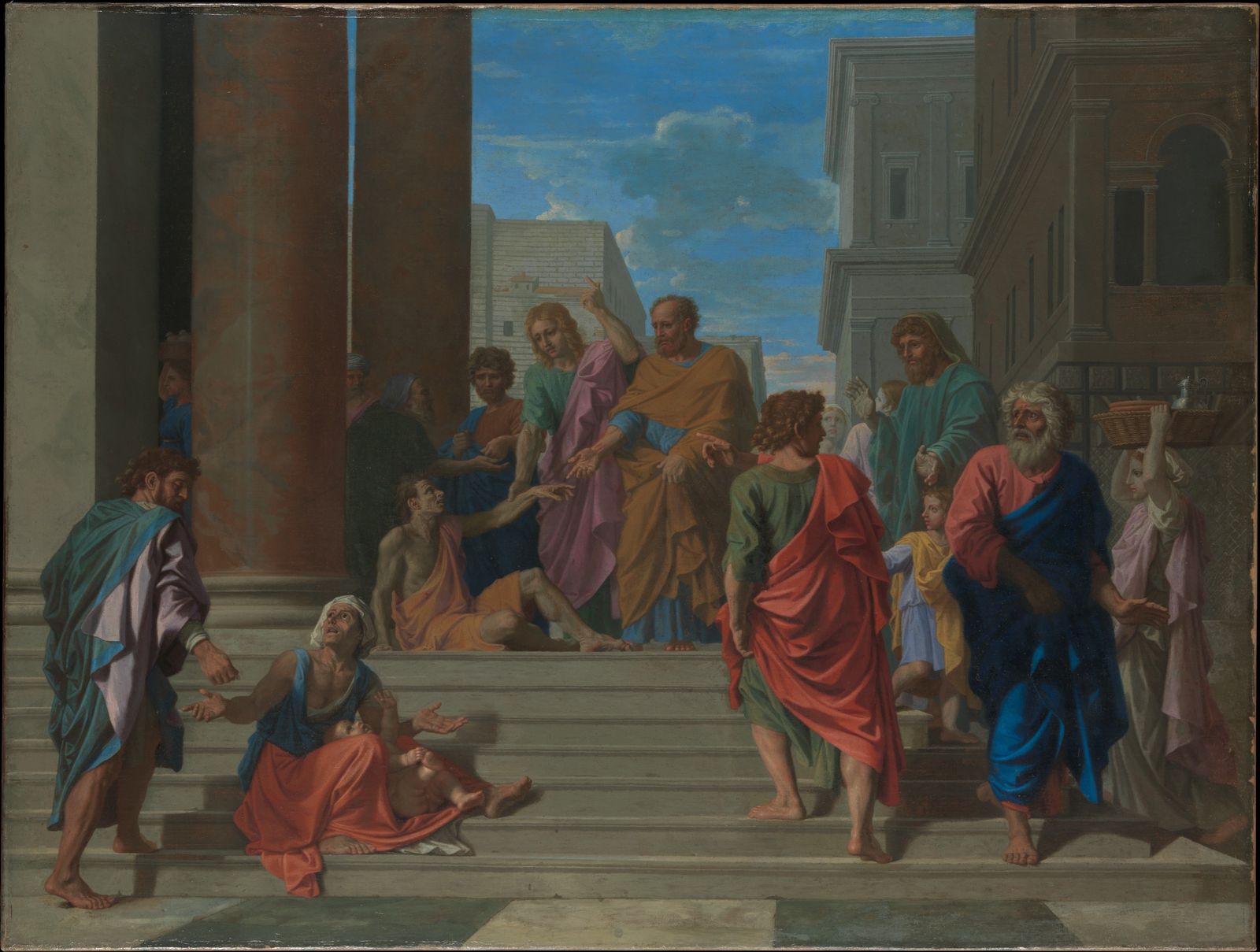
Nicolas Poussin · Saints Peter and John Healing the Lame Man
Peter’s real name was Simon. He was an ordinary man who made his living fishing on the Sea of Galilee. In John’s Gospel, his brother Andrew brings him to Jesus, who looks at him and says, "Thou art Simon the son of Jona: thou shalt be called Cephas, which is interpreted Peter." In Matthew’s Gospel the new name takes on its full meaning. When Peter declares, "Thou art Christ, the Son of the living God," Jesus answers, "Thou art Peter; and upon this rock I will build my church." The Church sees in these words the role of Peter, and of the popes who succeed him, as the visible foundation of the Church’s unity.
Falling and Getting Up Again
Peter is the boldest of the apostles, and also the most human. He tried to walk on water and sank when he got scared. He tried to talk Jesus out of going to the cross and was told, "Get thee behind me, Satan." At the Last Supper he swore, "I will never deny thee," and that same night, before the cock crowed, he denied three times that he even knew him. It all makes him very easy to recognize. But after the Resurrection, on the shore of the Sea of Tiberias, Jesus asked him three times, "Lovest thou me?" and three times told him, "Feed my lambs." Three denials were answered with three declarations of love.
Martyrdom in Rome
The Acts of the Apostles tells how Peter preached the first sermon at Pentecost and thousands were baptized. He became the best-known leader of the early Church. Tradition says he went to Rome, and that when he was condemned during Nero’s persecution he asked to be crucified upside down, because he did not feel worthy to die the same way as his Lord. Excavations under St. Peter’s Basilica found a tomb right beneath the high altar that is believed to hold his remains. The Church sees every pope as Peter’s successor, which is why Peter is called the first pope. He shares his feast day with Paul on June 29.