Emblem: The lily
Patron of Lost Things, Doctor of the Church · 1195-1231
Saint Anthony of Padua
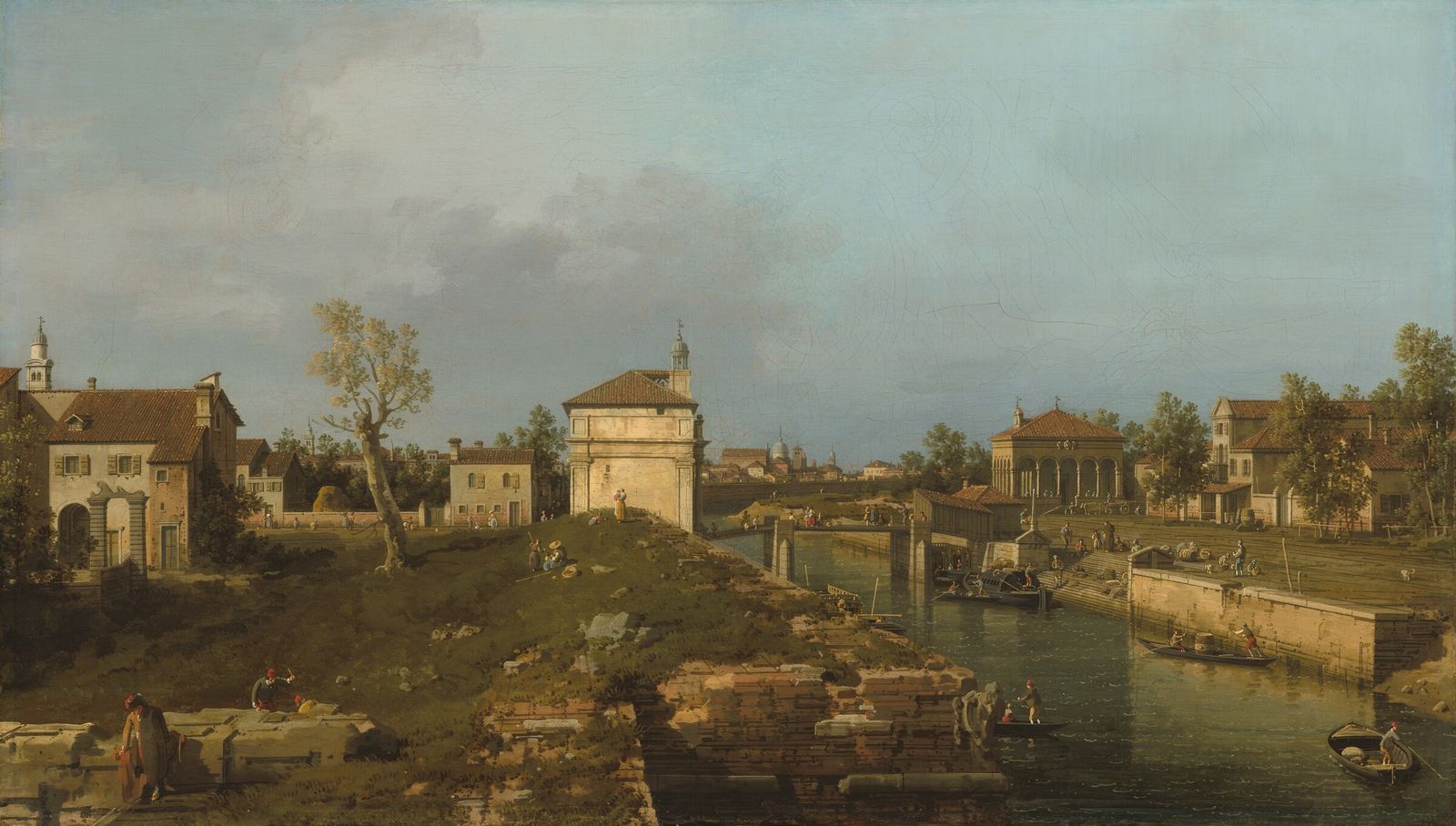
Canaletto · The Porta Portello, Padua
Anthony was born in Lisbon and christened Fernando. He first joined the Augustinian canons, but in 1220 he saw the bodies of five Franciscan missionaries who had been martyred in Morocco being brought back to Portugal. It moved him so deeply that he asked to join the Franciscans, and when they accepted him he took the name Anthony. He hoped to go to Morocco as a missionary himself, but he fell seriously ill on the way, and his ship was blown off course to Italy.
A Preacher Nobody Expected
In Italy he lived as an ordinary friar nobody had heard of, until one day, at an ordination, it turned out that nobody had prepared a sermon, and at the last minute Anthony was asked to speak. No one there had any idea how learned and powerful a preacher he was, and his unprepared sermon amazed them all. Soon afterwards Francis of Assisi himself put him in charge of teaching theology to the friars, an unusual step at the time, since Francis was wary of learning and academic titles.
Patron of Lost Things
Anthony went on to preach all over Italy and France, and the crowds that came to hear him are said to have been too big for any church, so he preached in the squares. One story says that when some heretics refused to listen to him, he went down to the shore and preached to the fish instead, and the fish lifted their heads out of the water to listen, a picture of how powerful his words were. After his death, a friar who had lost a precious book of psalms got it back after praying to him, and people began to call on Anthony whenever they lost something. To this day, Catholics all over the world searching for something they’ve lost pray, "Saint Anthony, Saint Anthony, please come around."
Anthony died at thirty-five, worn out by work. He was canonized in 1232, only a year after his death, one of the fastest canonizations in the Church’s history, and declared a Doctor of the Church in 1946. His feast day is June 13.