Emblem: The IHS seal
Founder of the Jesuit Order · 1491-1556
Saint Ignatius of Loyola
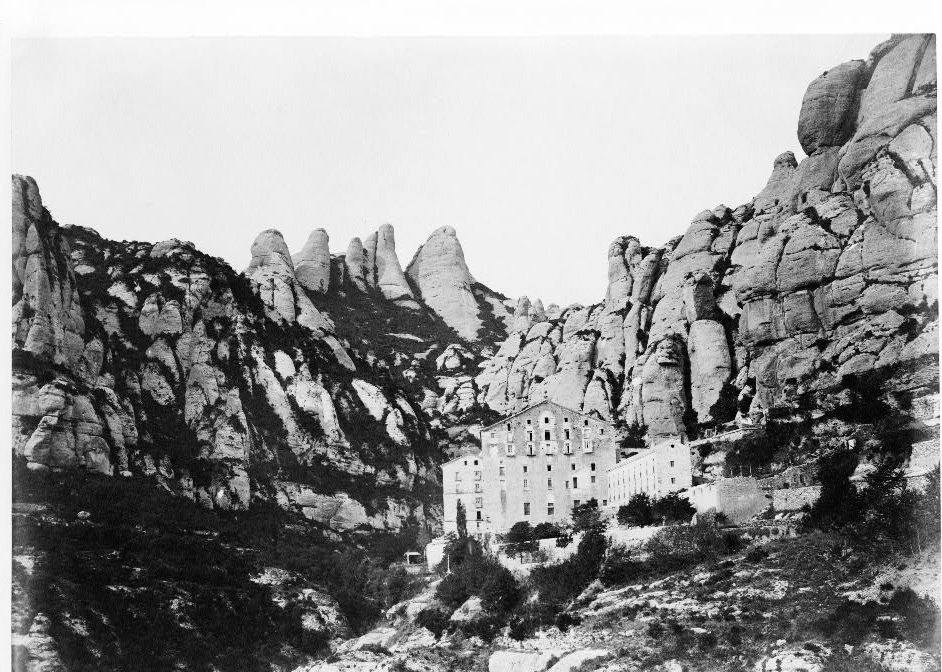
Photograph, about 1900 · The Monastery of Montserrat
Ignatius was born into a noble Basque family in Spain, and as a young man he lived for soldiering, dueling and life at court. In 1521, at the siege of Pamplona, a cannonball shattered his leg. His recovery took months: the bones had set badly and had to be broken and set again, with no anesthetic.
Reading He Never Chose
Bored in bed, Ignatius asked for tales of knights and their adventures, but there were none in the house. All he could find was a life of Christ and a book of the lives of the saints. As he read, he noticed something strange. Daydreaming about glory as a knight thrilled him for a while but left him empty afterwards, while imagining himself living like the saints left him with a peace that lasted. That discovery was the seed of what he later called the "discernment of spirits": learning to tell which feelings lead to lasting good and which only to passing satisfaction.
The Spiritual Exercises
When he was well again he gave up the army, lived for months as a hermit in a cave, and then, already over thirty, went back to school, starting with Latin. During these years he wrote the Spiritual Exercises, a four-week program of intense prayer and discernment that thousands of people still make every year. In Paris he gathered a small group of friends, among them Francis Xavier, and in 1540, with the approval of Pope Paul III, they founded the Society of Jesus, the Jesuits.
Unlike the older monastic orders, the Jesuits turned outward to the world, putting their energy into education, missions and scholarship, and within a few years they had spread from Japan to South America. Ignatius spent his last fifteen years in Rome, running the order and writing letters, and died there in 1556. Pope Francis was the first Jesuit pope. Ignatius’s feast day is July 31.