The Bible
Which translation should you read?
Simon Vouet · Saint Jerome and the Angel
Which Bible?
In short
For everyday reading
RSV-2CE (the Ignatius Bible)
Accurate, dignified and easy to read aloud.
When buying a Bible
73 books and an Imprimatur
A Catholic edition has 73 books, with Nihil obstat and Imprimatur inside the cover.
The best translation is the one you will read.
Logos
Why translation matters so much
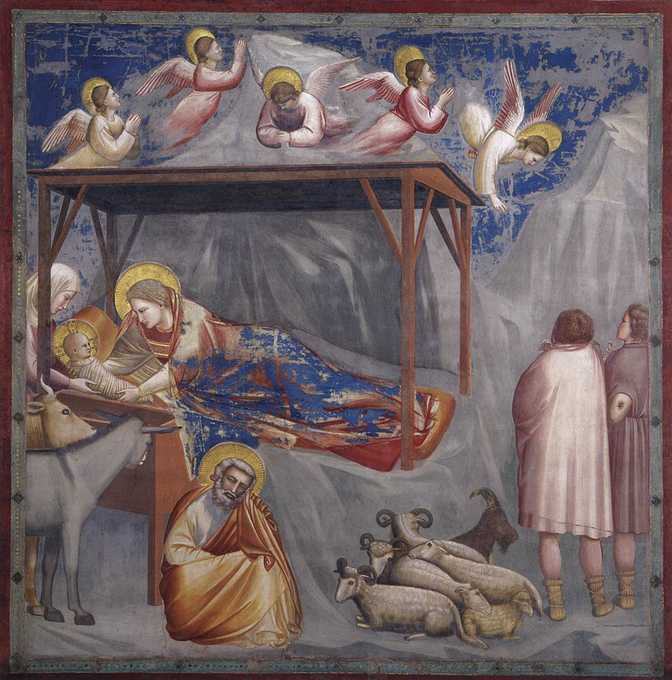
The New Testament was written in Greek. Ancient Greek can fit a whole philosophy into a single word, which makes it hard to carry into languages with narrower words. John’s Gospel opens: “In the beginning was the Word, and the Word was with God, and the Word was God” (John 1:1). The word translated “Word” is the Greek logos.
In ancient Greek philosophy, logos is the reason and divine intelligence that orders the cosmos: the universal principle that connects and governs all things. For the Stoics it was an active, rational, spiritual principle, equated with nature, fate or providence. By choosing this word, John says that this Reason, the meaning and order of the universe, is God himself, and became man in Jesus (John 1:14).
“Word” is the best English has, and it still loses most of what John’s first readers heard. The same is true of many Greek words: each has to be read in its context. That is why a good translation, and the Church’s guidance in reading it, matter so much.
3 sections
The full guide
How to tell a Catholic Bible
A Catholic Bible has 73 books. Most Protestant Bibles have 66: they leave out Tobit, Judith, Wisdom, Sirach, Baruch and 1 and 2 Maccabees, along with parts of Esther and Daniel. The Church has read these deuterocanonical books as Scripture since the first centuries.
Before you buy, check two things:
- "Catholic Edition" on the cover or title page.
- Nihil obstat and Imprimatur inside. They mean a bishop has approved the translation and its notes.
Which English translation?
There is no single "official" English Bible. Each has its strengths:
- RSV-2CE (the Ignatius Bible): accurate, dignified and easy to read aloud. A favourite for study and prayer.
- NABRE (New American Bible, Revised Edition): the translation behind the readings at Mass in the United States. Good notes, plainer style.
- NRSV-CE and NRSVue-CE: widely used in universities and, in Canada, close to what you hear at Mass.
- ESV-CE: the English Standard Version with the deuterocanonical books, chosen for the new Lectionary in England, Wales and Scotland.
- Douay-Rheims: the classic Catholic translation from the Latin Vulgate (1582-1610, revised by Bishop Challoner in the 1750s). Old-fashioned English, but beautiful, and free of copyright. It is the English you see in the verse popups on this site.
If you are starting out, pick the RSV-2CE or whatever your parish uses, and read a Gospel from beginning to end. Mark is the shortest.
Approved translations
Translations approved by the United States Conference of Catholic Bishops (USCCB) since 1983:
- New American Bible, Revised Edition (NABRE)
- New Revised Standard Version, Catholic Edition, National Council of Churches
- New Revised Standard Version, Updated Edition, Catholic Edition, Friendship Press
- Books of the New Testament, Alba House
- Contemporary English Version: New Testament, Psalms and Proverbs, American Bible Society
- Good News Translation (Today's English Version, Second Edition), American Bible Society
- Translation for Early Youth (a New Testament for children), American Bible Society
- The Grail Psalter (Inclusive Language Version), G.I.A. Publications
- The Psalms, Alba House
- The Psalms (New International Version), St. Joseph Catholic Edition, Catholic Book Publishing Company
- The Psalms, St. Joseph New Catholic Version, Catholic Book Publishing Company
- Revised Psalms of the New American Bible (1991)
- So You May Believe: A Translation of the Four Gospels, Alba House
The list covers only translations approved since 1983, which is why older ones like the RSV-CE and the Douay-Rheims aren't on it; they carry their own approval and are fine to use. Outside the United States, your own bishops' conference keeps its own list.
The list of approved translations comes from the USCCB.