Why We're Catholic
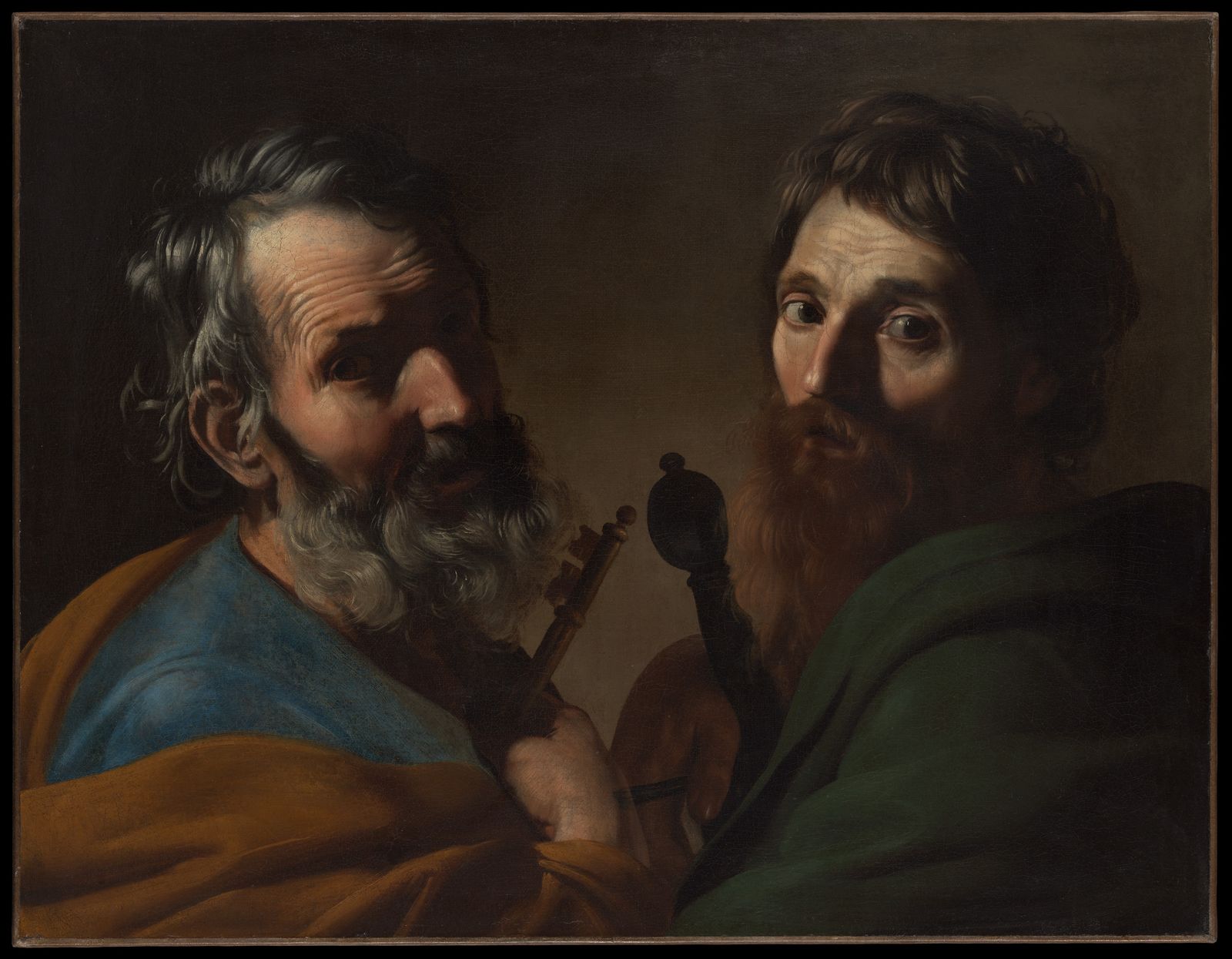
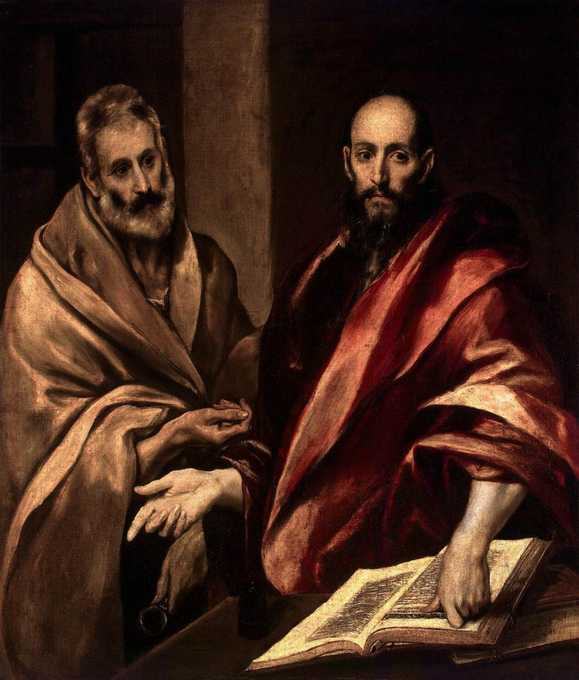
Bartolomeo Manfredi · Saints Peter and Paul
Maybe you’re curious, maybe you’re skeptical, maybe you used to believe. Either way, here is the case in three steps: is there a God, who is Jesus, and why the Catholic Church. Short answers first, the details if you want them.
Part 1 of 3
Is There a God?
A universe that had a beginning, laws tuned for life, a conscience that knows right from wrong, a heart that always wants more: a Creator explains all of it better than chance does.
Objective TruthWhoever says “there is no absolute truth” is stating an absolute truth.
The questionIsn't truth different for everyone?
Tastes differ from person to person; facts don’t.
- “There is no absolute truth” presents itself as an absolute truth, so it refutes itself.
- No one is content with a bridge being sound “for me”; we want it to be really sound.
- No one seriously argues that torturing children could be “right for some cultures”. The question of God is the same: not a matter of taste, but a real question with a real answer.
ObjectionBut different societies have held different moral codes.
Most of those differences come from disagreeing about facts. Nearly every culture praises courage and justice and despises betrayal. And when we call the end of slavery “progress”, we are measuring it against a real standard of good.
The Beginning of the UniverseThe first person to propose the Big Bang was a Catholic priest.
The questionCouldn't the universe just exist on its own?
Science says the universe had a beginning. Everything that begins has a cause.
- The first person to propose that the universe began at a single moment was a Belgian Catholic priest and physicist, Georges Lemaître (1931). Today we call it the Big Bang.
- If time, space and matter began there, their cause must lie outside them: timeless, immaterial and immensely powerful.
- “Nothing” produces nothing. Even the quantum vacuum is something, with laws of its own. A timeless, immaterial, powerful first cause: that is what people have always meant by God.
ObjectionThen who created God?
The argument is that everything that begins to exist has a cause. The universe began; God never began, because he is outside time. An endless chain of causes explains nothing. At some point you reach a being that needs nothing else to exist.
Fine-TuningIf the universe’s settings were slightly different, there would be no stars, and no us.
The questionCouldn't life be just a lucky accident?
The basic constants of the universe seem tuned with astonishing precision to allow life.
- If the strong nuclear force were a few percent different, stars could not burn and the carbon life needs could not form.
- If the cosmological constant were a little larger, no galaxy could have formed.
- Even the atheist astronomer Fred Hoyle wrote: “A common sense interpretation of the facts suggests that a superintellect has monkeyed with physics.”
ObjectionMaybe there are countless universes and we’re in a lucky one.
No one has ever observed another universe; the multiverse can’t be tested. Believing in infinitely many invisible universes takes more faith than believing in one Creator. And whatever churns out universes would need fine-tuning too, so the problem just moves back a step.
The Problem of EvilOur anger at evil shows that goodness is real.
The questionIf a good God exists, why is there so much suffering?
This is the hardest question, and the most honest. Christianity doesn’t answer it with a formula. It answers it with a cross.
- God gave us real freedom, because love can’t be forced. Most evil is that freedom misused.
- Without God even the word “evil” loses its meaning: our outrage at evil assumes a real good.
- The Christian God doesn’t watch suffering from afar: in Christ he went through betrayal, torture and death, and defeated death by rising.
ObjectionAn all-powerful God would remove suffering at once.
Only by taking away free will, and with it love and forgiveness. The Christian hope is that suffering will end: “He will wipe every tear from their eyes, and death shall be no more” (Revelation 21:4).
The Heart's LongingThirst shows that water exists.
The questionDo I really need God?
No success, no amount of money, no relationship ever fully satisfies us. That is a clue that we were made for something more.
- Hunger means there is food; thirst means there is water. Our deepest desires point to something real.
- C. S. Lewis: “If I find in myself a desire which no experience in this world can satisfy, the most probable explanation is that I was made for another world.”
- Augustine: “You have made us for yourself, and our heart is restless until it rests in you.”
ObjectionThat’s just a need for comfort; that’s why people invent religion.
Being thirsty doesn’t prove water is imaginary. And Christianity is a strange choice if all you want is comfort: it tells you to love your enemies and give your life away for others.
If you are an atheist or an agnostic: Answering Atheism
Part 2 of 3
Who Is Jesus?
If there is a Creator, he may have spoken. Christianity stakes everything on an event you can test like any other piece of history: the resurrection of Jesus.
The Historical JesusEven historians who aren’t believers don’t doubt that Jesus lived.
The questionDid Jesus really live, or is he a legend?
That Jesus lived and was crucified under Pilate is accepted by almost every historian.
- The Roman historian Tacitus (around AD 116) writes that Christians took their name from Christus, executed by Pontius Pilate; the Jewish historian Josephus also mentions “Jesus, who was called the Christ”.
- Even the agnostic New Testament scholar Bart Ehrman treats Jesus’ existence as beyond serious dispute.
- More than 5,800 Greek manuscripts of the New Testament survive; no other ancient work is so well preserved.
ObjectionThe Gospels were written long after Jesus, by believers.
They were written within a few decades, while eyewitnesses were still alive. The earliest full lives of Alexander the Great come three hundred years after his death. And the Gospels keep details no one would invent: Peter’s denial, and women, whose testimony counted for little then, as the first witnesses of the empty tomb.
Who Jesus Claimed to BeJesus was either mad, a liar, or truly God.
The questionCouldn't Jesus just have been a good teacher?
What Jesus said about himself rules that option out.
- He forgave sins, and those present were outraged because they knew only God has that authority (Mark 2:5-7).
- He said “I and the Father are one” (John 10:30) and called himself by the name God revealed to Moses, “I am” (John 8:58).
- A man who talks like that is a lunatic, a liar, or exactly who he says he is. His teaching and his life don’t fit the first two.
ObjectionMaybe later generations put these words in his mouth.
Less than thirty years after his death, Paul is already writing about Jesus as the Lord worshipped as God (Philippians 2:6-11). Legends take generations. Here a man is worshipped while the eyewitnesses are still alive, by people fiercely devoted to the one God.
The ResurrectionFrightened disciples in hiding would not die for something they knew was a lie.
The questionHow can anyone believe a man rose from the dead?
Christianity rests on a testable historical claim: “If Christ has not been raised, your faith is futile” (1 Corinthians 15:17).
- Even most skeptical historians accept that Jesus died on the cross and was buried, that his tomb was found empty, and that his disciples sincerely believed they had seen him risen.
- The creed in 1 Corinthians 15:3-8 goes back to within a few years of the event and names more than five hundred witnesses.
- Within weeks, the same disciples who had been hiding in fear were preaching the resurrection openly, in the city where he was killed. James the skeptic and Paul the persecutor joined them.
ObjectionMaybe they hallucinated, or stole the body.
Five hundred people don’t share one hallucination, and hallucinations don’t empty tombs. If they had stolen the body, they died for what they knew was a lie. And their enemies could have ended the whole thing by producing the body. They never did.
If you come from a Muslim background: Answering Islam
Part 3 of 3
Why the Catholic Church?
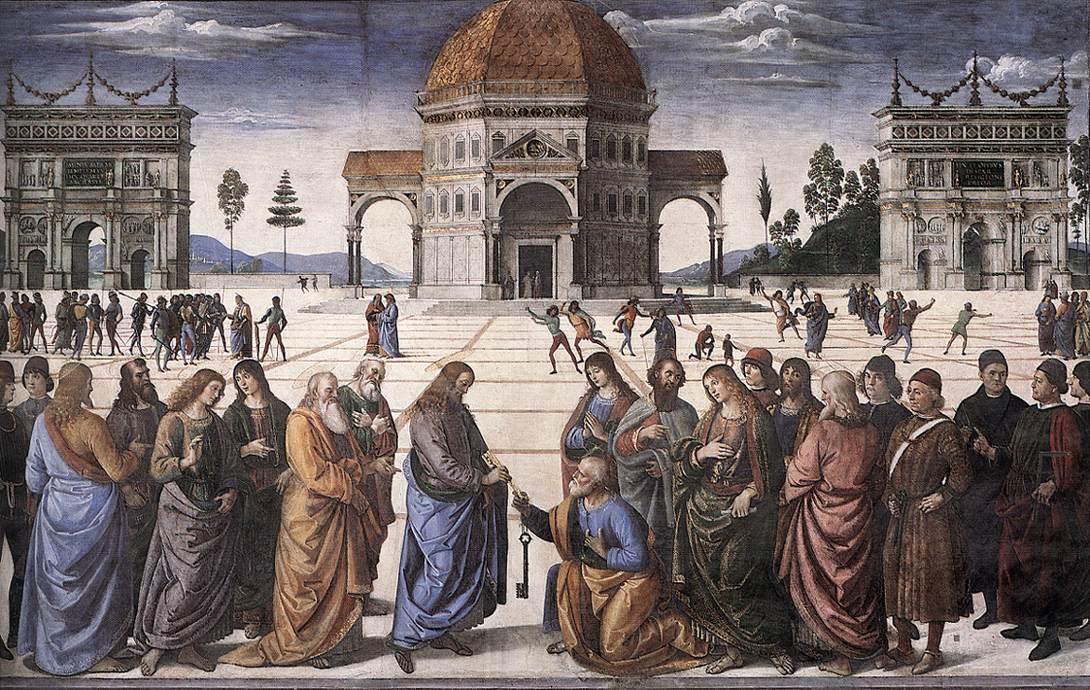
If Jesus rose, what he said matters. And he didn’t leave a book behind: he left a Church, built on the apostles, that is still here.
One Church and PeterJesus left behind not a book, but a Church.
The questionIsn't believing in Jesus enough? Why a Church?
Jesus entrusted his teaching not to scattered individuals but to a visible community with authority.
- He told Peter, “On this rock I will build my church,” and gave him the keys of the kingdom of heaven (Matthew 16:18-19).
- Without a shared authority, everyone reads the Bible their own way, and the thousands of separate denominations today are the result. Christ prayed that his disciples would “be one” (John 17:21). None of this means looking down on other Christians: by baptism they are our brothers and sisters in Christ, and we have plenty to learn from their faith (CCC 818).
- Today’s pope is the latest link in a chain of more than 260 that began with Peter and has held for two thousand years.
ObjectionThe Church later turned Jesus’ simple message into an institution.
It was the other way round. The Church came before the New Testament: Jesus wrote no book, but he chose twelve apostles and gave them authority. Around AD 107, Ignatius of Antioch was already calling it “the Catholic Church”.
Scripture and TraditionThe Church decided the Bible’s table of contents.
The questionWhy isn't the Bible alone enough?
The Church decided which books belong in the Bible. The Book was born inside the Church, not the other way round.
- The 27-book New Testament list was settled at the councils of Hippo (393) and Carthage (397).
- The Bible itself tells us to keep the teaching handed on by word of mouth: “Hold to the traditions which you were taught by us, either by word of mouth or by letter” (2 Thessalonians 2:15).
- Scripture, Tradition and the Church’s teaching office form one whole, coming from one source, Christ.
- Nowhere does the Bible say “Scripture alone.” Instead it speaks of teaching handed on by word of mouth and entrusted to faithful men (2 Timothy 2:2), and John says that not everything Jesus did was written down (John 21:25).
ObjectionSo the Church puts itself above the Bible.
The Church is Scripture’s servant, not its master. It guards and explains the Bible but can’t change a word of it. Think of a museum that can tell an original painting from a forgery: it didn’t paint the picture, but it knows it, and it protects it.
The SacramentsJesus said “This is my body,” not “This is a symbol.”
The questionCan water, bread and oil really have a spiritual effect?
God made us body and soul, so he gives his grace through signs we can see and touch.
- Jesus touched people when he healed, used mud and water, and told his disciples to baptize, to offer the bread “in remembrance of me” and to forgive sins: “If you forgive the sins of any, they are forgiven” (John 20:22-23).
- The seven sacraments accompany every important moment of life, from birth to death.
- The first Christians didn’t treat the Eucharist as a symbol: Ignatius of Antioch criticized those who denied it was “the flesh of our Savior Jesus Christ”.
- Jesus said, “My flesh is food indeed, and my blood is drink indeed” (John 6:55). Many of his disciples could not accept this and left him, yet he did not call them back to say he only meant a symbol (John 6:66). At the Last Supper he took the bread and said, “This is my body” (Mark 14:22).
ObjectionIsn’t this a kind of magic?
Magic tries to bend supernatural power to your will. In the sacraments nobody controls God; God keeps his own promise. Their power doesn’t depend on how holy the priest is, but on Christ’s word.
Scandals in the ChurchEven one of the apostles was a traitor; the Church still stands.
The questionHow can the Church be holy with so many scandals?
The Church is holy because Christ is, not because its members are. It is not a museum for saints; it is a hospital for sinners.
- Abuse and cover-ups are real, grave and shameful. The Church has to confess them and do justice to the victims.
- One of the Twelve betrayed Jesus and Peter denied him three times; Christ knew his Church would be made of flawed people.
- A bad doctor doesn’t disprove medicine. The same Church also formed Teresa of Calcutta, Maximilian Kolbe and millions of holy people.
ObjectionIt has survived two thousand years only because it is well organized.
No merely human institution has lasted twenty centuries with the same teaching through so many failed leaders, schisms and persecutions. Jesus promised: “The gates of hell shall not prevail against it” (Matthew 16:18).
Known by Its FruitThe first hospitals and universities grew out of the Church.
The questionHas religion really done humanity any good?
Hospitals, universities, the very idea of human rights: a lot of what we take for granted was born in the Church.
- In the fourth century St. Basil of Caesarea founded a large complex for the sick and the poor; many historians count it among the first hospitals.
- The first great universities (Paris, Oxford, Bologna) grew up under the Church; Mendel, the father of genetics, was a friar, and Lemaître a priest.
- The idea that every person is made in God’s image and has equal dignity is one of the roots of human rights.
ObjectionBut there were the Crusades and the Inquisition.
The Church has admitted those sins openly; St. John Paul II asked forgiveness for them in public in 2000. And the standard we judge them by is Christ’s own command to love even our enemies.
Grace and Good WorksSalvation can’t be bought, but real faith doesn’t sit idle.
The questionDo you get to heaven by being a good person?
No. Salvation isn’t a prize we earn; it is God’s gift. But real faith always shows up in what we do.
- None of us can reach God’s perfect goodness on our own, so God made the first move.
- Christianity is the story of God setting out to find us, like the shepherd looking for his lost sheep (Luke 15:4-7).
- “Faith without works is dead” (James 2:26): good works don’t buy salvation; they answer a love already received.
- Salvation isn’t a box ticked once; it is a road: “Work out your own salvation with fear and trembling” (Philippians 2:12). That is why there is Confession after Baptism. Whoever falls along the way can repent and get up again.
ObjectionSo a bad person can repent at the last minute and be saved? Is that fair?
Yes. Jesus told the criminal on the cross, “Today you will be with me in paradise” (Luke 23:43). Grace goes beyond fairness, because none of us deserves it. But repentance means a real change of heart, and no one is promised tomorrow.
Mary and the SaintsIf you can ask a friend to pray for you, you can ask one in heaven.
The questionDo Catholics worship Mary and the saints?
No. Worship belongs to God alone. We ask the saints to pray for us, the way you would ask a friend.
- “The prayer of a righteous man has great power” (James 5:16), and death doesn’t separate people who are one in Christ.
- Mary is honored as Jesus’ mother and first disciple; she always points to her Son: “Do whatever he tells you” (John 2:5).
- The saints prove that the Christian life can actually be lived. Many of them, like Augustine, were great sinners first.
- Mary said, “Henceforth all generations will call me blessed” (Luke 1:48). God tells us to honor our father and mother (Exodus 20:12). Surely he wants his own Son’s mother honored.
ObjectionWhy not pray to God directly?
We do. The heart of Catholic prayer is the Mass, offered to the Father through Christ. Asking a friend to pray for you doesn’t mean you trust God less, and neither does asking a friend in heaven.
Moral TruthsRails don’t imprison a train; they take it where it’s going.
The questionWhy are the Church's rules so strict?
The Church’s moral teaching isn’t a list of random bans. It is a whole picture of what a human being is, and its goal is freedom.
- Every human life, from the unborn child to the very old, is sacred. A person’s worth doesn’t depend on how useful they are.
- Your body isn’t something you own; it is you. That is why sex finds its full meaning in a lifelong promise: marriage.
- A train isn’t less free because it runs on rails; the rails get it where it’s going. Morality works the same way: it leads to real happiness.
- The Church doesn’t change its teaching with the times. Until 1930 all the major Christian churches held contraception to be morally wrong. That year the Anglican Church allowed some exceptions, and in time most Protestant churches followed. The Catholic Church kept its teaching.
ObjectionAs long as I don’t hurt anyone, what I do is nobody’s business.
The Church doesn’t force anyone; it invites. But we can harm ourselves, and what we do touches others in ways we don’t see. And no one who struggles is shut out: Confession exists so we can start again after every fall.
Heaven, Hell and PurgatoryThe doors of hell are locked from the inside.
The questionHow could a loving God send anyone to hell?
God forces no one into heaven or hell. Eternity is the answer we freely give in this life, made permanent.
- Heaven is eternal union with God, the source of all goodness and love.
- Hell is what happens when someone freely and stubbornly chooses to stay away from God. As C. S. Lewis put it, its doors are locked from the inside.
- Purgatory is where those who die in God’s friendship, but not yet fully purified, are made ready for heaven. It isn’t a punishment; it is love finishing its work (2 Maccabees 12:45).
ObjectionIsn’t eternal punishment out of proportion to the sins of a finite life?
Hell isn’t revenge. It is a will that rejects God to the very end, and stays that way. God keeps the door open until the last moment and wants no one to be lost (1 Timothy 2:4).
In the end
Putting it together
- 1There is real truth
- 2The universe points to a Creator
- 3Jesus rose from the dead
- 4His Church is still alive today
- 5Our hearts find rest in him
None of these is a mathematical proof on its own. Together they are clues that lean on each other: if there is real truth, we can look for it; if the universe points to a Creator, he may have spoken; if Jesus rose, what he said is true; and the Church he founded is still here after two thousand years, saints and sinners alike. Reason can’t take the last step of faith for you, but it can walk you right up to the door. If you have questions, you’re not alone: walk into any Catholic church, or write to us.