The History of the Rosary
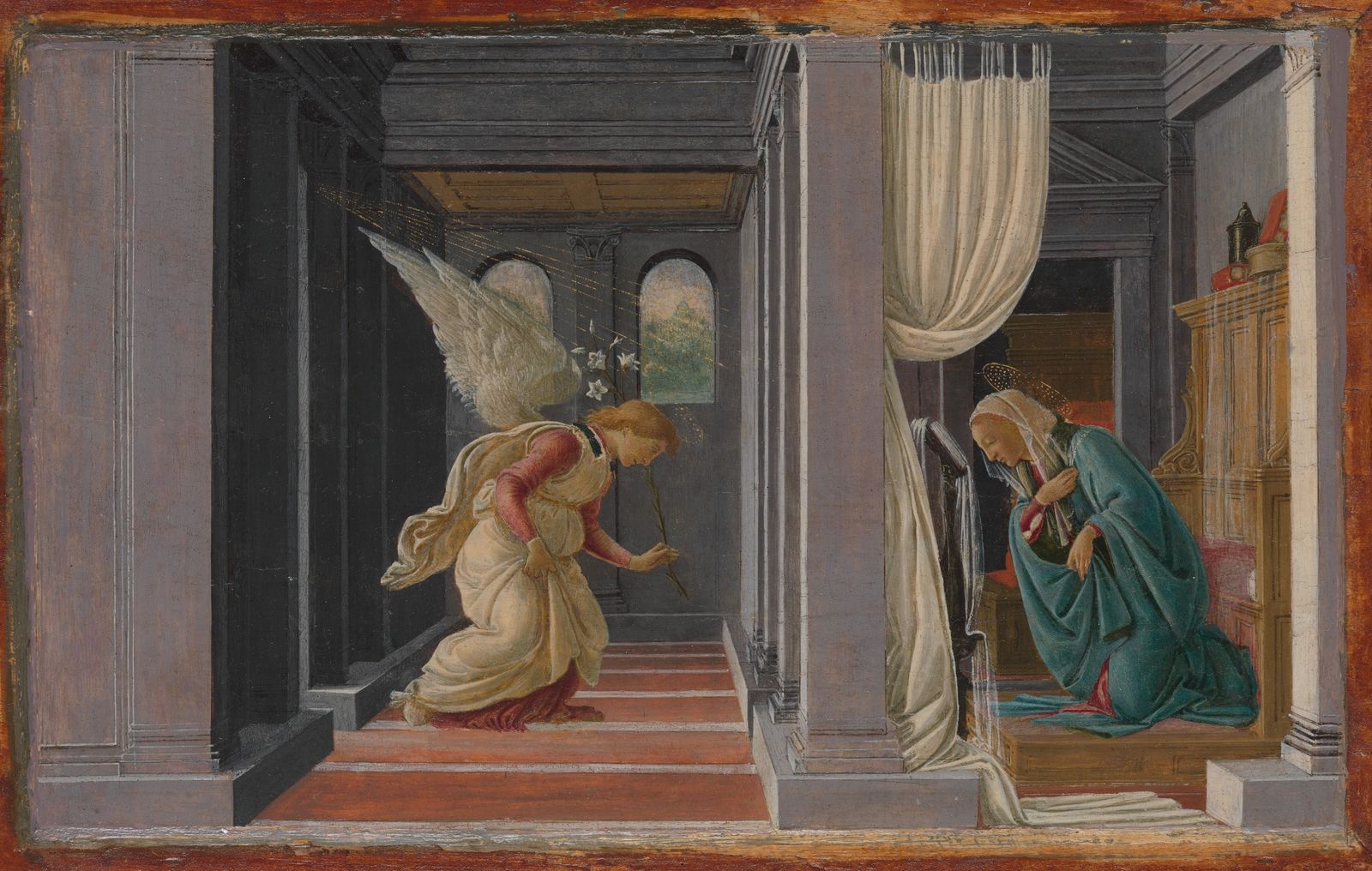
Botticelli · The Annunciation
The decades of the Rosary are like a machine-gun belt: every bead is a bullet, every affection of the soul is an explosion of faith that frightens off Satan, and Mary once more crushes his head.
The beginning
From a rose garden to the Gospel
Where does the name come from?
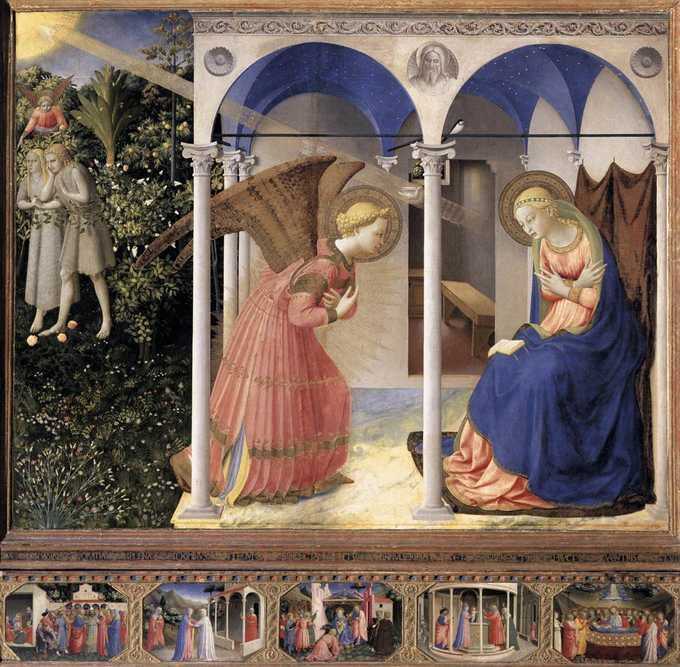
The name “Rosary” comes from the Latin rosarium, meaning “rose garden” or “garland of roses”. Each Hail Mary is like a rose offered to the Virgin Mary; fifty of them make a garland.
Even the English word “bead” comes from the Old English “bede”, which meant “prayer”. A rosary isn’t a lucky charm or a piece of jewelry; the beads just help you keep count.
Rooted in the Gospel
The Rosary is also called “the Bible on beads”, because every prayer in it either comes straight from Scripture or sums up what Scripture teaches. Jesus himself taught us the Our Father. The first half of the Hail Mary is simply what Gabriel and Elizabeth said to Mary.
Where does each prayer come from in the Bible?
- The Apostles’ Creed: a short summary of what the Apostles taught. It grew out of the creed recited by those being baptized in Rome in the 2nd century.
- The Our Father: the prayer Jesus taught (Matthew 6:9-13).
- The Hail Mary (first half): the words “Hail, full of grace, the Lord is with thee” are Gabriel’s (Luke 1:28). The words “Blessed art thou among women, and blessed is the fruit of thy womb” are Elizabeth’s (Luke 1:42). The names “Mary” and “Jesus” were added only to make clear who is meant.
- “Holy Mary”: Scripture calls all believers “saints”, that is, holy ones (Ephesians 1:1). Mary, the first to welcome Jesus, has every right to the title.
- “Mother of God”: a mother does not give birth to a “nature”; she gives birth to a “person”. The person Mary gave birth to is the Son of God, who took on a human nature. Elizabeth, too, calls her “the mother of my Lord” (Luke 1:43). The Church formally proclaimed this at the Council of Ephesus in 431.
- “Pray for us sinners”: Paul asks Christians to pray for one another (1 Timothy 2:1-4). Those in heaven also offer the prayers of the faithful to God (Revelation 5:8).
- The Glory Be: a short hymn of praise to the Father, the Son and the Holy Spirit (Matthew 28:19).
- The Hail Holy Queen: in David’s kingdom the queen was not the king’s wife but his mother; Solomon seated his mother at his right hand (1 Kings 2:19). Since Jesus is the King of David’s line, his mother is the Queen.
One more thing: “pray” doesn’t automatically mean “worship”. Its old meaning is simply “ask”, as in “pray tell”. When we pray to the Virgin Mary, we are not worshipping her. Just as we might ask a friend, “Will you pray for me?”, we are asking her to pray to God for us.
Isn’t this vain repetition?
Jesus says, “When you are praying, speak not much, as the heathens” (Matthew 6:7). But what he forbids is not repetition as such; it is empty repetition, words that do not come from the heart and try to win over the gods by sheer quantity. Scripture itself is full of repetition: in the garden of Gethsemane Jesus prayed the same words three times (Matthew 26:44). In Psalm 136 the words “for his steadfast love endures for ever” are repeated twenty-six times. Day and night, the angels never stop saying, “Holy, holy, holy” (Revelation 4:8).
What really matters is not the number of Hail Marys but the mysteries: taking time over the life of Jesus. Fr. Chris Alar compares this to a film score: the music does not replace the film, but it lets you feel the scene more deeply. The Hail Marys of the Rosary are the music playing in the background; the film itself is the life of Jesus.
Twenty mysteries, twenty Gospel scenes
The Joyful Mysteries:
- The Annunciation (Luke 1:26-38)
- The Visitation (Luke 1:39-56)
- The Nativity (Luke 2:1-20)
- The Presentation (Luke 2:22-38)
- The Finding in the Temple (Luke 2:41-52)
The Luminous Mysteries:
- The Baptism of Jesus (Matthew 3:13-17)
- The Wedding Feast of Cana (John 2:1-11)
- The Proclamation of the Kingdom (Mark 1:14-15)
- The Transfiguration (Matthew 17:1-8)
- The Institution of the Eucharist (Luke 22:19-20)
The Sorrowful Mysteries:
- The Agony in the Garden (Matthew 26:36-46)
- The Scourging at the Pillar (John 19:1)
- The Crowning with Thorns (Matthew 27:27-31)
- The Carrying of the Cross (John 19:17)
- The Crucifixion (Luke 23:33-46)
The Glorious Mysteries:
- The Resurrection (Luke 24:1-12)
- The Ascension (Acts 1:9-11)
- The Descent of the Holy Spirit (Acts 2:1-4)
- The Assumption
- The Coronation of Mary
The last two mysteries are not described in the Gospels; they rest on the Church’s tradition and are read in the light of the “woman clothed with the sun, and on her head a crown of twelve stars” in the Book of Revelation (Revelation 12:1).
So in the space of a few minutes, the Rosary takes you through the whole Gospel, from the birth of Jesus to his resurrection. In the words of Pope Pius XII, the Rosary is “a compendium of the entire Gospel”.
The Middle Ages
From pebbles to St. Dominic
From pebbles to beads
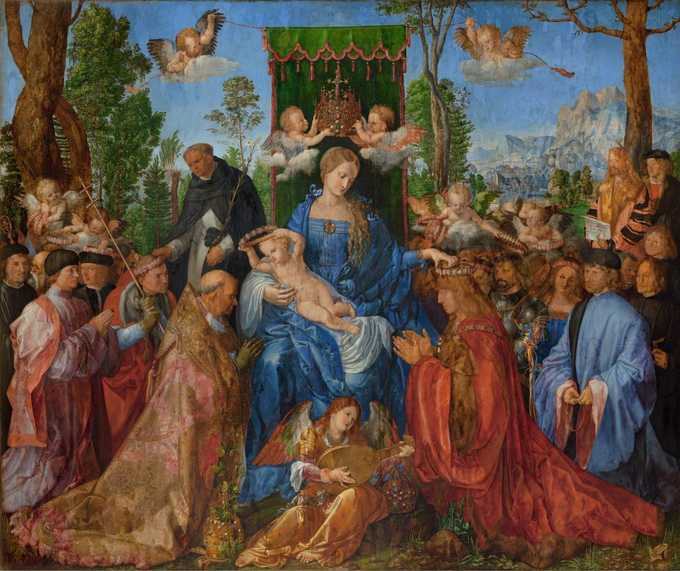
Monks prayed all 150 psalms every day. But there was no printing press yet, a handwritten book cost a fortune, and most people couldn’t read anyway. So lay people who wanted to join in prayed 150 Our Fathers instead. To keep count, they carried a bag of pebbles and moved one aside with each prayer. Over time the pebbles gave way to knotted cords and beads.
Later, people did the same with 150 Hail Marys, and this came to be called “Mary’s Psalter”. To this day the Joyful, Sorrowful and Glorious Mysteries each have 50 Hail Marys. Together they make exactly 150, the number of the Psalms.
St. Dominic
At the beginning of the 13th century St. Dominic was preaching in southern France to people caught up in the Albigensian heresy. He was a gifted preacher, but his sermons weren’t getting through. According to tradition, in 1214 he withdrew to a forest near Toulouse and fasted and prayed for three days and three nights. When at last he collapsed from exhaustion, the Virgin Mary appeared to him and said:
“In this kind of warfare, the battering ram has always been the Angelic Salutation. Preach my Psalter.”
Tradition also credits Dominic with linking each decade to a scene from the life of Jesus. His order’s name gave rise to a well-known Latin pun: the Dominicans are the “Domini canes”, “the hounds of the Lord”, watchdogs guarding the flock from wolves.
Some historians think the story only took its present form in the 15th century, and it’s true that no written record survives from Dominic’s lifetime. Even so, the Church has honored the tradition for centuries.
One more detail: in Dominic’s day the Hail Mary was only the first half, ending with the words “...and blessed is the fruit of thy womb, Jesus.” Matt Fradd suggests that Protestant friends who are drawn to the Rosary could pray it as people did in St. Dominic’s day, using only this first half, which comes entirely from Scripture.
Forgotten and reborn
After the Black Death swept through Europe in the 14th century, the Rosary fell out of use. In the 15th century the Dominican Blessed Alan de la Roche had every gift he needed to bring it back, yet he did nothing. The story goes that one day at Mass, as he raised the Host, he heard a voice rebuking him, and from then on he got to work.
Alan spread the Rosary throughout Europe and in 1470 founded the first Rosary Confraternity. He was so successful that people thought he had invented the Rosary. He answered, “No, this is Dominic’s prayer.” The well-known “15 Promises of the Rosary” also come from the private revelations Alan passed on. One of these promises reads: “The Rosary shall be a powerful armor against hell; it will destroy vice and decrease sin.”
1571 and after
Lepanto and the spread across the world
Lepanto and the feast of Our Lady of the Rosary (1571)
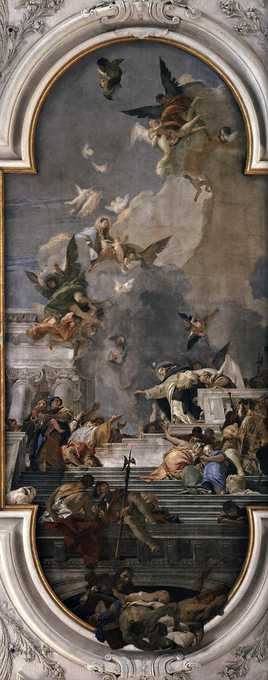
Under Pope Pius V, himself a Dominican friar, the Ottoman fleet was pushing west across the Mediterranean. Spain, Venice and the Papal States joined forces in the “Holy League”. The Pope called all Christians to pray the Rosary. Churches were kept open day and night, and the Pope himself walked barefoot in processions through the streets of Rome. On 7 October 1571 the Christian fleet defeated the Ottoman fleet at Lepanto. The Pope credited the victory to the intercession of the Virgin Mary and set up a feast on that date. The Church still keeps it every year on 7 October as the feast of Our Lady of the Rosary.
In 1569 Pius V fixed the form of the Rosary with its 15 mysteries. A year earlier, in 1568, he had placed the second half of the Hail Mary, ending “Holy Mary, Mother of God, pray for us sinners, now and at the hour of our death”, in the Church’s official prayer book, the Breviary. So it was a pope who doubled the length of the Hail Mary.
The Rosary goes to the world
In the same century, missionaries set out for the Americas, Asia and Africa. They couldn’t carry heavy books everywhere, but a rosary in the pocket was enough to tell the whole life of Jesus. That is how “the Bible on beads” reached every corner of the world.
Many saints prayed it every day: Teresa of Ávila, Francis de Sales, John Bosco and Mother Teresa of Calcutta, to name only a few. Padre Pio called the Rosary “my weapon” and gave his spiritual children this advice: “Pray as many as you can.” Blessed Miguel Pro, shot by a firing squad in Mexico in 1927 for his faith, died with his arms stretched out like a cross, a crucifix in one hand and a rosary in the other, shouting “Long live Christ the King!” A photograph of that moment survives.
The 19th and 20th centuries
Bartolo Longo, Lourdes and Fatima
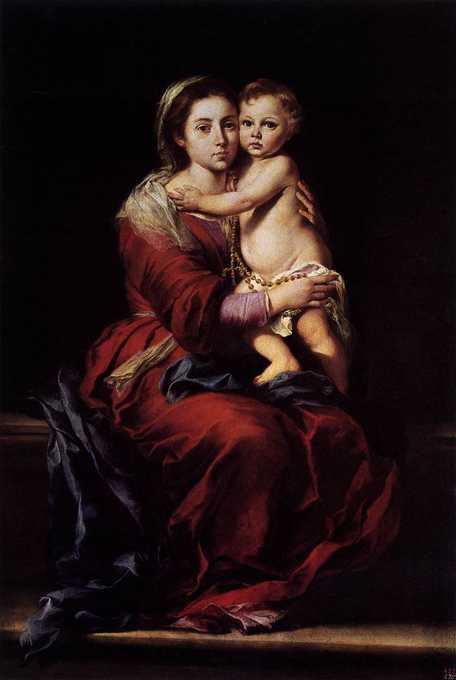
From the occult to sainthood: Bartolo Longo
Few stories show the power of the Rosary better than Bartolo Longo’s. As a law student in 19th-century Naples, Longo lost his faith; he went to séances and was even made a “priest” of an occult sect. He was left with terrible nightmares, deep depression and thoughts of suicide.
A Dominican priest told him about the Rosary. Longo broke with the occult and even walked into a séance to call those present to repentance. He spent the rest of his life spreading the Rosary in the town of Pompeii. He built orphanages, schools and the Basilica of Our Lady of the Rosary of Pompeii, today one of the best-known Rosary shrines in the world. St. John Paul II called him “a true apostle of the Rosary”. Longo was canonized in 2025.
Lourdes and Fatima
In the 19th century Pope Leo XIII wrote eleven encyclicals on the Rosary and declared October the month of the Rosary.
In 1858 at Lourdes, fourteen-year-old Bernadette was praying the Rosary alone in front of the grotto when the Virgin Mary appeared to her. Mary had a rosary on her arm. As Bernadette prayed, Mary passed the beads through her fingers, but she did not say the Hail Mary; she joined in only at the Glory Be. Mary appeared eighteen times in all, and every apparition began with the Rosary.
In 1917 at Fatima she appeared to three shepherd children. The youngest of them, Jacinta, was only seven. Mary told them, “I am the Lady of the Rosary,” and asked that the Rosary be prayed every day for peace in the world. The “Fatima Prayer” said at the end of each decade (“O my Jesus, forgive us our sins...”) also comes from these apparitions.
Today
The Luminous Mysteries and the heart of the Rosary
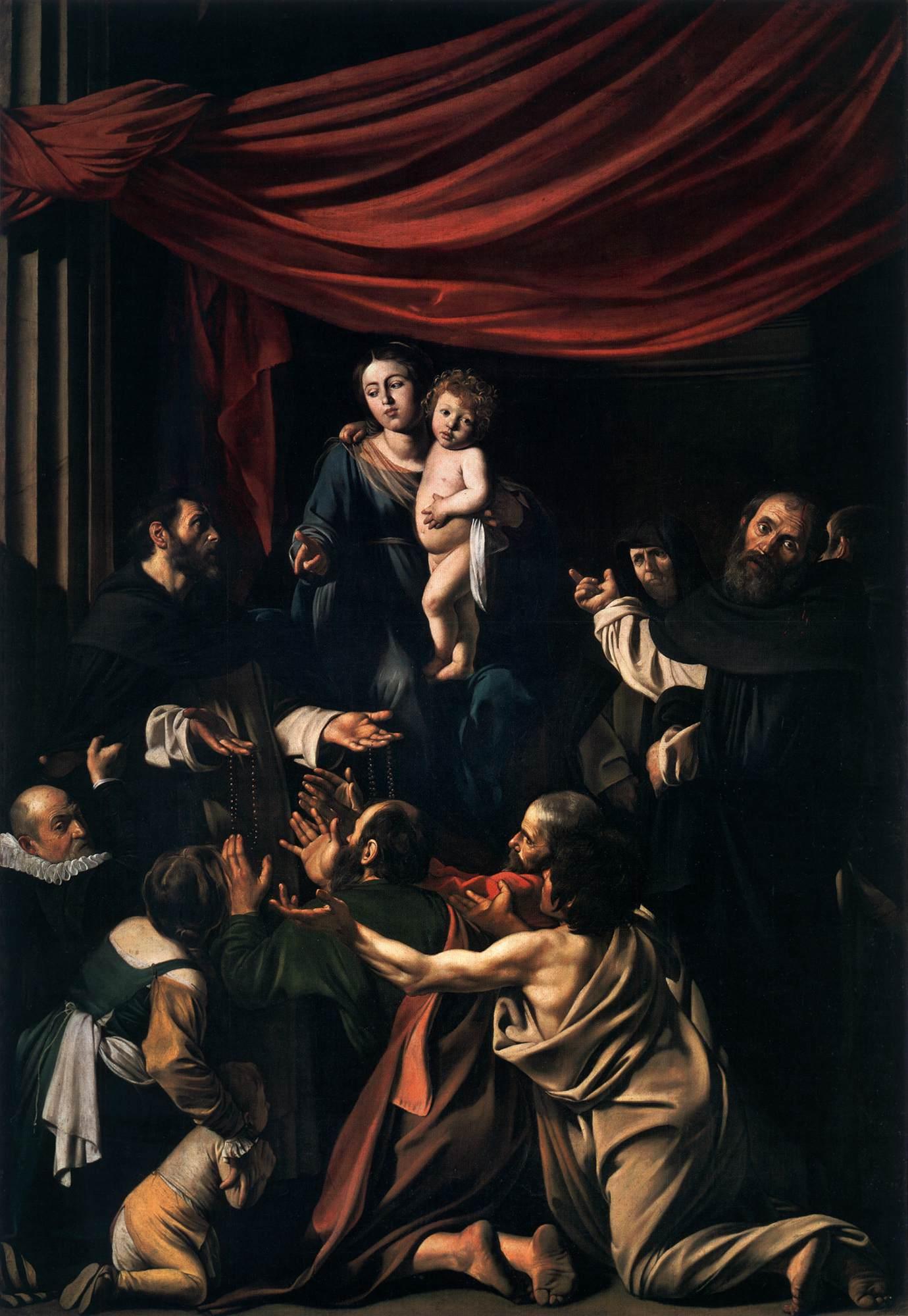
St. John Paul II and the Luminous Mysteries
Karol Wojtyła lost his mother when he was eight. The story goes that he went into a church, looked at an image of the Virgin Mary and said, “Now you are my mother.” When he became pope he took the motto “Totus Tuus” (Entirely Yours). Two weeks after his election he said, “The Rosary is my favorite prayer.”
On 13 May 1981, the feast of Our Lady of Fatima, he was shot in St. Peter’s Square by Mehmet Ali Ağca. The bullets missed his vital organs by millimeters. The Pope later said: “One hand fired, and another guided the bullet.” Two years later he visited Ağca in prison and forgave him. That bullet is now set in the crown of the statue of Our Lady at Fatima.
In 2002 he added a fourth set of five mysteries to the Rosary: the Luminous Mysteries. Fr. Chris Alar explains why: the Joyful Mysteries tell of Jesus’ birth, the Sorrowful Mysteries of his death, and the Glorious Mysteries of his resurrection. So what is missing? His life. The Luminous Mysteries fill that gap: Jesus’ baptism, the wedding at Cana, his proclamation of the Kingdom of God, his Transfiguration on the mountain and his institution of the Eucharist.
Nor was this an entirely new idea. In the 20th century the Maltese priest St. George Preca had written a similar set called the “Mysteries of Light”. Still, the Luminous Mysteries are optional: the Pope proposed them, he didn’t require them.
The heart of the Rosary
The form of the Rosary has changed over the centuries, but its heart never has: looking at Jesus through the eyes of the Virgin Mary. Who better to show us Jesus than Mary, who was there from the manger to the cross? And at the very center of every Hail Mary stands the same name: Jesus.
Gabriel Castillo suggests three simple steps:
- Pause: before you begin to pray, stop for a few seconds and remember that God is present.
- Picture it: imagine the scene of the mystery as if you were there. If you cannot picture it, look at an image or tell yourself what happened.
- Talk: in that scene, speak to Jesus and Mary in your own words.
You do not have to finish the Rosary in one sitting. You can pray one decade in the morning, another on the way to work and another after a meal. If you told someone during the day, “I’ll pray for you,” remember them in your evening Rosary; you can offer each bead for a different person.
Spiritual warfare
Why does the devil fear the Hail Mary?
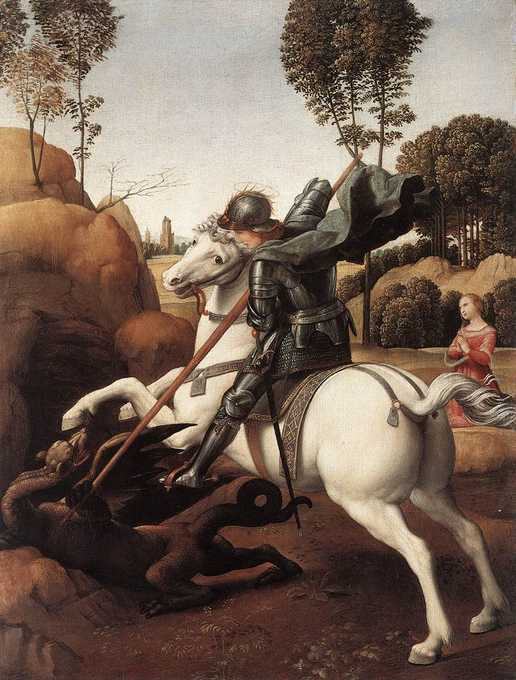
Spiritual warfare: why does the devil fear the Hail Mary?
The Rosary is not only a prayer that brings peace; it is a weapon in a spiritual battle that begins on the first pages of the Bible. After the disobedience of Adam and Eve, God says to the serpent: “I will put enmities between thee and the woman, and thy seed and her seed: she shall crush thy head, and thou shalt lie in wait for her heel” (Genesis 3:15). This verse is known as the Protoevangelium, the “first Gospel”. Read plainly, the woman is Eve; but the Church Fathers also saw in her Mary, the “new Eve”, and in her offspring, Jesus Christ.
In the Hebrew text, the pronoun refers to the woman’s offspring, that is, to Christ. Older Latin translations such as the Vulgate, however, use a feminine pronoun (ipsa conteret caput tuum, “she shall crush thy head”), and this inspired the traditional images of Mary crushing the serpent. In Catholic teaching, Mary takes an indirect but active part in this victory: she shares in the work of salvation through her “yes” at the Incarnation and her suffering at the foot of the cross. The wound to the heel stands for Jesus’ death on the cross: the devil thought he had defeated Christ, but it was by that very death that Jesus crushed the serpent’s head.
In the Bible’s last book, Revelation, the story ends with the dragon waging war against the woman (Revelation 12).
Gabriel greeted Mary with the words “Hail, full of grace.” In these words the Church sees the Immaculate Conception: the teaching that God kept Mary free from all sin from the first moment of her conception in her mother’s womb. With the same greeting the angel also announced that the Son of God would become man. That moment is the devil’s greatest defeat. This is why saints and exorcists say that the devil trembles when he hears the Hail Mary. The proud angel cannot bear to be reminded that he was defeated by the “yes” of a humble young girl.
Prayed faithfully every day, the Rosary opens the soul to God’s grace; someone whose mind is filled with the life of Christ grows stronger against sin and evil. But be warned: at first, things may feel like they’re getting worse, not better. Restlessness, reluctance, an inner voice saying “Give it up, what’s the point?”... That is because the devil does not give up easily; he fights back. Don’t stop. Keep going, more stubbornly than before. By God’s grace, those who persevere in prayer see darkness turn into light, and in that light they find Christ, the New Adam, and Mary, the New Eve, who bring new life to humanity.
In the end, this is a struggle between good and evil. Evil wants us to give up; we must never stop praying. And we do not have to face this struggle alone. The words Fr. Patrick Peyton spread around the world still hold true: “The family that prays together stays together.”
Ready to try? Start now with Pray the Rosary, Bead by Bead.
Sources
Interviews and talks
- Interview with Gabriel Castillo: “The History of the Rosary”, Pints With Aquinas, episode 598
- Interview with Gabriel Castillo: “The Holy Rosary: Everything You’ve Ever Wanted to Know”, Pints With Aquinas, episode 475
- Fr. Chris Alar, MIC: “The Rosary Is Biblical” talks, parts 1 and 2 (National Shrine of The Divine Mercy, Stockbridge)
Church documents
- Catechism of the Catholic Church: CCC 410-411 (the first Gospel, the new Eve), CCC 466 (Council of Ephesus), CCC 490-492 (Immaculate Conception), CCC 971 and CCC 2676-2678 (the Hail Mary and the Rosary)
- Second Vatican Council, Lumen Gentium, 55-56 (Genesis 3:15 and Mary’s “yes”)
- Pope St. Pius V, Consueverunt Romani Pontifices (1569)
- Blessed Pius IX, Ineffabilis Deus (1854)
- Pope Leo XIII, Supremi Apostolatus Officio (1883)
- St. John Paul II, Rosarium Virginis Mariae (2002)
Books
- St. Louis de Montfort, The Secret of the Rosary (Dominic’s vision, Alan, the 15 promises)
- St. John Paul II, Memory and Identity (2005) (“One hand fired…”)
- Sister Lucia, Fatima in Lucia’s Own Words (the Fatima apparitions)
- Fr. Dolindo Ruotolo, Riflessioni sul Santo Rosario di Maria (Apostolato Stampa, Naples) (the opening quote)