Legal notice
Verbum Domini is an independent, private initiative undertaken in keeping with the first sentence of Canon 216 of the Code of Canon Law. This website is not an official platform of any Church authority or of the Catholic Church, and carries no official approval or institutional affiliation.
Original content and translations © 2026 Verbum Domini.
Texts
- Catechism: the Compendium of the Catechism of the Catholic Church. The text is © 2005 Libreria Editrice Vaticana; the English is the Vatican’s own.
- The Holy Bible: the Douay-Rheims Bible in Bishop Challoner’s revision, with Challoner’s notes, both in the public domain; we brought the old spelling and grammar up to date. The appendix and Ethiopian books are public-domain English translations, modernized in the same way; each book names its translation. The words of Christ are marked in red following the public-domain World English Bible. The book introductions, major events, chapter summaries and word meanings were written for this site.
- The Confessions of St. Augustine: Edward Bouverie Pusey’s translation (Oxford, 1838), in the public domain; we brought its old English up to date and kept his sentences. Book, chapter and section numbers follow the Latin text.
- Scripture in the popups: the same Douay-Rheims text. The link in the popup opens the passage in the Holy Bible on this site.
- Today’s readings: the references follow the Lectionary used in Canada; the texts shown are from our Douay-Rheims Bible. The thought of the day is a short excerpt from a Pope’s words, as published in Vatican News’ Word of the Day, with a link to the full text.
- The Mass: excerpts from the English translation of The Roman Missal © 2010, International Commission on English in the Liturgy Corporation. All rights reserved.
- The General Instruction of the Roman Missal: the Roman Missal Guide sums up, in our own words, the paragraphs it cites and gives their numbers. The official text is on vatican.va; the Canadian adaptations are in the edition published by the Canadian Conference of Catholic Bishops.
- Canon Law: the page sums up, in our own words, the canons of the Code of Canon Law (1983, with later changes) and gives their numbers. The English translation on vatican.va is © Canon Law Society of America.
- The Rosary: the traditional English prayers, in the public domain.
- Saints: dates follow the General Roman Calendar and the Roman Martyrology.
Written for this site
Everything else (the lives of the saints, the parables, the miracles, the history of the Church, the guides, Answering Islam, Answering Atheism, A Call to Our Jewish Friends) was written for this site from the Church’s documents and reliable sources. Where a page draws on particular sources, they are listed at the end of that page.
- Answering Islam: hadith numbers follow sunnah.com. The Arabic of the Qur’an comes from the Tanzil project, the English from Pickthall’s translation (1930).
- Miracles: the sections on Fatima, Lanciano and Padre Pio draw on Ethan Muse’s Motiva Credibilitatis.
- Divine Mercy: the Chaplet, the image, the Hour of Mercy, the feast and the novena follow the Diary of Saint Maria Faustina Kowalska, Divine Mercy in My Soul; the rest draws on St. John Paul II, Dives in Misericordia (1980) and his homily for the canonization of Saint Faustina (30 April 2000), the Apostolic Penitentiary’s decree on the indulgence for Divine Mercy Sunday (29 June 2002), Pope Francis, Misericordiae Vultus (2015), and the Catechism of the Catholic Church 67, 1471, 1846-1848, 2132 and 2447. The wording of the Chaplet varies slightly between translations. The painting of the image is Eugeniusz Kazimirowski’s Divine Mercy (1934, Divine Mercy Sanctuary, Vilnius), in the public domain; the photograph is from Wikimedia Commons.
- Roman Missal Guide: a summary, in our own words, of the Canadian bishops’ Pastoral Notes for the Celebration of the Eucharist in Light of the Revised Roman Missal (Concacan Inc., 2012).
Pictures
- Paintings: the paintings in the page headers and sections are in the public domain. They come from the collections of the National Gallery of Art (Washington), the Metropolitan Museum of Art, the Cleveland Museum of Art, the Library of Congress and the Web Gallery of Art. The full list is below.
- History of the Church: most of the pictures come from Wikimedia Commons. Their owners and licenses are below.
- Miracles: the photographs and pictures are in the public domain or under Creative Commons licenses. The credits are below.
- Portraits of the saints: public-domain paintings and photographs; four are photographs under Creative Commons licenses. The credits are below.
- Bible engravings: the pictures in the chapters of the Holy Bible are engravings by Gustave Doré (1866), in the public domain. They come from Wikimedia Commons and from The Doré Bible Gallery on Project Gutenberg; a few New Testament scenes use public-domain paintings from the list below. Open any picture to see its credit and source.
- Bible maps: drawn for this site from Natural Earth data, which is in the public domain. The maps are free to use. Their borders are approximate.
- Drawings and icons: drawn for this site.
Fonts
Source Serif 4 for reading, Inter for menus and labels, JetBrains Mono for numbers, Amiri for Arabic, Atkinson Hyperlegible Next for the Legible reading font, and EB Garamond for the logo. All are used under the SIL Open Font License and are served from the site itself.
Last updated: 5 November 2026
Paintings
The paintings used in the page headers and on the home page. All are in the public domain; the links open the pages the images come from.
- The Feast of the Rosary
Albrecht Dürer · National Gallery, Prague - The Triumph of Saint Thomas Aquinas
Andrea da Firenze · Santa Maria Novella, Florence - The Crucifixion
Andrea Mantegna · Musée du Louvre, Paris - The Presentation in the Temple
Andrea Mantegna · Gemäldegalerie, Berlin - The Trinity
Andrei Rublev · Tretyakov Galerisi, Moscow - Saints Peter and Paul
Bartolomeo Manfredi · The Metropolitan Museum of Art, New York - The Raising of Lazarus
Benozzo Gozzoli · National Gallery of Art, Washington - Saint Francis of Assisi Receiving the Stigmata
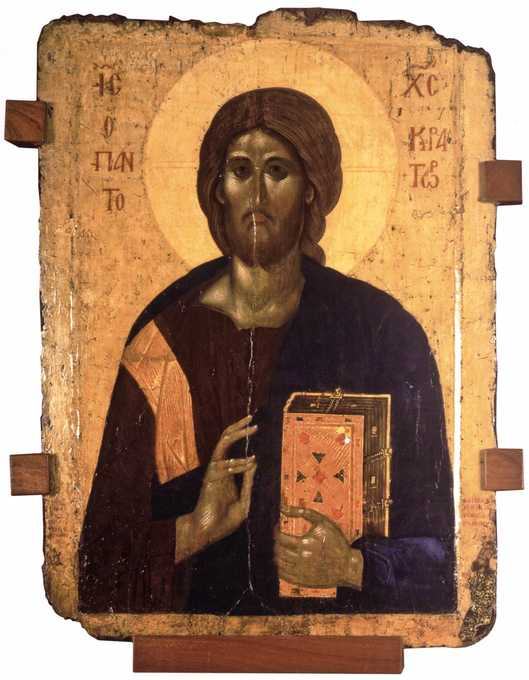
Bicci di Lorenzo · The Cleveland Museum of Art - Christ Pantocrator (icon)
Unknown icon painter · Hermitage, St. Petersburg - Icon of the New Testament Trinity
Unknown icon painter · The Cleveland Museum of Art - The Annunciation
Botticelli · The Metropolitan Museum of Art, New York - The Adoration of the Magi
Botticelli · National Gallery of Art, Washington - The Porta Portello, Padua
Canaletto · National Gallery of Art, Washington - The Calling of Saint Matthew
Caravaggio · San Luigi dei Francesi, Rome - The Inspiration of Saint Matthew
Caravaggio · San Luigi dei Francesi, Rome - The Denial of Saint Peter
Caravaggio · The Metropolitan Museum of Art, New York - The Burial of Saint Lucy
Caravaggio · Santa Lucia alla Badia, Syracuse - The Adoration of the Shepherds
Caravaggio · Museo Regionale, Messina - The Crowning with Thorns
Caravaggio · Kunsthistorisches Museum, Vienna - Christ at the Column
Caravaggio · Musée des Beaux-Arts, Rouen - Ecce Homo
Caravaggio · Palazzo Bianco, Genoa - Supper at Emmaus
Caravaggio · National Gallery, London - Supper at Emmaus
Caravaggio · Pinacoteca di Brera, Milan - Saint Francis of Assisi in Ecstasy
Caravaggio · Wadsworth Atheneum, Hartford - The Sacrifice of Isaac
Caravaggio · Uffizi, Florence - The Flagellation of Christ
Caravaggio · Museo di Capodimonte, Naples - The Incredulity of Saint Thomas
Caravaggio · Sanssouci, Potsdam - Madonna of Loreto
Caravaggio · Sant’Agostino, Rome - The Death of the Virgin
Caravaggio · Louvre, Paris - The Entombment
Caravaggio · Vatican Pinacoteca - Rest on the Flight into Egypt
Caravaggio · Galleria Doria Pamphilj, Rome - The Annunciation
Caravaggio · Musée des Beaux-Arts, Nancy - The Denial of Saint Peter
Caravaggio · Metropolitan Museum of Art, New York - Saint Francis in Meditation
Caravaggio · Museo Civico, Cremona - Madonna of the Rosary
Caravaggio · Kunsthistorisches Museum, Vienna - The Penitent Magdalene
Caravaggio · Galleria Doria Pamphilj, Rome - Saint Jerome Writing
Caravaggio · Galleria Borghese, Rome - The Seven Works of Mercy
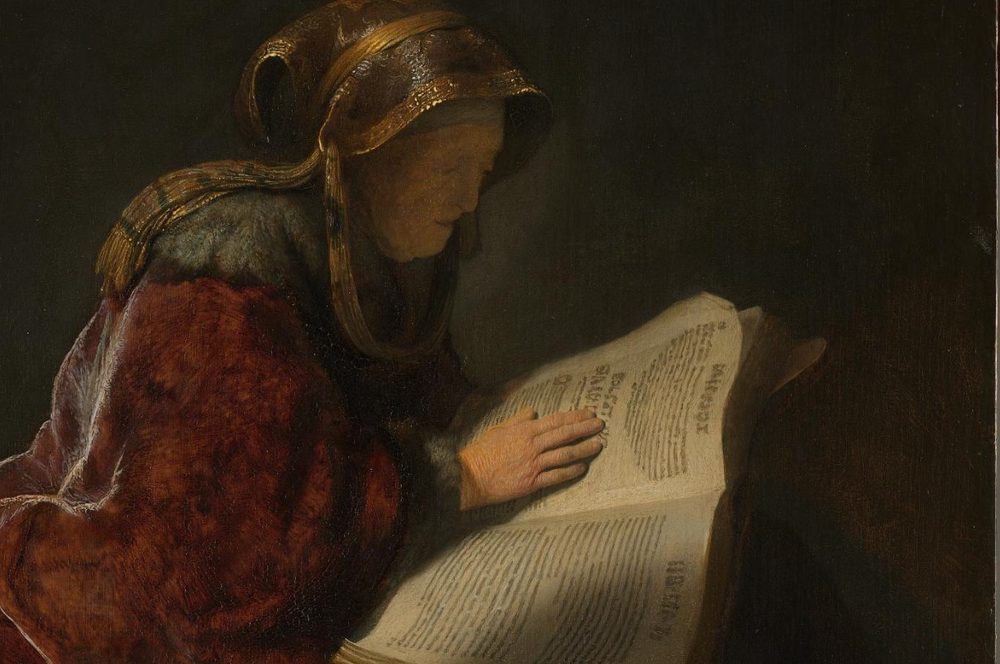
Caravaggio · Pio Monte della Misericordia, Naples - Old Woman Reading, Probably the Prophetess Anna
Rembrandt van Rijn, 1631 · Rijksmuseum, Amsterdam (public domain) - The Sermon on the Mount
Carl Heinrich Bloch · Frederiksborg Palace, Hillerød - The Sermon on the Mount
Claude Lorrain · Frick Collection, New York - The Coronation of the Virgin
Diego Velázquez · Museo del Prado, Madrid - The Feast of the Passover
Dieric Bouts · Sint-Pieterskerk, Leuven - The Last Communion of Saint Jerome
Domenichino · Vatican Pinacoteca - The Visitation
Domenico Ghirlandaio · Musée du Louvre, Paris - The Apostles Peter and Paul
El Greco · Hermitage, St. Petersburg - Pentecost
El Greco · Museo del Prado, Madrid - The Institution of the Eucharist
Federico Barocci · Santa Maria sopra Minerva, Rome - The Monastery of Montserrat
Photograph, about 1900 · Library of Congress, Washington - The Healing of Palladia by Saints Cosmas and Damian
Fra Angelico · National Gallery of Art, Washington - The Annunciation
Fra Angelico · Museo del Prado, Madrid - Saint Nicholas of Myra
Fra Angelico · San Domenico, Fiesole - Saint Benedict Orders Saint Maurus to the Rescue of Saint Placidus
Fra Filippo Lippi · National Gallery of Art, Washington - The Coronation of the Virgin
Fra Filippo Lippi · Uffizi, Florence - The Annunciation
Fra Filippo Lippi · National Gallery of Art, Washington - Christ Washing the Disciples’ Feet
Garofalo · National Gallery of Art, Washington - The Adoration of the Shepherds
Georges de La Tour · Musée du Louvre, Paris - Saint Francis before the Sultan
Giotto · Basilica of Saint Francis, Assisi - Saint Francis before the Sultan
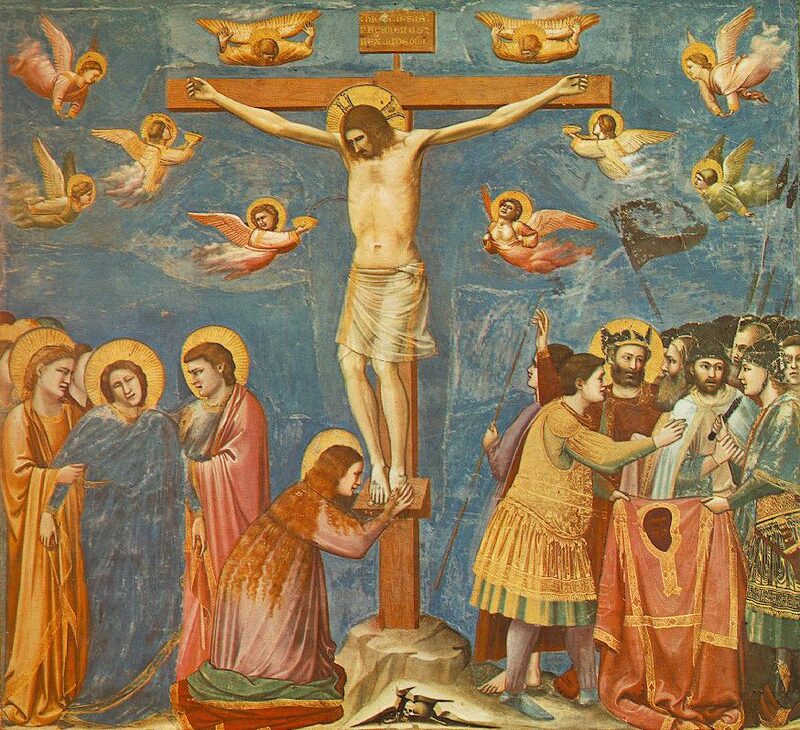
Giotto · Basilica of San Francesco, Assisi - The Crucifixion
Giotto · Scrovegni Chapel, Padua - The Road to Calvary
Giotto · Scrovegni Chapel, Padova - Christ among the Doctors
Giotto · Scrovegni Chapel, Padova - The Nativity
Giotto · Scrovegni Chapel, Padova - The Ascension
Giotto · Scrovegni Chapel, Padova - Entry into Jerusalem
Giotto · Scrovegni Chapel, Padua - The Marriage at Cana
Giotto · Scrovegni Chapel, Padua - The Agony in the Garden
Giovanni Bellini · National Gallery, London - The Transfiguration
Giovanni Bellini · Museo di Capodimonte, Naples - The Mystic Marriage of Saint Catherine of Siena
Giovanni di Paolo · The Metropolitan Museum of Art, New York - The Adoration of the Shepherds
Giovanni Girolamo Savoldo · National Gallery of Art, Washington - Interior of Saint Peter’s, Rome
Giovanni Paolo Pannini · National Gallery of Art, Washington - Confession
Giuseppe Maria Crespi · Gemäldegalerie, Dresden - The Mass of Saint Gregory
Hans Baldung · The Cleveland Museum of Art - The Mass of Saint Gregory
Hans Baldung Grien · Kunsthalle, Karlsruhe - The Last Judgement
Hans Memling · National Museum, Gdańsk - Roses de Nice on a Table
Henri Fantin-Latour · National Gallery of Art, Washington - Saint John on Patmos
Hieronymus Bosch · Gemäldegalerie, Berlin - The Conversion of Saint Paul
Jacopo Tintoretto · National Gallery of Art, Washington - The Adoration of the Lamb
Jan van Eyck · St. Bavo’s Cathedral, Gent - Pentecost
Jean Restout · Musée du Louvre, Paris - Shepherd with His Flock
Jean-Victor Bertin · National Gallery of Art, Washington - The Ascension
John Singleton Copley · Museum of Fine Arts, Boston - The First Mass of Saint John of Matha
Juan Carreño de Miranda · Louvre, Paris - The Last Supper
Juan de Juanes · Museo del Prado, Madrid - The Agony in the Garden
Mantegna · National Gallery, London - The Creation of Adam
Michelangelo · Sistine Chapel, Vatican - The Prophet Daniel
Michelangelo · Sistine Chapel, Vatican - The Prophet Isaiah
Michelangelo · Sistine Chapel, Vatican - The Prophet Zechariah
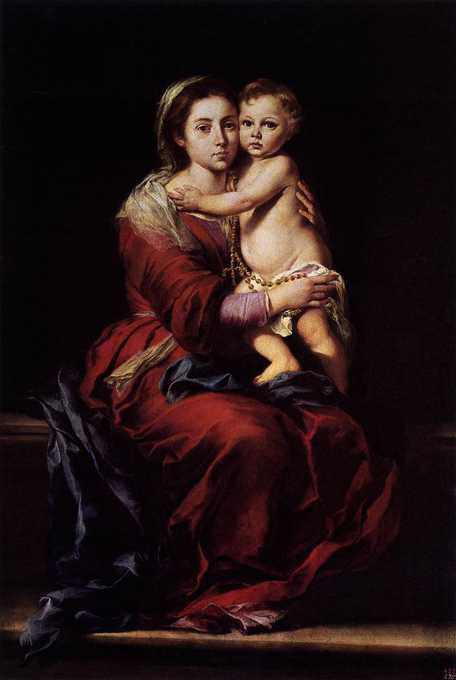
Michelangelo · Sistine Chapel, Vatican - Virgin and Child with a Rosary
Murillo · Museo del Prado, Madrid - The Basilica of Constantine with a Doric Colonnade
Niccolò Codazzi · National Gallery of Art, Washington - Saints Peter and John Healing the Lame Man
Nicolas Poussin · The Metropolitan Museum of Art, New York - The Baptism of Christ
Nicolas Poussin · National Gallery of Art, Washington - The Holy Family on the Steps
Nicolas Poussin · The Cleveland Museum of Art - The Assumption of the Virgin
Palma il Vecchio · Gallerie dell’Accademia, Venice - The Wedding at Cana
Paolo Veronese · Musée du Louvre, Paris - The Council of Trent
Pasquale Cati · Santa Maria in Trastevere, Rome - Antwerp Cathedral
Peeter Neeffs · National Gallery of Art, Washington - Christ among the Doctors
Pensionante del Saraceni · Capitoline Museums, Rome - Christ Giving the Keys to Saint Peter
Perugino · Sistine Chapel, Vatican - Saint Teresa of Ávila Interceding for Souls in Purgatory
Peter Paul Rubens · The Metropolitan Museum of Art, New York - The Recognition of Joseph by his Brothers
Peter von Cornelius · Alte Nationalgalerie, Berlin - The Resurrection
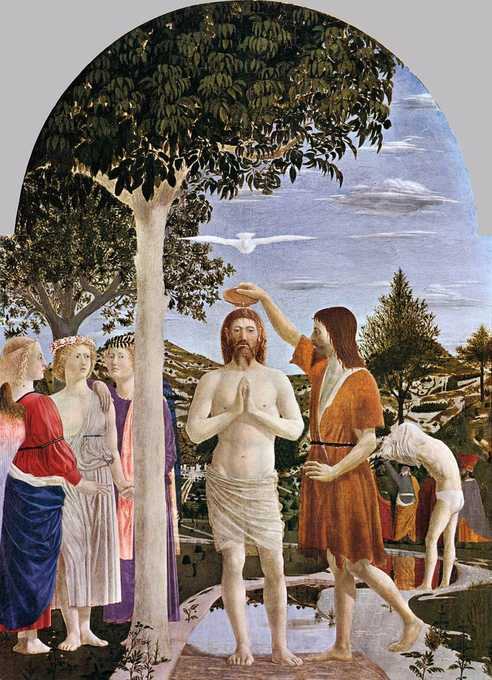
Piero della Francesca · Museo Civico, Sansepolcro - The Baptism of Christ
Piero della Francesca · National Gallery, London - The Prodigal Son
Pierre Puvis de Chavannes · National Gallery of Art, Washington - The Baptism of Christ
Pietro Perugino · Sistine Chapel, Vatican - The School of Athens
Raphael · Apostolic Palace, Vatican - Saint George and the Dragon
Raphael · National Gallery of Art, Washington - Saint Michael the Archangel
Raphael · Louvre, Paris - The Fall of the Rebel Angels
Pieter Bruegel the Elder · Royal Museums of Fine Arts, Brussels - The Disputation of the Holy Sacrament
Raphael · Apostolic Palace, Vatican - Paul Preaching in Athens
Raphael · Victoria and Albert Museum, London - The Transfiguration
Raphael · Vatican Pinacoteca - The Return of the Prodigal Son
Rembrandt · Hermitage, St. Petersburg - The Parable of the Labourers in the Vineyard
Rembrandt · Hermitage, St. Petersburg - Simeon with the Infant Jesus in the Temple
Rembrandt · Nationalmuseum, Stockholm - Jews in the Synagogue
Rembrandt (etching) · Teylers Museum, Haarlem - Saint Jerome
Ribera · Galleria Doria Pamphilj, Rome - The Seven Sacraments
Rogier van der Weyden · KMSKA, Antwerp - The Resurrection
Sebastiano Ricci · Dulwich Picture Gallery, London - Saint Jerome and the Angel
Simon Vouet · National Gallery of Art, Washington - The Institution of the Rosary
Tiepolo · Gesuati Church, Venice - Christ at the Sea of Galilee
Circle of Tintoretto (probably Lambert Sustris) · National Gallery of Art, Washington - Christ Carrying the Cross
Titian · Museo del Prado, Madrid - The Assumption of the Virgin
Titian · Santa Maria Gloriosa dei Frari, Venice - The Vision of Saint Augustine
Vittore Carpaccio · Scuola di San Giorgio degli Schiavoni, Venice - Saint Jerome and the Lion in the Monastery
Vittore Carpaccio · Scuola di San Giorgio degli Schiavoni, Venice
Pictures in the History of the Church
The pictures on the History of the Church page and in the home page strip, in order. Those not in the public domain are used under the Creative Commons license shown, with their owners named.
- Pentecost
El Greco · Public domain - The Martyrdom of Saint Clement I, Pope
Agostino Ciampelli · Public domain (The Met, CC0) - Photographic Facsimiles of the Remains of the Epistles of Clement of Rome. Made from the
Roger Fenton · Public domain (The Met, CC0) - Papyrus letter in Greek
Unknown · Public domain (The Met, CC0) - S. Ignace, martyr (St. Ignatius, Martyr), February 1st, from "Les Images De Tous Les Sainc
Jacques Callot · Public domain (The Met, CC0) - The Institution of the Eucharist
Fra Angelico · Public domain - The Good Shepherd
Early Christian painter · Public domain - The Glorification of the Eucharist
Peter Paul Rubens · Public domain (The Met, CC0) - S. Polycarpe (St. Polycarp), February 23rd, from "Les Images De Tous Les Saincts et Sainte
Jacques Callot · Public domain (The Met, CC0) - Glass bowl fragment with gold leaf and painted decoration
Unknown · Public domain (The Met, CC0) - Christ Giving the Keys to Saint Peter
Perugino · Public domain - Bowl Base with Miracle Scenes
Unknown · Public domain (The Met, CC0) - The Apostles Peter and Paul
El Greco · Public domain - Crucifix with Scenes of the Passion
Unknown · Public domain (Cleveland Museum of Art, CC0) - Saint Hippolytus of Rome, martyr
Anonymous Mexican painter · Public domain (The Met, CC0) - The Baptism of Christ
Piero della Francesca · Public domain - Icon of the Virgin and Child, Hodegetria variant
Byzantine or Crusader workshop · Public domain (The Met, CC0) - The Virgin of Mercy
Enguerrand Quarton · Public domain - The Trinity
Andrei Rublev · Public domain - Leaf from a Gospel Book with Four Standing Evangelists
Unknown · Public domain (The Met, CC0) - Gospel Book
Unknown · Public domain (The Met, CC0) - Icon with Three Church Fathers
Unknown · Public domain (The Met, CC0) - Carthage
William Linton · Public domain (Cleveland Museum of Art, CC0) - Saint Augustine
Botticelli · Public domain - Medallion of St. John Chrysostom
Unknown · Public domain (The Met, CC0) - Saint Augustine
Unknown · Public domain (The Met, CC0) - Portable Icon with the Virgin Eleousa
Unknown · Public domain (The Met, CC0) - Christ among the Doctors
Giotto · Public domain - Saint Benedict
Francisco de Zurbarán · Public domain (The Met, CC0) - The Mass of Saint Gregory
Hans Baldung Grien · Public domain - Icon with Christ Pantokrator
Unknown · Public domain (The Met, CC0) - The Deësis mosaic
Byzantine mosaicist · Public domain - The Disputation of the Holy Sacrament
Raphael · Public domain - The Triumph of Saint Thomas Aquinas
Andrea da Firenze · Public domain - Title Page of the Gospel of John
Sargis · Public domain (The Met, CC0) - Bible
Unknown · Public domain (The Met, CC0) - Martin Luther as an Augustinian Monk
Lucas Cranach the Elder · Public domain (The Met, CC0) - The Lord on the Throne Surrounded by Four Evangelists, plate 2 from "The Apocalypse"
Hans Burgkmair · Public domain (The Met, CC0) - M. Ulrich Zwingli
Unknown (Library of Congress) · Public domain (Library of Congress) - Martin Luther (1483–1546)
Lucas Cranach the Elder · Public domain (The Met, CC0) - Martin Luther, Bust to the Left
Lucas Cranach the Elder · Public domain (The Met, CC0) - The Bible, The Book of Common Prayer, The Book of Psalms with Royal Stuart arms
Robert Barker · Public domain (The Met, CC0) - John Calvin (1509–1564)
Sebastian Dadler · Public domain (The Met, CC0) - The Council of Trent
Pasquale Cati · Public domain - The entry of Marcantonio Colonna and the Christian army in Rome after victory at the battl
Francesco Tramezzino · Public domain (The Met, CC0) - Certificate of Bible Society
Asher Brown Durand · Public domain (The Met, CC0) - Cardinal John Henry Newman, 1801-1890
Unknown (Library of Congress) · Public domain (Library of Congress) - The Immaculate Conception
Murillo · Public domain - The oecumenical council of the Vatican, convened December 8th 1869
Unknown (Library of Congress) · Public domain (Library of Congress) - Pope Leo XIII
Henry Schile · Public domain (Library of Congress) - A Group of Laborers
Jan Toorop · Public domain (Cleveland Museum of Art, CC0) - Saint Jerome
Ribera · Public domain - Northeast Transept of Canterbury Cathedral (recto); Architectural Details (verso)
Anonymous English painter · Public domain (The Met, CC0) - Pope Pius X
Unknown (Library of Congress) · Public domain (Library of Congress) - Bifolium with the Decretals of Gratian
Master Honoré · Public domain (The Met, CC0) - View of St. John Lateran, Rome
Gillis van Coninxloo · Public domain (The Met, CC0) - Pope Pius XI
Bain News Service · Public domain (Library of Congress) - Pius XI, Pope, 1857-1939 (Achille Ratti - Pope, 1922-39)
Unknown (Library of Congress) · Public domain (Library of Congress) - Ivory Panel with Saint Peter
Unknown · Public domain (The Met, CC0) - Saint Jerome as Scholar
El Greco · Public domain (The Met, CC0) - The Assumption of the Virgin
Titian · Public domain - View of St. Peter's and the Vatican from the Janiculum
Richard Wilson · Public domain (The Met, CC0)
Pictures on the Miracles page
Those not in the public domain are used under the Creative Commons license shown, with their owners named.
Portraits of the saints
The portraits of the twenty best-known saints on the Saints page. Those under a Creative Commons licence are used with the license and source page given.
- The Blessed Virgin Mary
Madonna Advocata icon, Rome · CC BY-SA 4.0 - Saint Joseph
Guido Reni, Saint Joseph with the Infant Jesus · Public domain - Saint Peter the Apostle
Icon of Saint Peter, Mount Sinai, 6th century · Public domain - Saint Paul the Apostle
Fresco of Saint Paul, the Grotto of Saint Paul, Ephesus · Public domain - Saint John the Baptist
Titian, Saint John the Baptist · Public domain - Saint John the Apostle and Evangelist
Peter Paul Rubens, Saint John the Apostle · Public domain - Saint Augustine of Hippo
Philippe de Champaigne, Saint Augustine · Public domain - Saint Thomas Aquinas
Carlo Crivelli, Saint Thomas Aquinas · Public domain - Saint Francis of Assisi
Fresco of Saint Francis, Sacro Speco, Subiaco · Public domain - Saint Catherine of Siena
Giovanni Battista Tiepolo, Saint Catherine of Siena · Public domain - Saint Teresa of Ávila
Portrait of Saint Teresa of Ávila, Prado Museum · Public domain - Saint Thérèse of Lisieux
Saint Thérèse of Lisieux, photograph (1890s) · Public domain - Saint Ignatius of Loyola
Portrait of Saint Ignatius of Loyola · Public domain - Saint Benedict of Nursia
Hans Memling, Saint Benedict · Public domain - Saint Patrick
Stained-glass window of Saint Patrick, Our Lady’s Island, Ireland · CC BY-SA 3.0 - Saint Anthony of Padua
Vincenzo Foppa, Saint Anthony of Padua · Public domain (NGA) - Saint Teresa of Calcutta (Mother Teresa)
Saint Teresa of Calcutta, photograph · CC BY-SA 2.0 - Saint John Paul II
Pope John Paul II, Adamello, 1988, photograph · CC BY-SA 3.0 - Saint Pio of Pietrelcina
Padre Pio, photograph · Public domain - Saint Jerome
Matthias Stom, Saint Jerome · Public domain
Church Fathers in the Bible
The small portraits beside the Church Fathers’ commentary in the Bible reader.
- St. Basil the Great
Byzantine mosaic · Public domain - St. Augustine
Philippe de Champaigne, Saint Augustine · Public domain - St. Gregory of Nyssa
Byzantine fresco · Public domain - St. Clement of Rome
Mosaic, St. Sophia Cathedral, Kyiv (11th century) · Public domain - St. Justin Martyr
Theophanes the Cretan, fresco, Stavronikita Monastery, Mount Athos · Public domain - St. Irenaeus of Lyons
Lucien Bégule, stained glass (1901), Church of Saint-Irénée, Lyons · Public domain - St. Theophilus of Antioch
Engraving (17th century), Pitts Theology Library, Emory University · Public domain - St. Hippolytus of Rome
Ancient statue, Vatican Library · Photograph by Dobroš, © Dana Stehlíková, CC BY-SA 4.0 - St. Cyprian of Carthage
Icon · Public domain - St. Thomas Aquinas
Carlo Crivelli, Saint Thomas Aquinas, National Gallery, London · Public domain
 NewInteractiveOCIA Marriage NavigatorAnswer a few questions about your marriageStart→