On this page

Roman Missal Guide

What should the Mass look like in a parish? Who does what, when do we stand, and why does the priest do what he does? This guide answers those questions, part by part, in the order of the Mass.

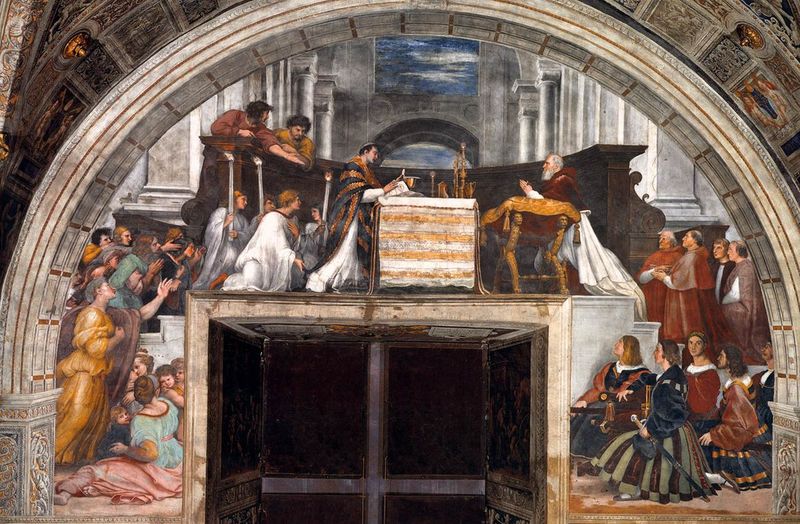
Raphael · The Mass at Bolsena

This guide follows the Pastoral Notes for the Celebration of the Eucharist, which the Canadian bishops (CCCB) published in 2012 with the new translation of the Roman Missal. We have put the Notes in our own words and shortened them. Under each section, What the General Instruction says sums up, in a few lines, the paragraphs of the Church’s official rules for the Mass, the General Instruction of the Roman Missal (GIRM), and gives their numbers so you can look them up. A few details, such as when to kneel and how to receive Communion, are the rules for Canada.

Part I

The Mass and the People of God

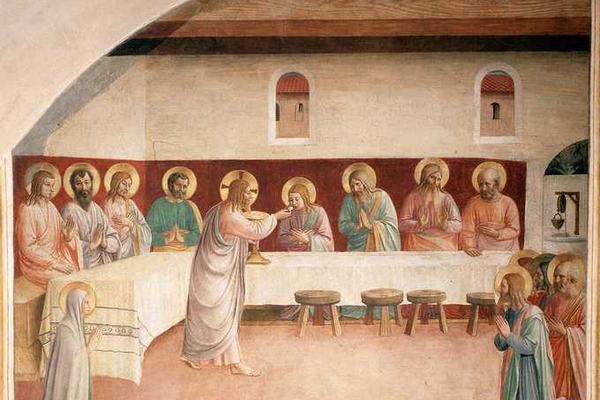
Fra Angelico · The Institution of the Eucharist

1What happens at Mass

Worship is first of all something Christ does. At Mass He acts for His people, and His people, moved by the Holy Spirit, answer Him with praise. The liturgy is how the Church, here on earth, enters the life of the Father, the Son and the Holy Spirit.

By Baptism we became members of Christ’s Body. So when Christ acts in the liturgy, His Body, the Church, acts with Him. Together we praise God and pray for the salvation of the world.

At the heart of the Mass is the Paschal Mystery: Jesus passed through death to risen life, and He takes us with Him. At every Mass the Church remembers His death and resurrection, and by the power of the Holy Spirit His one sacrifice is made present for us.

The Mass is a sacrifice and a meal at the same time. At the Last Supper Jesus told His disciples to do this in memory of Him (1 Corinthians 11:23-26). The bread and wine become His Body and Blood, and those who receive them become more fully His Body. In the readings God speaks to us, in the Eucharistic Prayer we answer Him, and in Communion the covenant between God and His people is sealed again.

Jesus gave the Eucharist under the forms of bread and of wine. His Body given up and His Blood poured out, consecrated separately on the altar, show His death on the cross. For this reason both are given the same reverence, and where possible the people receive both.

The Mass also gives us a first taste of heaven. Around the altar we join the angels and the saints in their praise, and we share the food of God’s Kingdom.

What the General Instruction says GIRM 2, 16, 27
2

The Mass is a sacrifice. At the Last Supper Christ gave the Church the memorial of His death and resurrection, so that the sacrifice of the cross is made present until He comes again.

16

The Mass is the centre of Christian life, for the whole Church and for each believer. In it God makes the world holy and we worship the Father through Christ.

27

At Mass God’s people are called together, with a priest who presides in the person of Christ. Christ is present in the gathered people, in the priest, in His word and above all in the Eucharist.

A short summary in our own words of the paragraphs of the General Instruction of the Roman Missal (GIRM) shown by number. Read the official text on vatican.va; paragraphs marked Canada include an adaptation found in the Canadian edition (CCCB).
2Sunday, the Lord’s Day

Every Sunday is a small Easter. It is the Church’s first and oldest feast day: the day Christ rose from the dead and the first day of the new creation.

The early Christians also called Sunday the “eighth day”. It stands outside the old seven-day week and points to the day that has no end. Pope John Paul II wrote that to understand Sunday we have to look at the Resurrection, because each Sunday brings us back to Easter.

Sunday stands above the other days of the week. In the same way, the Easter Triduum, from the evening of Holy Thursday to Easter Sunday, stands above the whole Church year.

3The gathered people

Since the first days of the Church, Christians have gathered on the Lord’s Day because God calls them together. The Notes call this gathering the assembly.

Christ is present in the assembly. He promised: “Where two or three are gathered in my name, I am there among them” (Matthew 18:20). He is also present in the priest, in the word of God and, above all, in His Body and Blood on the altar.

Through Baptism every member of the assembly shares in Christ’s priesthood. The Second Vatican Council taught that the faithful offer Christ to the Father “not only through the hands of the priest, but also with him”, and they offer themselves along with him. The priesthood of the baptized and the ordained priesthood are joined in this one offering.

So the first aim of every Mass is the full, conscious and active participation of everyone present. This does not mean that everyone has to be doing something all the time. It means:

  • greeting one another warmly as you arrive;
  • listening to the readings as God’s word to you today;
  • making the Eucharistic Prayer your own and answering it with the Great Amen;
  • receiving Communion, the sign of the covenant;
  • going out at the end to live what you have received.

Taking part is personal, but it is not private. We do not come to pray alone side by side. We come to be one Body. The Directory for Masses with Children explains how children can take part fully in the Sunday Mass too.

What the General Instruction says GIRM 5, 95, 96
5

All the baptized share in a royal priesthood. Their offering is joined to Christ’s sacrifice through the ministry of bishops and priests, because the Mass is the action of the whole Church.

95

The faithful are a holy and priestly people. They offer Christ to the Father not only through the priest’s hands but with him, and they learn to offer themselves.

96

The faithful form one body in hearing the word, praying, singing and above all in sharing the Lord’s table. Common postures show this unity.

A short summary in our own words of the paragraphs of the General Instruction of the Roman Missal (GIRM) shown by number. Read the official text on vatican.va; paragraphs marked Canada include an adaptation found in the Canadian edition (CCCB).

Part II

Who Serves at Mass

4Every minister serves the people

Everyone who has a role at Mass is first a member of the assembly. Each minister has a particular task, and each serves the whole Church in Christ’s name.

The clearest picture of the Church is a Mass in the cathedral: the bishop presides, surrounded by his priests, deacons and other ministers, with many of the people of the diocese around them.

The Notes give a few rules for lay ministries:

  • All lay ministries at Mass are open to both women and men.
  • The people who serve should look like the parish as a whole, in age, sex and background.
  • They are chosen for their gifts and should keep receiving training, spiritual, liturgical and practical.
  • As a rule, each person does only one ministry at a given Mass.
  • Ministers take part in the whole Mass, not only in their own task.
What the General Instruction says GIRM 91, 97
91

The Mass is the action of Christ and of the whole Church. Each member takes part according to their own order and role, and all should do only their own part.

97

The faithful should gladly accept when they are asked to serve in some ministry at Mass.

A short summary in our own words of the paragraphs of the General Instruction of the Roman Missal (GIRM) shown by number. Read the official text on vatican.va; paragraphs marked Canada include an adaptation found in the Canadian edition (CCCB).

5The bishop, the priest and the deacon

The bishop

The bishop is the first witness to God’s word in his diocese and the one who chiefly presides at its Eucharist. He calls the local Church together in God’s name. He preaches from the teaching chair of Christ and the apostles, and he presides at the altar, where he receives the people’s gifts and gathers them into the Eucharistic Prayer.

Through the apostles, from whom his office comes down, and through his communion with the Pope and the other bishops, he links the parish Mass to the whole Church, in every place and every age.

The priest

The priest shares in Holy Orders through the bishop and presides in his name. In the Liturgy of the Word he proclaims the Gospel and teaches in Christ’s name. At the altar he does what Christ did at the Last Supper: he takes the bread, blesses it, breaks it and gives it. He stands for Christ, the Head of the Body.

His first goal is to draw everyone into the celebration. The Notes list the ways he does this: a warm manner, greetings that are real, open gestures, an unhurried pace, a clear voice for the prayers, and attention to the whole assembly. Good preparation, done with the other ministers, helps with all of it. When he makes a comment, it should be short and prepared, and it should point to the liturgy, not to himself.

The deacon

The deacon also receives Holy Orders. He is the first assistant of the bishop or the priest. He reads the Gospel, helps at the altar and is the first minister of the chalice. He gives the people any directions they need, announces the intentions of the Universal Prayer and sends the people out at the end.

Normally one deacon does all of these things at a given Mass, because his work at the ambo and his work at the altar belong together. He needs a microphone for the parts he does from the chair or the ambo. A master of ceremonies also helps a great deal at larger celebrations.

What the General Instruction says GIRM 92, 93, 94
92

Every Mass is directed by the bishop, in person or through his priests. When he presides with his priests, the unity of the Church is shown most clearly.

93

The priest presides in the person of Christ over the people and their prayer, proclaims the word, unites the people to his offering and gives them the Bread of life. He should serve with dignity and humility.

94

After the priest, the deacon has first place among the ministers. He reads the Gospel, sometimes preaches, announces the intentions, assists the priest, gives Communion, especially from the chalice, and gives directions to the people.

A short summary in our own words of the paragraphs of the General Instruction of the Roman Missal (GIRM) shown by number. Read the official text on vatican.va; paragraphs marked Canada include an adaptation found in the Canadian edition (CCCB).

6Other ministers

Ministers of hospitality

The Church is God’s family, so the first ministry anyone meets is a welcome. The whole assembly shares in it, but the ministers of hospitality greet people at the door, especially newcomers, visitors and anyone who needs help, and look after people during Mass. In this way they show the welcome of God, who is the host of the feast.

Ministers of music

The first minister of music is the assembly itself. Cantors, choirs, organists, other musicians and song leaders help the people to sing.

  • The cantor sings the verses of the Responsorial Psalm from the ambo, because the psalm is part of God’s word. A song leader does not use the ambo for anything else.
  • The musicians should have a place among the people, with enough room, where they can lead the singing well.
  • The human voice comes first. Recorded music should never replace the people’s singing or the musicians. Use it only in real need, and only to support the singing.
  • Instruments serve the singing. They should not take its place or cover it up. When a church is built or renovated, the choice and placing of the organ deserves careful thought.

Servers

Servers carry the thurible, the cross and the candles, and they help at the chair and the altar. Good serving is quiet and orderly and keeps the Mass flowing. Servers should not move around during the readings, the prayers or the times of silence, and they should show the rest of the people how to stand, sit and take part.

Readers

Readers proclaim the first and second readings. When they read, Christ speaks through them. It is better to have a different reader for each reading, so that the one word of God is heard in more than one voice. Readers need formation to help them pray with the readings, and training to use the microphone well. The cantor who sings the psalm is a minister of the word too.

Ministers of Communion

The ordinary ministers of Communion are the priest and the deacon. Lay people who have been instituted as acolytes or commissioned as ministers of Communion help them when needed; the Church calls them “extraordinary” ministers.

  • They should know how Communion is organized in their parish and be present for the whole Mass.
  • Some of them take Communion from the Sunday Mass to the sick. This joins the sick to the parish and shows the parish’s care for them.

Commentators, sacristans and the liturgy committee

Where there is a commentator, he or she usually reads the parish announcements, before Mass or after the Prayer after Communion, and may read the intentions of the Universal Prayer. Sacristans prepare everything for Mass and look after the furnishings and the things used. The liturgy committee helps the parish learn about the liturgy and prepares the seasons and the Sunday Masses well in advance.

What the General Instruction says GIRM 100, 103, 104, 106
100

Where there is no instituted acolyte, lay people may serve at the altar, carrying the cross, candles and thurible, or help give Communion as extraordinary ministers.

103

The choir has its own role: to sing its parts well and to help the people take part by singing. The same applies to other musicians, especially the organist.

104

It is fitting to have a cantor or choir director to lead and support the people’s singing.

106

Larger churches should have a master of ceremonies to see that the liturgy is carried out with order and devotion.

A short summary in our own words of the paragraphs of the General Instruction of the Roman Missal (GIRM) shown by number. Read the official text on vatican.va; paragraphs marked Canada include an adaptation found in the Canadian edition (CCCB).

Part III

Taking Part with Body and Voice

7Prayer, silence and the responses

At Mass the Church prays “through him, and with him, and in him”: every liturgical prayer is Christ’s prayer, offered to the Father. The priest says the main prayers for the whole assembly: the Collect, the Prayer over the Offerings, the Prayer after Communion and, above all, the Eucharistic Prayer. The people have their own prayers, songs and responses.

  • After “Let us pray” there is silence. It should be long enough for people to actually pray.
  • The Collect, the Prayer over the Offerings and the Prayer after Communion each close a procession: the entrance, the gifts and Communion. The priest prays them firmly, so that it is clear one part has ended and the next is starting.
  • Some prayers, such as the Our Father, are said by everyone together.
  • There are also times of silence after the readings and the homily, so that what we heard can sink in.

“The Lord be with you.” “And with your spirit.”

This very old greeting comes back again and again during Mass. It keeps the priest and the people together in one conversation from beginning to end. The members of the Body of Christ wish one another the presence of the Lord, and there is no better greeting between Christians.

“Thanks be to God”

This answer sums up the whole Mass, because the Mass is one great act of thanks. Said after the dismissal, it sends us out to keep giving thanks in daily life. Responses and acclamations like these are the people’s own voice in the Mass, and they work best when they are sung.

What the General Instruction says GIRM 34, 35, 45, 54
34

The dialogues between priest and people and the acclamations matter a great deal. They do more than show that we are together: they build communion.

35

The people’s acclamations and responses are the basic level of active participation at every Mass.

45

Silence is part of the Mass. Its meaning depends on the moment: recollection before prayer, reflection after the readings and homily, praise after Communion.

54

After “Let us pray” everyone keeps a short silence. Then the priest says the Collect, which expresses the character of the day. It ends “… in the unity of the Holy Spirit, God, for ever and ever”, without the word “one” (decree of the Canadian Conference of Catholic Bishops, 8 December 2020). (Canada)

A short summary in our own words of the paragraphs of the General Instruction of the Roman Missal (GIRM) shown by number. Read the official text on vatican.va; paragraphs marked Canada include an adaptation found in the Canadian edition (CCCB).

8Standing, sitting and kneeling

When everyone takes the same posture at the same time, it shows and builds up our unity as one Body.

Standing

Standing is the basic posture of Christians at prayer. It is the posture of people who believe in the Resurrection, a sign of respect for the Gospel, and the posture of those who offer and who make a covenant with God. Since the Second Vatican Council it has again become the usual posture at Mass. People who are old, sick, disabled or tired are free to sit whenever they need to, and priests should tell them so.

We stand:

  • for the Introductory Rites, from the entrance song to the end of the Collect;
  • for the Alleluia and the Gospel;
  • for the Creed and the Universal Prayer;
  • from “Pray, brothers and sisters” to the end of the Prayer over the Offerings;
  • for the Communion Rite, from the Our Father until all have received;
  • for the Prayer after Communion and the Concluding Rites.

Standing also helps everyone sing the acclamations properly.

Sitting

Sitting is the posture of listening and reflection. We sit for the first reading, the psalm, the second reading and the homily; during the preparation of the gifts, until we are incensed or until “Pray, brothers and sisters”; and for any longer silence after Communion.

Kneeling

Kneeling is the posture of humility and repentance. It belongs especially to Good Friday, to penitential services and to the Litany of the Saints outside Sundays and Easter Time.

In Canada, everyone kneels for the Consecration, unless illness, lack of space, a very large crowd or another good reason prevents it. Those who do not kneel make a deep bow when the priest genuflects after the Consecration. Where people already kneel from the Holy, Holy, Holy to the end of the Eucharistic Prayer, that good custom may continue.

What the General Instruction says GIRM 42, 43
42

The postures and gestures of everyone at Mass should make the celebration beautiful and simple, show what each part means and help all to take part.

43

When the people stand, sit and kneel. In Canada they kneel for the Consecration unless prevented, and those who do not kneel bow deeply when the priest genuflects. The custom of kneeling from the Holy, Holy, Holy to the end of the Eucharistic Prayer may be kept. (Canada)

A short summary in our own words of the paragraphs of the General Instruction of the Roman Missal (GIRM) shown by number. Read the official text on vatican.va; paragraphs marked Canada include an adaptation found in the Canadian edition (CCCB).

9Gestures and processions

Hands raised in prayer

Standing with arms raised and open to God is the oldest Christian way to pray. Scholars call it the orans posture. The priest prays the main prayers this way: his open arms gather the people and reach out to God.

The Sign of the Cross

The Sign of the Cross marks us as baptized people who belong to the Father, the Son and the Holy Spirit and who share in Christ’s victory over death. It is not only a way to start a prayer. It is a statement of faith and a promise.

The sign of peace

We share the peace of Christ with a handshake or a bow and words such as “Peace be with you.”

Bowing

We bow to show respect for the signs of Christ’s presence: the altar, the cross and one another. There are two kinds of bow, a bow of the head and a deep bow from the waist.

Genuflecting

To genuflect is to bend the right knee to the floor. It honours Christ present in His Body and Blood. At Mass the priest genuflects three times: after he shows the consecrated bread, after he shows the chalice, and before “Behold the Lamb of God.” We also genuflect to the tabernacle, and to the Cross from its adoration on Good Friday until the Easter Vigil.

Processions

Processions show that we are a people on a journey towards God’s Kingdom, and they show our joy. On Palm Sunday and at the Easter Vigil the whole assembly can walk in one procession.

  • Processions are festive, so whenever possible we sing during them.
  • Psalms and litanies suit processions well. When a cantor sings the verses and the people sing a short refrain, nobody needs a book, and people can walk or watch.
  • On special days, people trained in movement may lead the palm procession or carry the bread and wine.
What the General Instruction says GIRM 274, 275
274

A genuflection, bending the right knee to the ground, is a sign of adoration, reserved for the Blessed Sacrament and for the Cross from Good Friday until the Easter Vigil. The priest genuflects three times during Mass.

275

A bow shows reverence. A bow of the head is made at the names of the Trinity, Jesus, Mary and the saint of the day; a deep bow is made to the altar and at certain moments of the Mass.

A short summary in our own words of the paragraphs of the General Instruction of the Roman Missal (GIRM) shown by number. Read the official text on vatican.va; paragraphs marked Canada include an adaptation found in the Canadian edition (CCCB).

10Singing

Singing is part of the liturgy itself, so much that the Mass can be called sung prayer. Our song comes from faith and from the joy of knowing God.

  • Every Mass should have some singing. Even without musicians or instruments, the people can sing the acclamations and responses.
  • Give special care to the Responsorial Psalm, the Gospel acclamation and the acclamations of the Eucharistic Prayer, above all the Great Amen.
  • A choir can add harmony or sing a verse alone. The choir and the people, or men and women, can also take turns.
  • The opening song gathers us into one Body and turns our minds to prayer.
  • As a rule, sing all the verses of a hymn. A hymn is written as a whole, especially when it moves through Father, Son and Spirit and ends with a doxology.

Keep a balance. The Eucharistic Prayer is the centre of the Mass and its acclamations should always be sung. Do not let the music of the opening, Communion or closing rites make those parts seem more important than the Eucharistic Prayer.

What the General Instruction says GIRM 39, 40, 41
39

Christians are told to sing psalms, hymns and spiritual songs. Singing shows the joy of the heart: “whoever sings well prays twice.”

40

Singing should have a large place at Mass, especially on Sundays and holy days, with care for what each congregation can do.

41

Gregorian chant has first place in the Roman liturgy, but other sacred music is welcome if it suits the liturgy and helps everyone take part.

A short summary in our own words of the paragraphs of the General Instruction of the Roman Missal (GIRM) shown by number. Read the official text on vatican.va; paragraphs marked Canada include an adaptation found in the Canadian edition (CCCB).

Part IV

The Church and the Things We Use

11The church building

The church is the home of God’s people and a place where Christ is present in the town or city. It should be warm, bright, open and welcoming, inside and out, and easy for everyone to enter. Its main purpose is to hold the people for Sunday Mass, though it must serve the other sacraments too. Its style should be simple and noble, and its materials real.

A place to gather

Ideally there is a large, welcoming space before the nave where people can meet and greet one another. You could say the liturgy starts when people leave home to come to church. If baptisms take place there, the sprinkling with water can happen there too. Other devotions should be planned so that there is a clear gap of time before Mass begins.

The nave

The shape of the nave and the placing of the furniture should show that the people are one and that the whole assembly celebrates the Mass. The sanctuary, where the altar, ambo and chair stand, is set apart, but placed so that the people gather around it. People should be able to see the altar and one another, with nothing blocking the way.

Sound and seating

Good acoustics come first when building or renovating: the people need to hear themselves speak and sing, so a lively, resonant room matters more than anything. A good sound system should suit the building and include help for people who are hard of hearing. Seats should be arranged so that nobody is far from the altar and people can move around easily.

What the General Instruction says GIRM 288, 294, 311
288

God’s people normally gather in a church, which should be worthy and suited to the liturgy and to the people’s active participation.

294

The layout of the church should reflect the gathered people, with each minister and the faithful in their proper place, and should show the unity of the whole assembly.

311

Seating for the faithful should let them see and follow the celebration, move easily to receive Communion, and not be reserved for private persons.

A short summary in our own words of the paragraphs of the General Instruction of the Roman Missal (GIRM) shown by number. Read the official text on vatican.va; paragraphs marked Canada include an adaptation found in the Canadian edition (CCCB).

12The altar, the chair and the ambo

The altar

The altar is a sign of Christ, our Passover, who was sacrificed for us, and of the table of the Last Supper. It should look like the table of a feast, be made of noble material and be the clear centre of attention. It should be high enough for everyone to see, with steps that people can easily climb, and with access for people with disabilities. There should be only one altar in the space, because there is one Christ and one sacrifice.

The chair

The priest’s chair stands for the teaching seat of Christ and the apostles, and it links the parish to its bishop and to the whole Church. It is where the priest presides over the Liturgy of the Word, as the altar is where he presides over the Liturgy of the Eucharist. It should be solid and dignified, in proportion to the altar and the ambo. The deacon sits beside it. Other priests and ministers sit nearby, but not right next to it.

The ambo

The ambo is the place for the readings and the psalm. It may also be used for the homily, the Universal Prayer and the Easter Proclamation (Exsultet), and for nothing else. There is only one ambo, because the word of God is one. It needs good light and a good microphone.

The altar, the chair and the ambo should stand in open space, close to the people. Flowers or other objects should not hide them. The altar is covered with a white cloth, and candles are best placed beside it, so that nothing distracts from the bread and the cup.

What the General Instruction says GIRM 296, 299, 309, 310
296

The altar is where the sacrifice of the cross is made present, the table of the Lord to which God’s people are called, and the centre of the thanksgiving.

299

The altar should stand free of the wall so that one can walk around it and celebrate facing the people, and it should be the centre toward which everyone’s attention turns.

309

The word of God needs a worthy, fixed place, the ambo, which is used only for the readings, the psalm and the Easter Proclamation, and may be used for the homily and the Universal Prayer.

310

The priest’s chair shows his role of presiding and is best placed at the head of the sanctuary, facing the people, but it should not look like a throne.

A short summary in our own words of the paragraphs of the General Instruction of the Roman Missal (GIRM) shown by number. Read the official text on vatican.va; paragraphs marked Canada include an adaptation found in the Canadian edition (CCCB).

13The tabernacle and the font

The tabernacle

For a very long time the Church has kept the consecrated Bread in a tabernacle, for the dying, for the sick and for adoration. A veil or another sign shows that the Eucharist is there, and a lamp burns before it all the time.

The tabernacle belongs in a noble, visible and beautiful place, suitable for prayer, but distinct from the altar. The diocesan bishop decides where it goes.

  • If it is in the sanctuary, it stands apart from the altar, because the altar is the centre that everyone looks to during Mass.
  • The ideal place is a chapel for private prayer and adoration that is connected to the church and easy to see.
  • Only a small amount of consecrated Bread is kept. Hosts from the tabernacle are not used for Communion at Mass, except when something unexpected makes it necessary.

The baptismal font

Baptism, together with Confirmation, is the way into the Eucharist and into full membership in Christ’s Body. The font should be large, deep enough to baptize adults and babies by immersion, and ideally with flowing water. Many fonts have eight sides, for the “eighth day” of the Resurrection. A font near the entrance reminds everyone of their own Baptism each time they come to Mass.

What the General Instruction says GIRM 314, 315, 316
314

The Blessed Sacrament is kept in a single, solid, locked tabernacle in a noble, prominent place in the church that is suitable for prayer.

315

It is better that the tabernacle not be on the altar where Mass is celebrated. The diocesan bishop decides whether it goes in the sanctuary, apart from the altar, or in a chapel joined to the church.

316

A lamp burns always near the tabernacle to show and honour Christ’s presence.

A short summary in our own words of the paragraphs of the General Instruction of the Roman Missal (GIRM) shown by number. Read the official text on vatican.va; paragraphs marked Canada include an adaptation found in the Canadian edition (CCCB).

14Bread, wine, vessels, books and vestments

Everything used at Mass should be as natural and real as possible: wax candles, a real bowl of water and a real branch for the sprinkling, and burning charcoal for the incense.

Bread and wine

The bread should look like real bread and be made so that it can be broken and shared, at least for part of the people. For a thousand years the Latin Church has used only unleavened bread. The wine must come from grapes. It may be red or white, and it should be good wine.

Enough bread should be brought forward for everyone, because the people should receive bread consecrated at that same Mass. This shows that Communion is a share in the sacrifice being offered.

Paten and chalice

The paten should look like a plate for bread and be large enough for a Sunday Mass. Of all the things used at Mass, the chalice comes first. It should be a noble cup, fairly large, since it is the common cup of the people, with an inside made of a non-porous material.

  • One large chalice is the best sign of unity. Large parishes may need extra chalices; one of them can be larger than the others, and they can stand at the sides of the altar.
  • If many chalices are needed, some may be filled before Mass. The main chalice is filled at the altar during the preparation of the gifts.
  • Use the pall, the stiff card that covers the chalice, only when it is needed.

The cross

The processional cross should suit the size of the church and carry the figure of Christ crucified. After the entrance procession it is placed near the altar. Only one cross is used in the space.

The books

Liturgical books should be well made and well kept. Nothing of lesser dignity should take their place.

  • The Book of Gospels has always been honoured. The deacon, or else a reader, carries it in the entrance procession. If it is not carried, it lies closed on the altar before Mass.
  • The Lectionary holds the readings. It is placed on the ambo before Mass.
  • The Missal holds the priest’s prayers. It stays at the chair and is held by a server. It goes on the altar only from the preparation of the gifts until after Communion.
  • In Canada, the Catholic Book of Worship is the official book of music and hymns.

Vestments

The alb is the white robe of Baptism and reminds us of the dignity of all God’s people. The priest and deacon wear it, and other ministers may too. The stole is the mark of bishops, priests and deacons. The chasuble, worn by the priest, is the vestment of the Mass itself. The deacon wears the dalmatic over his stole.

Incense

Incense shows honour and reverence, and its smoke rising to God is a sign of our prayer. It may be used in the entrance procession; for the cross, the altar and the Book of Gospels; at the Gospel; and at the preparation of the gifts. Then the priest and the people are incensed as well, because Christ is present in them.

What the General Instruction says GIRM 320, 321, 322, 336, 337
320

The bread must be made only of wheat, be freshly made and, in the Latin Church, be unleavened.

321

The bread should look like real food and be made so that the priest can break it and share it with at least some of the faithful.

322

The wine must be from the grape, natural and pure, with nothing added.

336

The alb is the vestment common to all ordained and instituted ministers.

337

The priest’s proper vestment at Mass is the chasuble, worn over the alb and stole.

A short summary in our own words of the paragraphs of the General Instruction of the Roman Missal (GIRM) shown by number. Read the official text on vatican.va; paragraphs marked Canada include an adaptation found in the Canadian edition (CCCB).

Part V

The Introductory Rites

15What the opening of Mass is for

As people arrive, the ministers of hospitality greet them, and the priest may greet them too.

The Mass opens with a set of short rites: the entrance song and procession, the Sign of the Cross, the greeting, the Penitential Act, the Kyrie, the Gloria and the Collect. They make the people one and prepare them to hear God’s word and celebrate the Eucharist. They are short by nature, so they should be lively and to the point.

  • Do not sing every part of the opening rites. Too much music here makes the opening longer and heavier than the Liturgy of the Word and the Eucharist.
  • The Missal offers three greetings and three forms of the Penitential Act, or the sprinkling with water. Choose according to the season, the feast and the people.
  • Anything the priest adds should be short and prepared. It should prepare people for the whole Mass, not only for the readings. The entrance antiphon of the day is a good place to start.
  • Some celebrations have their own opening rites, which replace the usual ones: Palm Sunday, the welcoming of catechumens, and baptisms, weddings and funerals.
What the General Instruction says GIRM 46
46

The opening rites are a beginning and a preparation. They help the people become one and get ready to hear God’s word and celebrate the Eucharist.

A short summary in our own words of the paragraphs of the General Instruction of the Roman Missal (GIRM) shown by number. Read the official text on vatican.va; paragraphs marked Canada include an adaptation found in the Canadian edition (CCCB).

16The entrance

People leaving their homes and coming together is already a journey. The entrance procession shows that journey: God’s people walking with the risen Christ towards His Kingdom.

The procession is not there to welcome the priest; it has a meaning of its own. Incense, the cross, candles and the Book of Gospels, held high for all to see, make it festive, though they are not always needed. If the people have gathered outside the main body of the church, they can all walk in. If they are already inside, the procession should still include a good number of people.

The order of the procession is:

  1. the server with the thurible and burning incense;
  2. the servers with the cross and two candles;
  3. other ministers;
  4. the deacon, carrying the Book of Gospels (or a reader, if there is no deacon);
  5. concelebrating priests;
  6. the priest who presides.

The Lectionary is never carried in the procession. It is already on the ambo.

The entrance song

Everyone sings during the procession, and the song lasts until the priest reaches his chair. The Missal gives an antiphon for each day, meant to be sung with a psalm. A suitable hymn may be used instead, ideally one with a refrain, one that fits the day or the season, and one the people know well. If there is no singing, the antiphon is said, or the priest uses its words in his opening comments.

At the altar

  • Everyone in the procession makes a deep bow to the altar. If the tabernacle is in the sanctuary, the ministers genuflect instead. Those carrying something bow only the head.
  • The deacon places the Book of Gospels on the altar. The priest and deacon kiss the altar. The priest may incense the cross and the altar.
  • The priest goes to the chair, and everyone makes the Sign of the Cross together.
What the General Instruction says GIRM 47, 48, 49, 120
47

The entrance song opens the Mass, unites the people, introduces the day or season and accompanies the procession.

48

How the entrance song is sung, and what may be sung. In Canada it may be the antiphon and psalm from the Church’s chant books or another suitable approved song. If nothing is sung, the antiphon is said. (Canada)

49

Arriving at the altar, the priest, deacon and ministers bow deeply. The priest and deacon kiss the altar, and the priest may incense the cross and the altar.

120

The order of the entrance procession: incense, cross and candles, servers and other ministers, a reader or deacon with the Book of Gospels (never the Lectionary), then the priest.

A short summary in our own words of the paragraphs of the General Instruction of the Roman Missal (GIRM) shown by number. Read the official text on vatican.va; paragraphs marked Canada include an adaptation found in the Canadian edition (CCCB).

17The greeting and the Penitential Act

The greeting

The priest and the people exchange the ancient greeting: “The Lord be with you.” “And with your spirit.” It lifts our hearts to God and starts the conversation between God and His people.

  • It is never replaced or padded with everyday greetings. Adding “Good morning” before or after it weakens it and pulls attention away from God.
  • It is not a welcome, and it is not a thank-you for coming. The church is the people’s own home, and they came because God called them.
  • After the greeting, visitors, catechumens or large groups of children may be mentioned briefly.

The Penitential Act

The form is chosen to suit the season, the feast or the occasion. Each form begins with an invitation from the priest, followed by a short silence.

  • The “I confess” (Confiteor). This was once the priest’s private preparation. Now it is a common confession of sin by all. It suits Lent especially. The Kyrie follows.
  • Verses from Psalm 51 with the prayer of absolution. The Kyrie follows.
  • Three invocations to the risen Lord, in the style of a litany. This form suits any Mass, especially the Sundays of Advent and Ordinary Time. The Missal gives examples, and others may be written in the same style. The deacon or a cantor may lead, and it may be sung.

The blessing and sprinkling of water

On Sundays, especially in Easter Time, the sprinkling with blessed water may replace the Penitential Act. It reminds us of our Baptism. The priest walks among the people with plenty of water so that as many as possible are touched by it, while a song is sung. If the people gathered in the entrance space, or if the font is near the door, the greeting and the sprinkling can take place there.

The Kyrie

“Lord, have mercy” is an old chant that the Roman Church took from the liturgies of the East. Keeping the Greek words, Kyrie eleison, is a sign of unity with Orthodox Christians. It is normally sung, with the people repeating each call after the cantor or choir. If the Gloria is also going to be sung, think about whether singing both makes the opening too long.

What the General Instruction says GIRM 50, 51, 52
50

The priest and people make the Sign of the Cross together, and the greeting shows that the Lord is present among them. Someone may then briefly introduce the Mass of the day.

51

The Penitential Act: a short silence, a general confession and the priest’s absolution, which is not the sacrament of Penance. On Sundays, especially in Easter Time, the sprinkling with holy water may replace it.

52

The Kyrie follows the Penitential Act unless it was already part of it. Everyone usually takes part, with the people answering the cantor or choir.

A short summary in our own words of the paragraphs of the General Instruction of the Roman Missal (GIRM) shown by number. Read the official text on vatican.va; paragraphs marked Canada include an adaptation found in the Canadian edition (CCCB).

18The Gloria and the Collect

The Gloria

The Glory to God is one of the Church’s oldest hymns of joy. It is sung on Sundays outside Advent and Lent, on solemnities and feasts, and on other solemn occasions. No other song may replace it. It is a hymn, so it is normally sung: by everyone, by the choir and people in turn, or with a refrain.

The Collect

The Collect, or opening prayer, closes the Introductory Rites. It is the main part of them and one of the oldest. It is called the Collect because it “collects” the silent prayers of everyone into one.

  • After “Let us pray” everyone prays in silence for a real moment.
  • Then the priest, with his hands raised, says the prayer with energy. It ends with the full conclusion naming the Father, the Son and the Holy Spirit.
  • Sung parts like the Kyrie and the Gloria should not overshadow it.
  • A short pause before the first reading marks the move into the Liturgy of the Word.

How the Collect ends

The Collect always ends by naming the whole Trinity, and the people make the prayer their own with “Amen”. In Canada the endings are:

  • To the Father: “Through our Lord Jesus Christ, your Son, who lives and reigns with you in the unity of the Holy Spirit, God, for ever and ever.”
  • To the Father, when the Son is named at the end: “Who lives and reigns with you in the unity of the Holy Spirit, God, for ever and ever.”
  • To the Son: “Who live and reign with God the Father in the unity of the Holy Spirit, God, for ever and ever.”

Older missals say “one God, for ever and ever”. In 2020 the Holy See asked the English-speaking bishops to drop “one”, because it could suggest that Christ is “one God” among others. The Latin, Deus, per omnia sæcula sæculorum, has no such word, and French and other languages already said simply “God”. The change took effect in Canada on Ash Wednesday, 17 February 2021. The priest just leaves the word out: nothing in the books needs to be crossed out.

What the General Instruction says GIRM 53, 54
53

The Gloria is an ancient hymn of praise that may not be replaced by any other text. It is sung on Sundays outside Advent and Lent, and on solemnities and feasts.

54

After “Let us pray” everyone keeps a short silence. Then the priest says the Collect, which expresses the character of the day. It ends “… in the unity of the Holy Spirit, God, for ever and ever”, without the word “one” (decree of the Canadian Conference of Catholic Bishops, 8 December 2020). (Canada)

A short summary in our own words of the paragraphs of the General Instruction of the Roman Missal (GIRM) shown by number. Read the official text on vatican.va; paragraphs marked Canada include an adaptation found in the Canadian edition (CCCB).

Part VI

The Liturgy of the Word

19God speaks to His people

In the Liturgy of the Word, God speaks to His people through His Son, using the voice of the reader. He reminds us of everything He has done to save us and prepares our hearts for the Eucharist. We listen in silence, and then we answer Him in the psalm, the acclamations and the prayers. Nothing here should be rushed.

The readers, the cantor, the deacon and the priest speak on God’s behalf. In the Gospel, Jesus Himself brings the good news. In the homily, the priest shows that this good news is coming true here, among the people listening.

  • The Lectionary sets out the readings so that over time we hear the whole of Scripture. No other text, even a religious one, may replace a reading or be added to them.
  • The Lectionary also has seasonal psalms and refrains, which help when a parish has no cantor or finds a new refrain each week too hard.
  • Now and then the priest may say a few words before the readings. They should be very brief, not a sermon.
  • Each reading should have its own reader. The change of voice helps people listen.
  • Booklets with the readings printed in them do not belong in the celebration. They are for people who have trouble hearing or following the reader.
  • Keep silence after the readings and after the homily, so that the word can take root.

The reader’s task is to lift the story of salvation off the page and announce it as a word he or she believes, a word for this assembly today. Receiving that word is a real part of taking part in the Mass.

What the General Instruction says GIRM 55, 56, 57
55

In the readings God speaks to His people and Christ is present in His word. The homily, Creed and Universal Prayer develop and close this part.

56

The Liturgy of the Word should favour meditation, without haste, with short silences so the word can take root.

57

The order of readings in the Lectionary should be kept, and the readings and psalm may never be replaced by texts that are not from the Bible.

A short summary in our own words of the paragraphs of the General Instruction of the Roman Missal (GIRM) shown by number. Read the official text on vatican.va; paragraphs marked Canada include an adaptation found in the Canadian edition (CCCB).

20The readings and the psalm

The first reading

On Sundays the first reading is usually from the Old Testament and is chosen to match the Gospel, to show that the two Testaments belong together.

  • The reader comes to the ambo once the people have settled.
  • The reader does not bow to the priest. If he or she passes in front of the altar, he or she bows to the altar.
  • Looking at the people, the reader announces the reading with the words printed in the Lectionary. The chapter and verse numbers and the short summary at the top are for the reader only and are not read aloud. Do not add anything like “The first reading is a reading from…”
  • At the end, the reader pauses and says “The Word of the Lord.” The people answer “Thanks be to God.” These words refer to the word just heard, not to the book, so the reader does not lift the Lectionary.

A silence follows. It is a required part of the Mass. It should be long enough to reflect, but not so long that the Mass loses its flow. Everyone keeps it, including the cantor, who waits before coming to the ambo.

The Responsorial Psalm

The psalm is not just a reply to the first reading. It is itself God’s word, sung so that we can meditate on what we heard.

  • It should be sung. Usually the cantor sings the verses and the people sing the refrain. The cantor may also sing the whole psalm alone.
  • The psalm of the day is best. A seasonal psalm, or a common refrain with the psalm of the day, may be used instead, as long as it fits the reading.
  • The words of the psalm are not changed.
  • The cantor sings from the ambo and never introduces it with “The response is…”
  • If there is no cantor, the people still sing the refrain, and someone else reads the verses. Saying the refrain instead of singing it is a last resort.

The second reading

A second reader reads it, in the same way as the first. If the Book of Gospels is going to be used, the reader then takes the Lectionary away and puts it in a worthy place.

What the General Instruction says GIRM 58, 59, 61, 128, 130
58

At Mass with the people, the readings are always read from the ambo.

59

Reading at Mass is a ministry, not the presider’s task. A reader reads the readings, and a deacon, or else another priest, reads the Gospel.

61

The Responsorial Psalm is part of the Liturgy of the Word and helps us meditate. It is taken from the Lectionary and is best sung, at least the people’s response.

128

After the Collect all sit. The priest may introduce the readings very briefly. The reader reads from the Lectionary at the ambo, ends with “The word of the Lord,” and a short silence may follow.

130

The second reading is read from the ambo in the same way, and a short silence may follow.

A short summary in our own words of the paragraphs of the General Instruction of the Roman Missal (GIRM) shown by number. Read the official text on vatican.va; paragraphs marked Canada include an adaptation found in the Canadian edition (CCCB).

21The Gospel

The Gospel is the high point of the Liturgy of the Word. The Book of Gospels stands for Christ, so it is carried in procession and greeted with song.

  • We stand for the Gospel. Standing shows that we commit ourselves to the good news.
  • We sign our forehead, lips and heart with a small cross: we want the Gospel in our minds, on our lips and in our hearts.
  • A deacon reads the Gospel, or else another priest. The presiding priest reads it only when neither is there, so that he too listens before he preaches.

The Alleluia

“Alleluia” is Hebrew for “Praise God!” In Lent another acclamation takes its place. It should always be sung, and the people should be able to sing it even without instruments. If the Alleluia cannot be sung, it is left out, together with its verse. The cantor leads it from somewhere other than the ambo, so the way is clear for the Gospel procession. More verses can be added so that the singing lasts until the procession reaches the ambo.

The Gospel procession

The priest puts incense in the thurible. The deacon bows before the priest and asks for his blessing, takes the Book of Gospels from the altar and carries it to the ambo, led by the servers with incense and candles. The procession may go around the altar or through the people. The candle bearers stand on either side of the ambo.

A priest who reads the Gospel first bows before the altar and quietly prays: “Cleanse my heart and my lips, almighty God, that I may worthily proclaim your Gospel.”

The proclamation

  • The deacon says “The Lord be with you” without opening his arms, because the Sign of the Cross comes right after.
  • He announces the Gospel and signs the book, then his forehead, lips and breast. The people make the same signs and answer “Glory to you, O Lord.” He may incense the book.
  • He proclaims the Gospel, which may be sung. At the end he pauses and says “The Gospel of the Lord.” The people answer “Praise to you, Lord Jesus Christ.”
  • He kisses the book and quietly prays: “Through the words of the Gospel may our sins be wiped away.” The book stays open on the ambo. If a bishop presides, the deacon brings it to him to kiss.
What the General Instruction says GIRM 60, 62, 63, 134
60

The Gospel is the high point of the Liturgy of the Word, marked out by special signs of honour, its own minister and the people’s acclamations.

62

The Alleluia, or the Lenten acclamation, greets the Lord who is about to speak in the Gospel. Everyone stands and sings it.

63

What to sing when there is only one reading before the Gospel. If the Alleluia or the verse is not sung, it may be left out.

134

At the ambo the Gospel is announced and the book and the forehead, lips and breast are signed with a cross by all. The book may be incensed, and at the end the reader kisses it and prays quietly.

A short summary in our own words of the paragraphs of the General Instruction of the Roman Missal (GIRM) shown by number. Read the official text on vatican.va; paragraphs marked Canada include an adaptation found in the Canadian edition (CCCB).

22The homily

The homily is part of the Liturgy of the Word. It shows that what God did in the Gospel He is still doing today, here, in this community. It gives the people new reasons to give thanks, so that when the priest says “Let us give thanks to the Lord our God,” they can answer from the heart: “It is right and just.” It also sends the community out on its mission.

  • The homily belongs to the presiding priest. If he asks a deacon or another priest to preach, that person should take part in the whole Mass.
  • Meeting with parishioners to prepare it can enrich it.
  • There must be a homily on Sundays and holy days of obligation. It is recommended at every Mass, even if it is short.
  • No other kind of talk may replace it.
  • The priest preaches from the chair or the ambo. If he struggles with the people’s language, he can ask another priest or the deacon to preach, or have his homily translated.
  • The homily does not begin or end with the Sign of the Cross, and no devotional prayers are added at the end.
  • A silence follows it.

If catechumens are present, they are usually sent out after the homily to reflect on the word together.

What the General Instruction says GIRM 65, 66, 136
65

The homily is part of the liturgy and is needed to nourish Christian life. It explains the readings or texts of the day for the people who are listening.

66

The homily is given by the priest celebrant, another priest or sometimes the deacon, never by a lay person. On Sundays and holy days it may not be left out without a serious reason.

136

The homily is given at the chair, at the ambo or in another worthy place, and a time of silence may follow.

A short summary in our own words of the paragraphs of the General Instruction of the Roman Missal (GIRM) shown by number. Read the official text on vatican.va; paragraphs marked Canada include an adaptation found in the Canadian edition (CCCB).

23The Creed and the Universal Prayer

The Creed

After the homily the people profess their faith together. The Creed sums up the story of salvation and joins us to the Church in every age and place.

  • Either the Nicene Creed or the Apostles’ Creed may be used, and parishes should know both.
  • The Nicene Creed fits feasts such as Christmas, and it is shared with many other Christians. The Apostles’ Creed suits Lent and Easter Time, the season of Baptism.
  • On Easter Sunday, and when there is a baptism at a Sunday Mass, the questions of the baptismal promises take its place.
  • Everyone bows at the words about the Incarnation.
  • It may be said or sung, by everyone or by two groups in turn.

The Universal Prayer

The Liturgy of the Word ends with the Universal Prayer, also called the Prayer of the Faithful. Here God’s priestly people pray for the whole world. As a rule the intentions follow this order:

  1. for the needs of the Church;
  2. for those who govern and for the salvation of the world;
  3. for those in any kind of trouble;
  4. for the local community.
  • The priest introduces it from the chair. The deacon announces the intentions, or else another minister, and the priest only if no one else is there. A group of parishioners can help write them.
  • The one who announces them goes to the ambo before the introduction and stays until the people’s final Amen.
  • The people answer each intention with an acclamation or with silence. The priest closes with a prayer. The intentions and the response may be sung.
  • No devotional prayers are added at the end. Put those needs in the intentions instead.
  • In small groups people may add their own intentions, but the prayer should stay wide and not become private. One way is for the minister to name a need, such as the sick, and let people add names in the pause.
  • At weddings and funerals some intentions focus on the occasion, but the prayer still covers the world.
  • Everyone, ministers included, takes part. Nobody should be busy with other tasks at this moment.
What the General Instruction says GIRM 67, 69, 70, 71
67

In the Creed the whole people answer the word they have heard and profess the great truths of the faith before the Eucharist begins.

69

In the Universal Prayer the people, exercising their baptismal priesthood, pray for the salvation of all.

70

The usual order of intentions: the Church, public authorities and the world, people in difficulty, and the local community. At weddings or funerals they may focus on the occasion.

71

The priest introduces and concludes the Universal Prayer from the chair. The intentions are short and are announced by the deacon, a cantor, a reader or a lay person, and the people answer.

A short summary in our own words of the paragraphs of the General Instruction of the Roman Missal (GIRM) shown by number. Read the official text on vatican.va; paragraphs marked Canada include an adaptation found in the Canadian edition (CCCB).

Part VII

The Liturgy of the Eucharist

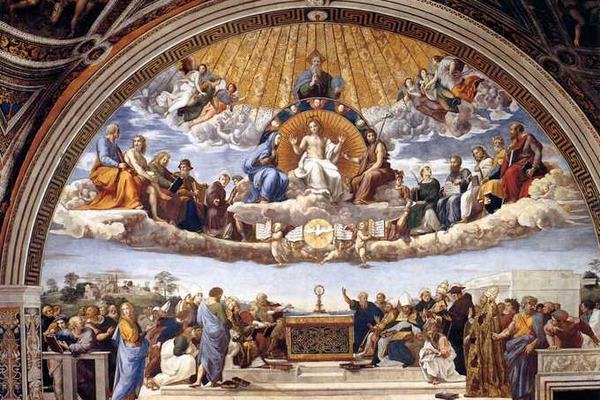
Raphael · The Disputation of the Holy Sacrament

24One act of worship

The Liturgy of the Word and the Liturgy of the Eucharist are so closely joined that they make one act of worship. They are never separated in time or held in different places. In the word, God renews His covenant with us. In the Eucharist, that covenant is sealed in the Body and Blood of Christ. Christ Himself is the one who acts, offering Himself to the Father, and the people are joined to His offering.

At the Last Supper Jesus took bread, blessed it, broke it and gave it to His disciples (Matthew 26:26). The Liturgy of the Eucharist follows the same four actions, in three parts:

  1. the preparation of the altar and the gifts: taking;
  2. the Eucharistic Prayer: blessing;
  3. the Communion Rite: breaking and giving.
What the General Instruction says GIRM 28, 72
28

The Mass has two main parts, the Liturgy of the Word and the Liturgy of the Eucharist, so closely joined that they make one act of worship. Opening and closing rites frame them.

72

At the Last Supper Christ took the bread and the cup, gave thanks, broke and gave. The Liturgy of the Eucharist follows these actions: preparation of the gifts, the Eucharistic Prayer and Communion.

A short summary in our own words of the paragraphs of the General Instruction of the Roman Missal (GIRM) shown by number. Read the official text on vatican.va; paragraphs marked Canada include an adaptation found in the Canadian edition (CCCB).

25Preparing the altar and the gifts

The attention now moves from the table of the word to the table of the Eucharist. In this rite the priest takes the gifts of bread and wine and places them on the altar. It should be very simple and must never outshine the Eucharistic Prayer. The real offering happens in the Eucharistic Prayer. That is why the Notes no longer call this part “the offertory”.

The collection

Christians have always cared for the poor and for the Church. The collection is taken before the procession with the gifts, so that the money can be carried up with the bread and wine. Ideally there is only one collection. If two causes need support, use separate envelopes in the same collection.

Music

Music begins with the collection and continues until the priest washes his hands. Instrumental music works well, and so do hymns of praise, joy, unity and peace, or hymns for the season. If there is no music, the priest may say the prayers over the bread and wine aloud, and the people answer “Blessed be God for ever.”

The procession with the gifts

  • While the collection is taken, the deacon and servers set the altar with the corporal (the square linen cloth), the purificator, the chalice and the Missal. The chalice may instead be prepared at the side table.
  • Members of the parish bring forward the bread on a single plate and the wine in a single container, with the collection. Food, clothing or other gifts for the poor may come too, and then the whole assembly can take part, as on Holy Thursday.
  • Gifts for the poor are presented first, so that they do not interrupt the bread and wine.
  • Keep the procession simple. The cross and candles are not carried, and the deacon does not lead it.
  • Only real gifts are carried. Things that are not given away, such as the altar cloth, the Missal or the chalice, are not part of the procession. Banners and symbols of the parish belong in the entrance procession.
  • The gift bearers go straight to the altar.

At the altar

  • The priest stays at the chair until the altar is ready.
  • He receives the collection and hands it to a minister, who takes it to a suitable place. Money is never put on or beside the altar.
  • He receives the bread and wine, says the prayer quietly and places the paten on the corporal. He pours the wine into the chalice, adds a little water, says the prayer and places the chalice on the altar. If a deacon is present, the deacon prepares the chalice. The container of wine is never left on the altar.
  • The priest does not wait for the music to stop. These prayers are meant to be said quietly.
  • If incense is used, the gifts, the cross, the altar, the priest and the people are incensed. The people stand to be incensed.

The washing of hands

The priest washes his hands before the Eucharistic Prayer. This comes from Jewish prayer custom. The washing is a sign that the one who prays for the people asks God to make him pure inside. He says the prayer that goes with it quietly.

Pray, brothers and sisters

The people stand after the hand washing. The priest invites them to pray that “my sacrifice and yours” may be acceptable to God. The words name both priest and people because all offer the one sacrifice together. The invitation looks ahead to the Eucharistic Prayer, so the priest does not point to the bread and wine as he says it. The Prayer over the Offerings closes this part, followed by a short pause.

What the General Instruction says GIRM 73, 74, 75, 76, 77
73

The altar is prepared with the corporal, purificator, Missal and chalice. The people bring the bread and wine, and money or gifts for the poor may be brought too, but these are placed away from the altar.

74

A song accompanies the procession with the gifts, at least until the gifts are on the altar.

75

The priest places the bread and wine on the altar with the set prayers. He may incense the gifts, the cross and the altar, and then the priest and people may be incensed.

76

The priest washes his hands at the side of the altar, a sign of the desire to be made pure inside.

77

The invitation “Pray, brothers and sisters” and the Prayer over the Offerings close the preparation of the gifts.

A short summary in our own words of the paragraphs of the General Instruction of the Roman Missal (GIRM) shown by number. Read the official text on vatican.va; paragraphs marked Canada include an adaptation found in the Canadian edition (CCCB).

26The Eucharistic Prayer

The Eucharistic Prayer is the centre and high point of the whole Mass. It is a great prayer of praise and thanks for everything God has done for us, above all for Jesus’ death and resurrection and for the meal He left us. Through the priest, the whole people joins Christ as He offers Himself to the Father, and offers itself with Him.

It has had several names, and each tells us something about it:

  • Eucharistic Prayer, from the Greek word for thanksgiving;
  • anaphora, “offering”;
  • canon, “rule”, because it is the standard prayer that marks the Church’s identity;
  • sacrifice of praise, because our praise and thanks are how we offer ourselves with Christ.

Its parts

It is prayed as one single prayer, but its parts can be named:

  • The dialogue. “Lift up your hearts.” It has opened the prayer since the earliest times.
  • The Preface. The name can mislead: it is not an introduction but a proclamation of praise, a speaking out before God. Many Prefaces fit different feasts and seasons. Eucharistic Prayer II has its own Preface, but others may be used with it. Eucharistic Prayer IV has a fixed Preface and is not used on days that have their own Preface. The prayers for Masses with children, for Reconciliation and for Various Needs also have fixed Prefaces, though other suitable Prefaces may be used with the prayers for Reconciliation.
  • The acclamations. The Holy, Holy, Holy, the Mystery of Faith and the Great Amen are the people’s part of the prayer.
  • The epiclesis. The priest calls down the Holy Spirit on the gifts, so that they become the Body and Blood of Christ, and later on the people, so that they become one Body in Christ.
  • The institution narrative and consecration. Christ’s own words at the Last Supper. They are the hinge of the prayer, linking the Last Supper and the cross with what the Church does now.
  • The memorial and offering. The Church remembers Christ’s death, resurrection and ascension, joins in His offering to the Father, and looks forward to His coming in glory.
  • The intercessions. Praise leads to prayer for the living and the dead, for the Church on earth and in heaven, for those present and those absent.
  • The doxology and Great Amen. “Through him, and with him, and in him…” sums up the whole prayer as praise. In the Great Amen the people say yes to all that has been prayed. It is the most important acclamation of the Mass and should ring out with conviction and joy.

Singing the acclamations

  • Always sing them, even without instruments.
  • Never leave them to the choir alone. They are how the whole assembly takes part in the prayer.
  • The melodies should be strong but simple enough for everyone. Avoid long instrumental introductions that break the flow.
  • The priest, not the deacon, says “The mystery of faith”, because it is part of the prayer itself. The people answer at once.
What the General Instruction says GIRM 78, 79, 147
78

The Eucharistic Prayer is the centre and high point of the whole Mass. The people join the priest in it and listen with reverence and in silence.

79

The parts of the Eucharistic Prayer: thanksgiving (the Preface), the Holy, Holy, Holy, the calling down of the Holy Spirit, the institution narrative and consecration, the memorial, the offering, the intercessions and the final doxology with the people’s Amen.

147

The Eucharistic Prayer is said by the priest alone. The people join him in faith and silence and through their acclamations: the Holy, Holy, Holy, the memorial acclamation and the Amen.

A short summary in our own words of the paragraphs of the General Instruction of the Roman Missal (GIRM) shown by number. Read the official text on vatican.va; paragraphs marked Canada include an adaptation found in the Canadian edition (CCCB).

27What the priest does during the prayer

The gestures are part of the prayer. They should fit the moment and the size of the church, and keep the prayer moving at the right pace.

  • Hands raised. The priest prays with his arms open, gathering the people into a prayer addressed to the Father.
  • Hands over the gifts. He holds his hands over the bread and wine as he calls down the Holy Spirit. Any concelebrating priests do the same. Then he makes the Sign of the Cross over them.
  • Holding the bread and the chalice. As he speaks Christ’s words, he holds the bread, and then the chalice, a little above the altar, as in a Jewish table blessing. After each, he shows it to the people and genuflects. This is a showing, not an offering, so it should not be exaggerated or drawn out.
  • No breaking or giving. He does not act out breaking the bread or handing the cup during the narrative. The narrative is not a re-enactment, and the breaking and giving come later, in the Communion Rite.
  • The doxology. At “Through him, and with him, and in him” the priest raises the paten and the deacon raises the chalice, and they hold them up until the end of the Great Amen. Only the one large paten and the one chalice are raised.

How the priest prays it

The priest prays as the sign of Christ, the Head of the Body. The people take part by listening closely, by making Christ’s offering their own, and by singing their acclamations.

  • He should proclaim the prayer, not just read it, in a clear, warm and engaging voice that makes it stand out above every other prayer.
  • He should know the text so well that he can pay attention to its meaning rather than to the book.
  • Ideally he sings it. At least the opening dialogue, “The mystery of faith” and the doxology should be sung.
  • He keeps it one prayer, so that it does not fall into pieces.
  • Only the presiding priest says the doxology. Concelebrants may join in quietly, but the people should hear only his voice, especially when it is sung.
  • After the Great Amen there is a short pause. Ministers of Communion do not come to the altar yet.
What the General Instruction says GIRM 148, 150, 151
148

The priest begins the Eucharistic Prayer with the opening dialogue, “The Lord be with you … Lift up your hearts … Let us give thanks,” with hands extended and then raised.

150

A server may ring a bell before the Consecration and at each elevation, according to local custom, and the host and chalice may be incensed when they are shown.

151

After the Consecration the people sing the memorial acclamation. At the end of the prayer the priest raises the paten and the chalice for the doxology, and the people answer Amen.

A short summary in our own words of the paragraphs of the General Instruction of the Roman Missal (GIRM) shown by number. Read the official text on vatican.va; paragraphs marked Canada include an adaptation found in the Canadian edition (CCCB).

Part VIII

The Communion Rite

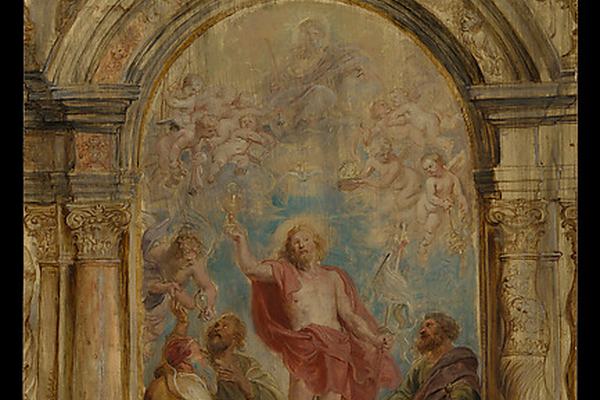
Peter Paul Rubens · The Glorification of the Eucharist

28One table, one bread, one cup

The Communion Rite has four parts: the Our Father, the sign of peace, the breaking of the bread and the Communion procession. Its main actions are breaking and giving, and both should be clear to see. The bread is broken slowly and with reverence, and the people come in procession to the altar to receive the Body and Blood of the Lord.

The breaking of the bread was the first name Christians gave to the Eucharist. The one Body of Christ, under bread made from many grains, is shared among many. His Blood, under wine made from many grapes, is poured out for the life of the world.

The Eucharist is the sacrament of unity, so the rite points to one table, one bread and one cup. The link between the sacrifice on the altar and Communion is clearest when people receive what was consecrated at that Mass. Taking hosts from the tabernacle as a regular habit breaks that link, and the Church strongly asks that it not be done, except in unexpected need.

In Canada the people stand through the whole Communion Rite, a sign that we are one people making a covenant with God. Your “Amen” when you receive is a promise to live Christ’s life in the world. Reaching out your hands shows your desire to receive God’s gift.

What the General Instruction says GIRM 80, 83, 85
80

The Mass is the Paschal banquet, so the faithful who are properly prepared receive the Lord’s Body and Blood. The rites before Communion lead them to it.

83

The priest breaks the Eucharistic Bread, helped if needed by the deacon or a concelebrant, while the Lamb of God is sung. The breaking shows that the many become one body by sharing the one Bread.

85

It is most desirable that the faithful receive hosts consecrated at the same Mass, and from the chalice where this is allowed, so that Communion is clearly a share in the sacrifice being offered.

A short summary in our own words of the paragraphs of the General Instruction of the Roman Missal (GIRM) shown by number. Read the official text on vatican.va; paragraphs marked Canada include an adaptation found in the Canadian edition (CCCB).

29Ministers of Communion and the chalice

The Body and Blood of Christ are given, not taken. So there should be enough ministers.

  • Concelebrating priests help as needed, then other priests and deacons who are present for the whole Mass, and then extraordinary ministers.
  • Extraordinary ministers are already commissioned, so no extra prayer is needed when they receive the vessels.
  • In a case of necessity, the priest may appoint a suitable person to help just once, using the rite in the Missal.
  • Ministers receive Communion first, because they must receive what they are about to give. But they do not help themselves to the bread or the chalice.

Communion from the chalice

Drinking from the chalice fulfils the Lord’s command, “Take this, all of you, and drink from it.” The Canadian bishops encourage it in every way.

  • Intinction, where the minister dips the host in the chalice and places it on the tongue, is allowed but discouraged. It does not fulfil the command to drink, and it takes away the option of receiving in the hand, which is permitted in Canada.
  • Communicants may never dip the host in the chalice themselves, because Communion is given, not taken.
  • For hygiene, the minister wipes the inside and outside of the rim after each person, turns the chalice a little and uses a fresh part of the purificator.
What the General Instruction says GIRM 162, 284, 287
162

Other priests present may help give Communion. If needed, the priest may call on extraordinary ministers, and in a case of necessity he may appoint someone for that one occasion.

284

When Communion is given under both kinds, a deacon, priest, acolyte or extraordinary minister usually offers the chalice, and what remains is consumed at the altar.

287

How Communion by intinction is given: the priest dips the host in the chalice and places it on the tongue, saying “The Body and Blood of Christ.”

A short summary in our own words of the paragraphs of the General Instruction of the Roman Missal (GIRM) shown by number. Read the official text on vatican.va; paragraphs marked Canada include an adaptation found in the Canadian edition (CCCB).

30Communion stations and music

The places where Communion is given should make it clear that the people are coming to the Lord’s table. They should be close to the altar and should not make people turn their backs to it. Do not set up more than are really needed.

Music during Communion

Music during the Communion procession joins the people together and expresses their joy. Songs about unity, covenant, peace and joy fit well, and so do songs of praise and thanks.

  • One Communion song is best. Avoid starting a second hymn right after it. Instrumental interludes can make it last longer.
  • A psalm with a refrain can go on for the whole procession, and people can sing it while walking. A well-known hymn or chorus that needs no book also works.
  • Hymns written for adoration outside Mass do not suit this moment, and neither do songs that make Communion a private matter.
  • The song starts when the priest receives Communion.
  • Musicians can receive at the end or a few at a time, so that the music carries on. Do not wait for the musicians to receive before starting the song.
What the General Instruction says GIRM 86, 87
86

The Communion song begins as the priest receives and continues while Communion is given, to express the unity of those receiving. Singers should also be able to receive easily.

87

What may be sung at Communion in Canada: antiphons and psalms from the chant books or another suitable approved song. If nothing is sung, the antiphon is said. (Canada)

A short summary in our own words of the paragraphs of the General Instruction of the Roman Missal (GIRM) shown by number. Read the official text on vatican.va; paragraphs marked Canada include an adaptation found in the Canadian edition (CCCB).

31The Our Father, the sign of peace and the breaking of the bread

The Our Father

The Communion Rite begins with the prayer Jesus taught us. It speaks of forgiveness and of unity and leads us towards Communion.

  • It may be sung if everyone can sing it comfortably, and then the doxology (“For the kingdom…”) is sung too.
  • The words are never changed to fit a tune.
  • Singing it should not overshadow the Eucharistic Prayer that came just before.
  • The people may raise their hands in prayer. That is more traditional than holding hands, a gesture that fits the sign of peace better.

The sign of peace

At the invitation of the deacon, or of the priest if there is no deacon, the people share the peace of Christ with those near them. It is the traditional moment to make sure we are at peace with one another before we share the sacrament of unity. It is not a welcome; the welcome happened at the door.

  • Offer the peace only to those nearest you. It is shared freely, not passed down in order from the priest.
  • It should be neither rushed nor drawn out.
  • The priest shares the peace with the ministers at the altar. At weddings or funerals, for example, he may also greet people nearby.
  • There is no music, so that the musicians can share the peace too.

The breaking of the bread

Right after the sign of peace the priest breaks the bread and divides it into the vessels, with the help of other priests or deacons if needed. Servers may bring extra patens.

  • Ministers of Communion may come closer, but they do not stand at the altar or help break the bread. That is kept for the priest and other ordained ministers.
  • Ministers should not wash their hands at this point, because it confuses their role with the priest’s ritual washing. They wash before Mass and may use a little hand sanitizer discreetly before coming forward.
  • They should avoid perfume and scented lotions, which bother some people receiving Communion.

The Lamb of God

This chant from the Eastern Church is sung while the bread is broken. It has three invocations, but it can go on until the breaking and the preparation of the vessels are finished. A cantor or choir sings the invocation and the people answer “have mercy on us”, then “grant us peace” at the end. If it cannot be sung, it is said. Meanwhile the priest says his own prayer of preparation quietly.

What the General Instruction says GIRM 81, 82, 83
81

In the Our Father we ask for daily bread, which for Christians means above all the Eucharist, and for forgiveness. The priest adds a prayer and the people end with the doxology.

82

In the Rite of Peace the Church prays for peace and unity, and the faithful show their communion and love before receiving the Sacrament. In Canada the sign is a handshake or a bow, offered only to those nearest. (Canada)

83

The priest breaks the Eucharistic Bread, helped if needed by the deacon or a concelebrant, while the Lamb of God is sung. The breaking shows that the many become one body by sharing the one Bread.

A short summary in our own words of the paragraphs of the General Instruction of the Roman Missal (GIRM) shown by number. Read the official text on vatican.va; paragraphs marked Canada include an adaptation found in the Canadian edition (CCCB).

32Receiving Communion

Receiving the Body and Blood of Christ is the high point of the whole Mass. In Communion each person renews the covenant with God. It needs time, reverence and attention, so there should be no sense of hurry.

  • The priest holds up the host and says “Behold the Lamb of God…” Priest and people answer together, “Lord, I am not worthy…”
  • The priest receives under both kinds. The Communion song begins, and the extraordinary ministers come to the altar.
  • The priest gives Communion to the deacon, and then the two of them give Communion to the other ministers. Extraordinary ministers do not receive at the same time as the priest. If bishops are present, the presiding priest and the deacon give them Communion.
  • The ministers receive the patens and chalices at the altar and go to their stations.

The procession

  • People should not be sent up row by row. That singles out those who cannot or choose not to receive.
  • As a rule, only those who are going to receive come forward, though young children may come with their parents.
  • The rite has no blessing for those who do not receive. They take part by singing the Communion song and by joining themselves to Christ and to the others in spiritual communion.

At the minister

  • The minister waits until you are in place and ready. He holds up the host and says “The Body of Christ.” You answer “Amen.” He places it in your hand or on your tongue.
  • In Canada you bow your head as you come up to the minister. That is the sign of reverence before receiving standing.
  • The minister never rushes you. He should look at you and be warm and personal.
  • You consume the host before going to the chalice.
  • You alone decide whether to receive in the hand or on the tongue.
  • Anyone who receives Communion may also receive from the chalice. Age does not matter, either for receiving in the hand or for the chalice.
  • At the chalice the minister says “The Blood of Christ.” You answer “Amen,” take the chalice, drink a little and hand it back. The minister wipes it.
What the General Instruction says GIRM 84, 160, 161
84

The priest prays quietly to prepare himself, and so do the faithful. Then he shows the host and invites them to the banquet, and all say “Lord, I am not worthy.”

160

The faithful may not take the consecrated bread or chalice themselves or pass them to one another. In Canada Communion is received standing, though a person may choose to kneel; standing communicants bow their head first, and may receive in the hand or on the tongue. (Canada)

161

The minister shows the host and says “The Body of Christ”; the communicant answers Amen and receives on the tongue or, where allowed, in the hand, as he or she chooses, and consumes it at once.

A short summary in our own words of the paragraphs of the General Instruction of the Roman Missal (GIRM) shown by number. Read the official text on vatican.va; paragraphs marked Canada include an adaptation found in the Canadian edition (CCCB).

33After Communion

When Communion is over, what remains is brought back to the altar.

  • The ministers who will take Communion to the sick receive it in small cases (pyxes) from the priest at the altar. This way the sick share in the bread consecrated at this Mass. No blessing or sending-out ceremony is needed, since that would interrupt the Communion song. These ministers may leave at once, go out in the closing procession or return to their seats.
  • The priest and deacon consume what remains, and some hosts may be placed in the tabernacle for the sick.
  • The vessels may be cleaned at the side table, but it is usually better to do this after Mass.

Silence and the Prayer after Communion

  • The best option is a time of silent prayer, seated. A psalm or hymn of praise sung by everyone may be used instead, but silence is preferred here.
  • Then everyone stands. After “Let us pray” there is a short silence, longer if there was none before. The priest says the Prayer after Communion.
  • This prayer closes the Communion Rite. Nothing, not even announcements, should come between Communion and the prayer.

Announcements

If there are announcements, they come after the Prayer after Communion and before the final blessing. Made before the prayer, they would cut it off from Communion and turn it into a closing prayer for the whole Mass. Keep them short, and focus them on what the parish will do in the days ahead. They may also be made before Mass. The deacon makes them from his place by the priest, the priest from the chair, or another minister from a suitable place, but not from the ambo.

What the General Instruction says GIRM 88, 89, 163, 166
88

After Communion the priest and people may pray in silence for a while. A psalm, canticle or hymn of praise may also be sung by everyone.

89

The Prayer after Communion completes the people’s prayer and closes the Communion Rite.

163

After Communion the priest consumes any remaining Precious Blood, places remaining hosts in the tabernacle or consumes them, and cleans the vessels, at the altar or the side table.

166

Short announcements, if there are any, come after the Prayer after Communion.

A short summary in our own words of the paragraphs of the General Instruction of the Roman Missal (GIRM) shown by number. Read the official text on vatican.va; paragraphs marked Canada include an adaptation found in the Canadian edition (CCCB).

Part IX

The Concluding Rites

34Greeting, blessing and dismissal

The Concluding Rites send the people out with God’s blessing and with a mission: to bring the good news of Jesus Christ to the world. They are short, because nothing can be added to what has just been celebrated, but they are full of energy, because meeting the Lord sends us out to share our joy.

Greeting and blessing

The priest and people exchange the greeting one last time: “The Lord be with you.” “And with your spirit.” Then the priest blesses the people, so that all they do for God’s Kingdom will be under His hand. The Missal offers the simple blessing, solemn blessings and prayers over the people for different seasons and Sundays. The priest blesses the people in God’s name, as the sign of Christ, so it would be wrong for him to say “May almighty God bless us.”

The dismissal

In the early Church there were three dismissals: of the catechumens, of the penitents and of the faithful. They mattered so much that the whole celebration came to be named after them: in Latin Missa, the Mass.

  • The dismissal links the Mass to our mission in the world. It sends us out to witness and to share the faith.
  • Use one of the forms in the Missal, and do not add casual remarks to it.
  • The deacon, or the priest if there is no deacon, says it clearly and firmly, so that the people know when to answer “Thanks be to God.”
  • The priest and deacon kiss the altar, bow deeply to it, or genuflect if the tabernacle is there, and leave.
What the General Instruction says GIRM 90, 167, 168, 169
90

The concluding rites: short announcements if needed, the greeting and blessing, the dismissal, and the kissing of the altar.

167

The priest greets the people and blesses them. On some days a solemn blessing or a prayer over the people is used.

168

The deacon or priest dismisses the people, and they answer “Thanks be to God.”

169

The priest kisses the altar, bows deeply with the ministers and leaves.

A short summary in our own words of the paragraphs of the General Instruction of the Roman Missal (GIRM) shown by number. Read the official text on vatican.va; paragraphs marked Canada include an adaptation found in the Canadian edition (CCCB).

35Leaving the church

A closing procession is common, but the rite of the Mass has never actually mentioned one. In the past people seem simply to have left, as a family does at the end of a celebration. When that happens, instrumental music suits the moment.

  • No chant is set for the closing procession. Well-known music about the Church’s mission and journey fits well, or a hymn of praise and thanks for the season.
  • Hymns with verses usually work better here than songs with only a refrain. A short hymn lets people sing it all.
  • The music starts as soon as the dismissal has been given and the procession begins to leave.
  • The people may follow the procession out or stay in their places until it has left.
  • If another rite follows straight away, such as a funeral procession or adoration, the greeting, blessing and dismissal are left out.

Saying goodbye

The priest, the deacon and the other ministers should stand at the doors to greet people as they leave, rather than going straight back to the sacristy. Welcoming people and saying goodbye are basic courtesies in a Christian family. Other activities in the church, such as group devotions, should start only after a good gap of time.

What the General Instruction says GIRM 170
170

If another liturgical rite follows the Mass straight away, the greeting, blessing and dismissal are left out.

A short summary in our own words of the paragraphs of the General Instruction of the Roman Missal (GIRM) shown by number. Read the official text on vatican.va; paragraphs marked Canada include an adaptation found in the Canadian edition (CCCB).

In Short

The whole guide in plain words.

  1. At Mass Christ acts, and His Body, the Church, acts with Him. Everyone present takes part, not only the priest.
  2. Each minister, ordained or lay, serves the whole assembly. As a rule each person does one ministry at a Mass.
  3. Standing is the basic posture. In Canada we kneel for the Consecration and stand to receive Communion.
  4. Singing belongs to the Mass. The psalm, the Alleluia and the acclamations of the Eucharistic Prayer come first.
  5. The altar, the ambo and the chair are the focus of the church. The tabernacle stands apart from the altar.
  6. The opening rites are short and lively. The Collect closes them after a real moment of silence.
  7. In the readings God speaks today. Nothing replaces them, and silence lets them sink in.
  8. The preparation of the gifts is simple. The offering happens in the Eucharistic Prayer, the centre of the Mass.
  9. Communion is given, not taken. Hosts consecrated at the same Mass, and the chalice, are the fullest sign.
  10. The Mass ends with a sending. The dismissal links what we celebrated with the mission we carry out.

Every rule in this guide serves one thing: helping the whole people of God pray the Mass together.

Sources

  • Canadian Conference of Catholic Bishops, Pastoral Notes for the Celebration of the Eucharist in Light of the Revised Roman Missal (Concacan Inc., 2012). This page puts the Notes in our own words and shortens them; it is not the official text.
  • General Instruction of the Roman Missal (GIRM). The boxes on this page summarize the paragraphs cited, by number; the Canadian adaptations are in the edition published by the CCCB.
  • Second Vatican Council, Sacrosanctum Concilium, Constitution on the Sacred Liturgy (1963).
  • Pope John Paul II, Dies Domini, on keeping the Lord’s Day holy (1998).