History of the Church
From Pentecost to the Second Vatican Council, 62 events.
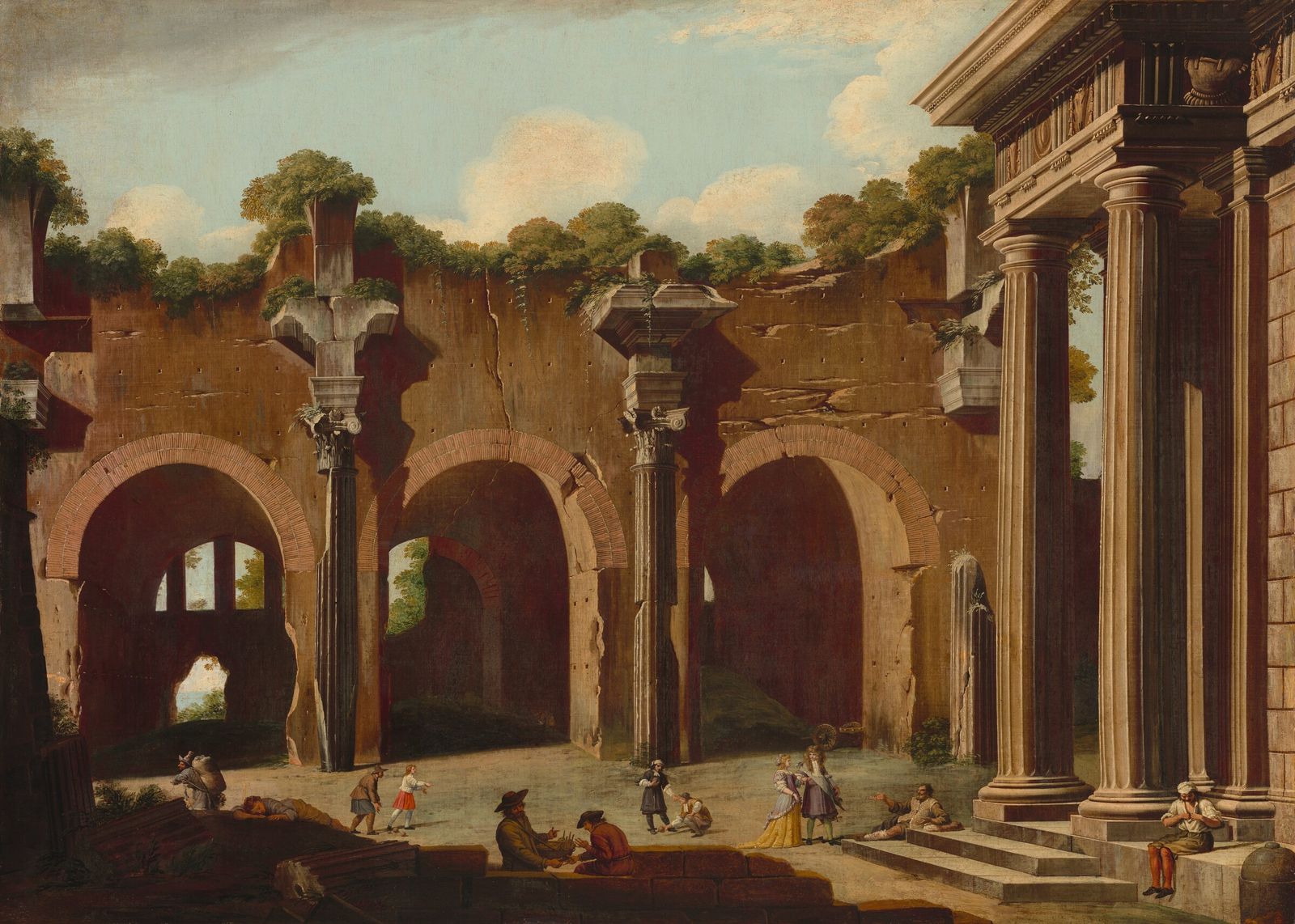
Niccolò Codazzi · The Basilica of Constantine with a Doric Colonnade
33-100
The Age of the Apostles
The apostles set out from Jerusalem. Peter and Paul are martyred in Rome. The writings that survive from these years show how the first Christians lived.
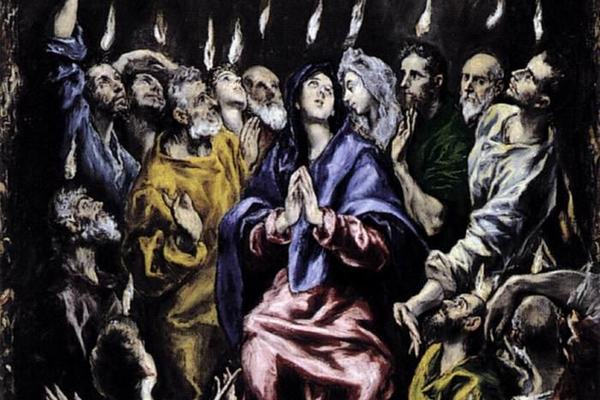
El Greco · Pentecost About 33
Pentecost
The Holy Spirit comes down and the Church is born.
The Holy Spirit comes down on the apostles gathered in Jerusalem. Peter preaches that day, and three thousand people are baptized. The Church counts this day as its birthday.
Read more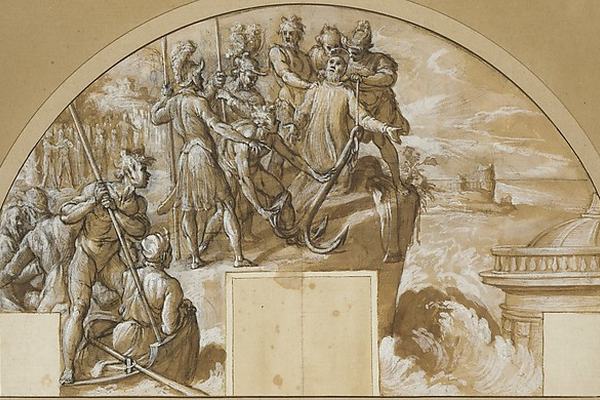
Agostino Ciampelli · The Martyrdom of Saint Clement I, Pope 67 and after
Rome’s first leaders
After Peter: Linus, Anacletus, Clement.
After Peter and Paul are martyred in Rome, the Church of Rome is led in turn by Linus, Anacletus and Clement. Linus is named in one of Paul’s letters (2 Tim 4:21). Irenaeus writes the list down around 180.
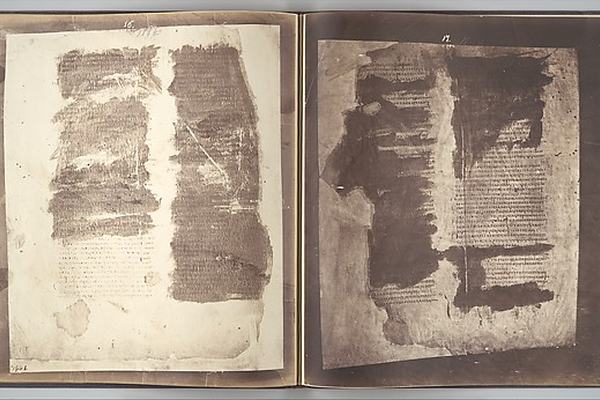
Roger Fenton · Photographic Facsimiles of the Remains of the Epistles of Clement of Rome. Made from the About 96
Clement writes to Corinth
Rome steps into a quarrel in Corinth.
Clement, bishop of Rome, intervenes in a dispute in the Church of Corinth and asks that the priests who were removed be restored. The apostle John is most likely still alive at the time.
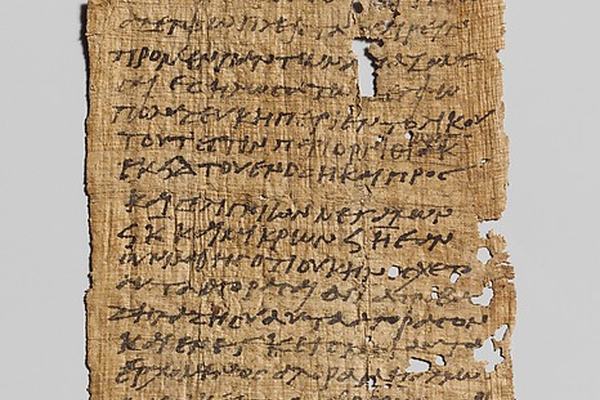
Unknown · Papyrus letter in Greek Late 1st century
The Didache
The first Christians’ little handbook.
This short handbook, also called the Teaching of the Twelve Apostles, describes the life of the first Christians. It plainly forbids abortion and infanticide, says that if there is no running water one may baptize by pouring water on the head three times, and asks for fasting on Wednesdays and Fridays.
100-451
The Church Fathers
The Church grows despite persecution. Bishops defend the faith. The councils of Nicaea and Ephesus proclaim the Creed and that Mary is the Mother of God. The list of the books of the Bible is settled.
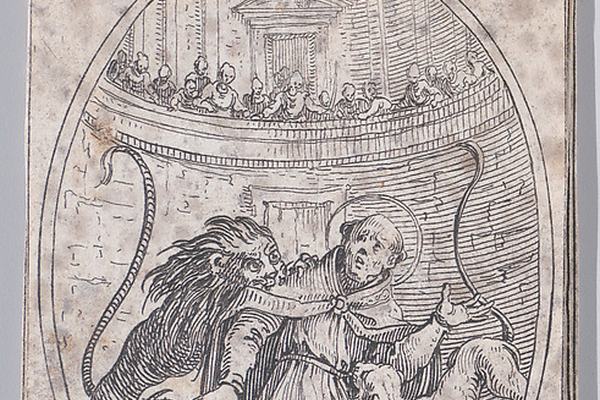
Jacques Callot · S. Ignace, martyr (St. Ignatius, Martyr), February 1st, from "Les Images De Tous Les Sainc About 107
“The Catholic Church”
The name “Catholic Church” is written for the first time.
Ignatius, bishop of Antioch, writes letters on his way to martyrdom in Rome. In them he becomes the first person known to use the phrase “Catholic Church”, and he describes the order of bishops, priests and deacons. Tradition holds that he was a disciple of the apostle John.
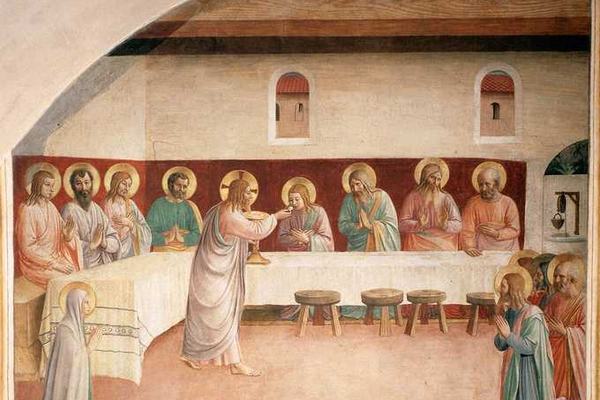
Fra Angelico · The Institution of the Eucharist About 107
Those who reject the Eucharist
The Eucharist is the body of Christ.
Ignatius writes to the Church of Smyrna: the heretics stay away from the Eucharist and from prayer, because they do not confess that the Eucharist is the flesh of our Savior Jesus Christ.
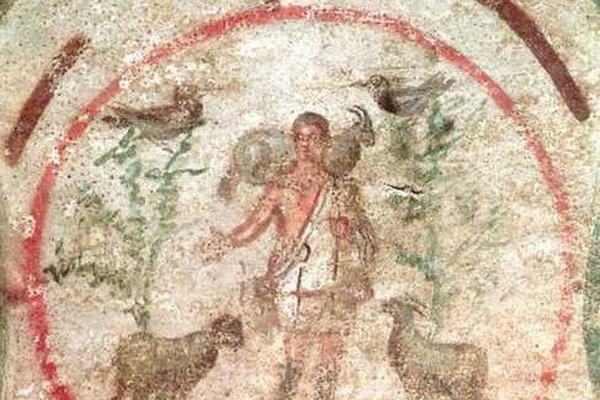
Early Christian painter · The Good Shepherd About 112
A Roman governor’s report
The first Christians through pagan eyes.
In a letter to the Emperor Trajan, the pagan governor Pliny the Younger reports that Christians meet before dawn on a fixed day, sing hymns to Christ as to a god, and bind themselves by an oath (sacramentum).
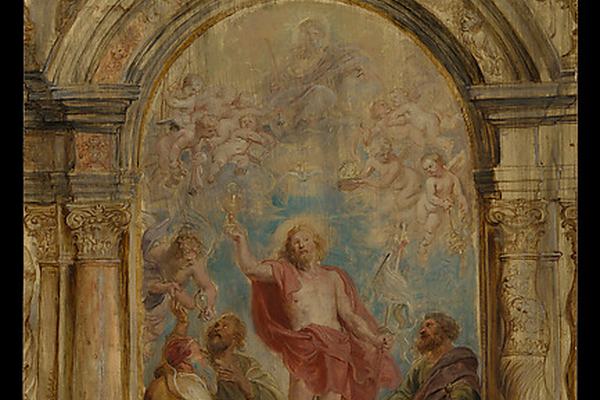
Peter Paul Rubens · The Glorification of the Eucharist About 155
The oldest description of Sunday Mass
A Sunday Mass in the second century.
In his defense of the faith addressed to the emperor, the philosopher Justin describes the Sunday gathering: the writings of the apostles and prophets are read, a homily is given, prayers are said, and bread and wine are offered. This food is not ordinary bread, he says; it is the flesh and blood of the incarnate Jesus.
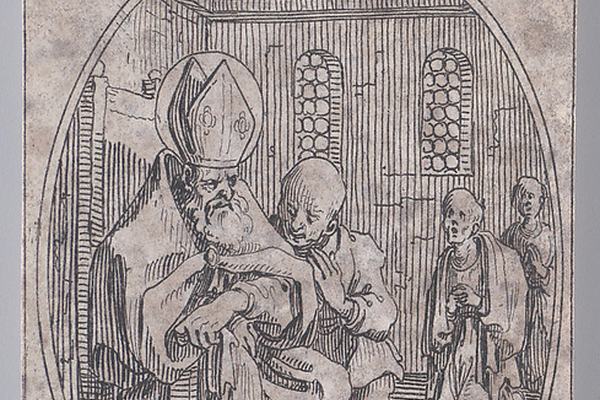
Jacques Callot · S. Polycarpe (St. Polycarp), February 23rd, from "Les Images De Tous Les Saincts et Sainte About 155
Polycarp in Rome
Different calendars, the same communion.
Polycarp, bishop of Smyrna and a disciple of the apostle John, goes to Rome to discuss the date of Easter with Pope Anicetus. They do not agree, but their communion is not broken: Anicetus lets Polycarp celebrate the Eucharist in his own church.
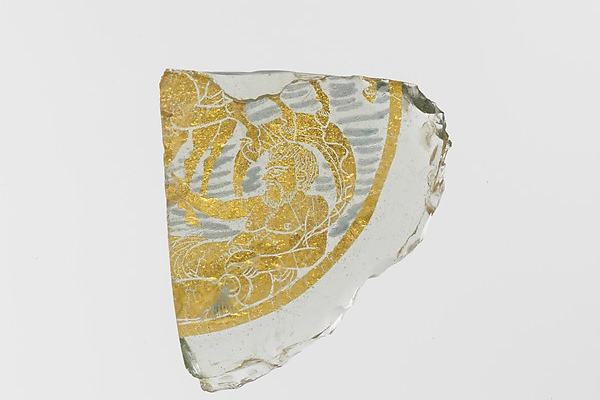
Unknown · Glass bowl fragment with gold leaf and painted decoration About 156
Bones more precious than gold
Veneration of the martyrs’ relics begins.
The account of Polycarp’s martyrdom says that the Christians of Smyrna gathered his bones as “more precious than precious stones and finer than gold,” and kept the day of his martyrdom every year.
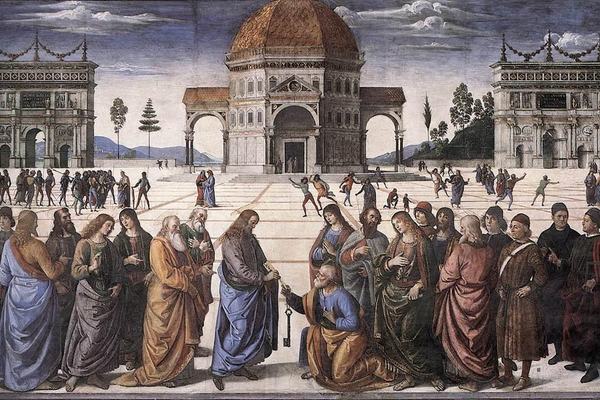
Perugino · Christ Giving the Keys to Saint Peter About 160
Over Peter’s tomb
The first monument on Peter’s tomb.
On the Vatican hill in Rome, a small monument (tropaion) is built right over Peter’s tomb. The altar of Constantine’s basilica and today’s high altar stand exactly above this spot. The custom of building altars over martyrs’ tombs and placing relics in the altar stone goes back to this tradition.
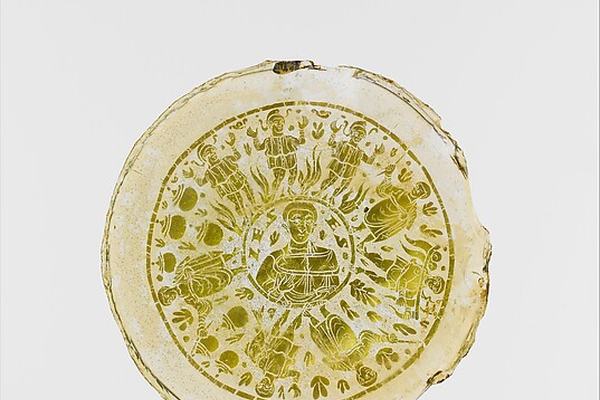
Unknown · Bowl Base with Miracle Scenes 2nd and 3rd centuries
The witness of the catacombs
Prayers to the martyrs, the first image of Mary.
Inscriptions in the Roman catacombs ask the martyrs to pray for the living, and pray for loved ones who have died. In a fresco in the Catacomb of Priscilla, Mary appears with the Child Jesus in her lap, long before Christianity became the state religion.
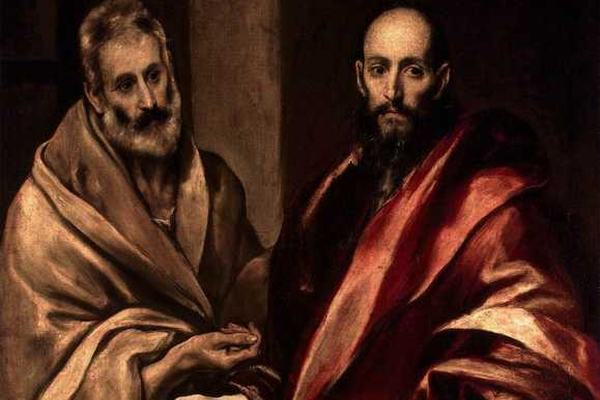
El Greco · The Apostles Peter and Paul About 180
Irenaeus and Rome
Every church must agree with Rome.
In a work written while he was bishop of Lyon, Irenaeus of Smyrna says that every church must agree with the Church of Rome, founded by Peter and Paul, because of its pre-eminent authority, and he lists the bishops of Rome one by one from Peter to his own day.
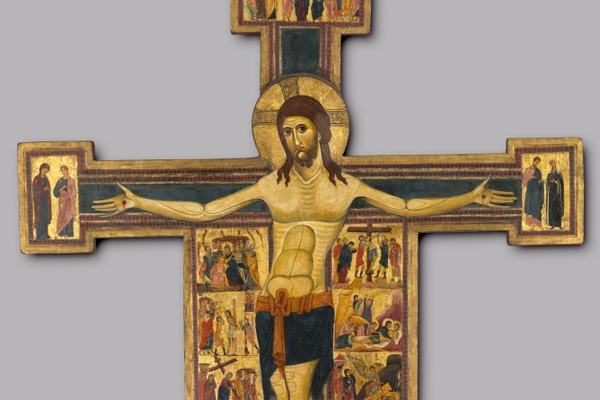
Unknown · Crucifix with Scenes of the Passion About 204
The sign of the cross
Everything starts with the sign of the cross.
Tertullian writes that Christians trace the sign of the cross on their foreheads whenever they begin anything: setting out, bathing, sitting down to eat.
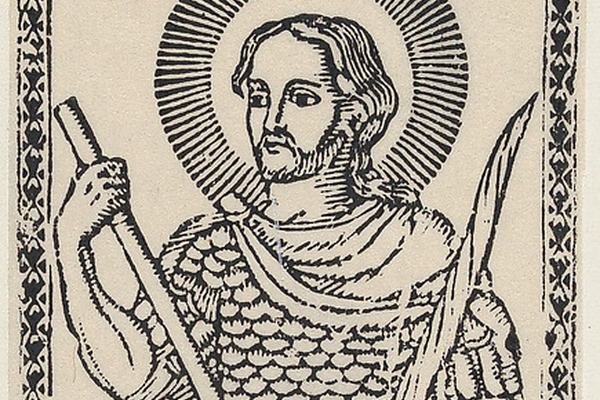
Anonymous Mexican painter · Saint Hippolytus of Rome, martyr About 215
A prayer still said at Mass
An ancient prayer still said today.
The Apostolic Tradition, written in Rome and attributed to Hippolytus, gives the Eucharistic prayer of consecration word for word. Eucharistic Prayer II, said at Mass today, is largely based on this text.
Read more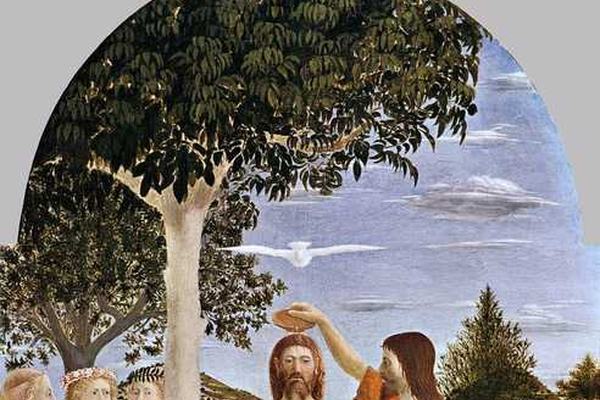
Piero della Francesca · The Baptism of Christ About 244
Infant baptism
Baptizing infants comes from the apostles.
Origen of Alexandria writes that the Church received the tradition of baptizing infants directly from the apostles.
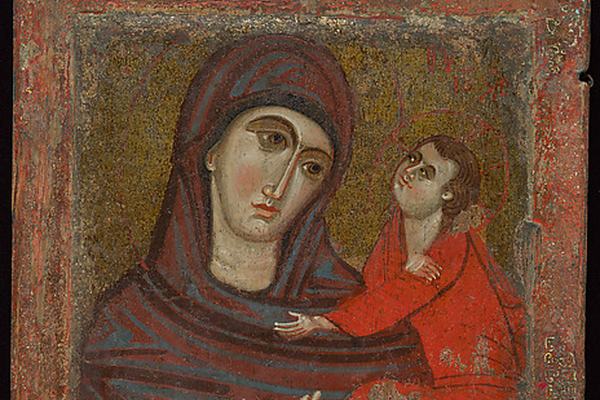
Byzantine or Crusader workshop · Icon of the Virgin and Child, Hodegetria variant 3rd century
The oldest prayer to Mary
“We fly to your protection.”
A papyrus fragment found in Egypt preserves the oldest known prayer to Mary: “We fly to your protection, O Mother of God.” The prayer is still said today.
Read more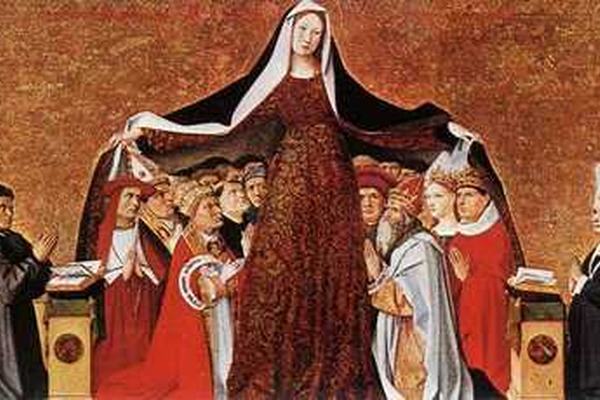
Enguerrand Quarton · The Virgin of Mercy 251
The Church as mother
The Church is mother, God is father.
In his work on the unity of the Church, Cyprian, bishop of Carthage, writes: no one can have God as father who does not have the Church as mother.
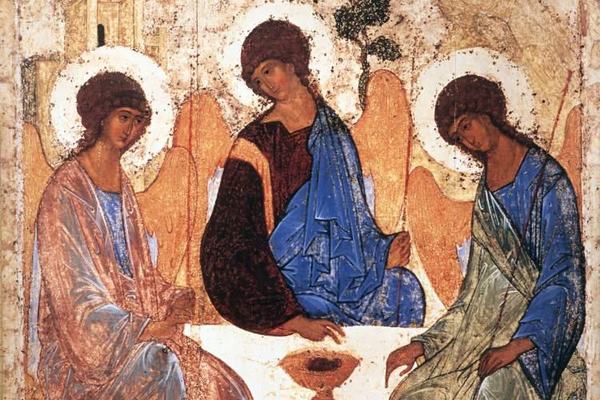
Andrei Rublev · The Trinity 325
The Council of Nicaea
The Creed is born.
The bishops gathered at Nicaea proclaim, against Arius, that the Son is “of one substance” (homoousios) with the Father. This Greek word, which is not found in the Bible, shows that the Church can speak in its own words to protect the faith. The first form of the Creed is written at this council.
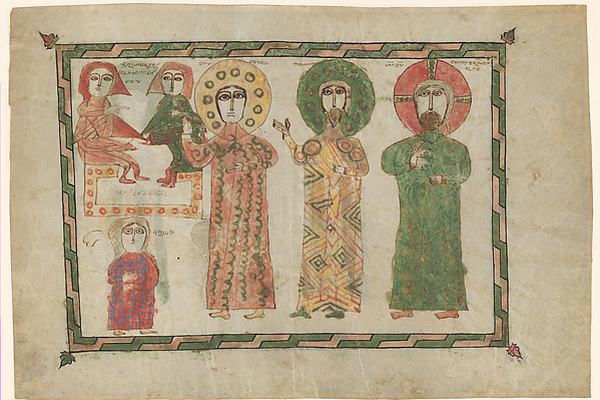
Unknown · Leaf from a Gospel Book with Four Standing Evangelists About 325
Eusebius’ History of the Church
Unbroken lists of bishops.
In the first history of the Church, Eusebius of Caesarea lists the bishops of Rome, Jerusalem, Antioch and Alexandria without a break from the apostles to his own day. He also records how the books of the New Testament were discussed and discerned.
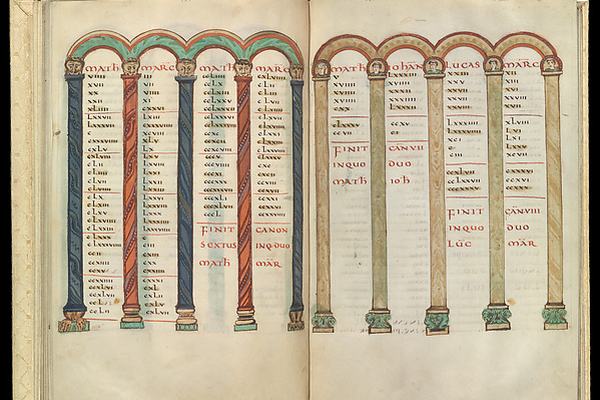
Unknown · Gospel Book 4th century
The oldest complete Bibles
The Bible with its deuterocanonical books.
The Sinai and Vatican manuscripts are the oldest great copies of the Bible we have. Their Old Testament includes Tobit, Judith, Wisdom and the other books that Protestants later removed, alongside the rest.
Read more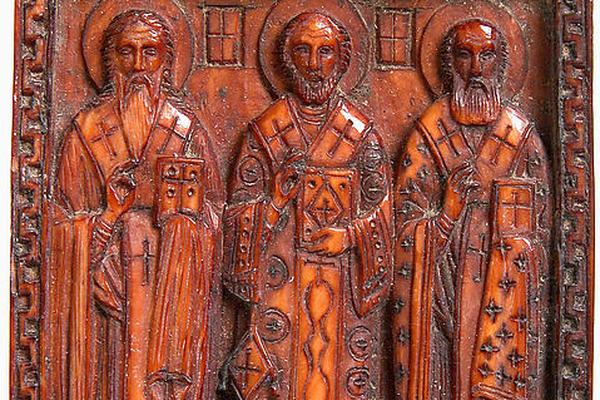
Unknown · Icon with Three Church Fathers About 350
“Ask for the Catholic Church”
Ask, “Where is the Catholic Church?”
Cyril of Jerusalem advises those preparing for baptism: when you go to a city, do not just ask “Where is the house of the Lord?”, because the heretics call their places that too; ask “Where is the Catholic Church?”
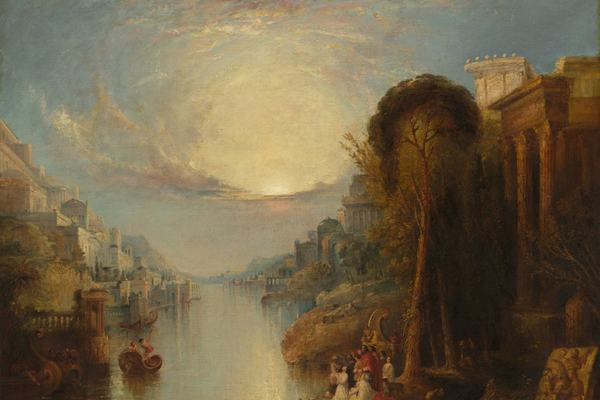
William Linton · Carthage 393 and 397
The 27 books of the New Testament
The New Testament list is approved.
The councils held at Hippo and Carthage approve the 27 books of today’s New Testament and the Old Testament list, including the deuterocanonical books. The same list is proclaimed again at the councils of Florence (1442) and Trent (1546).
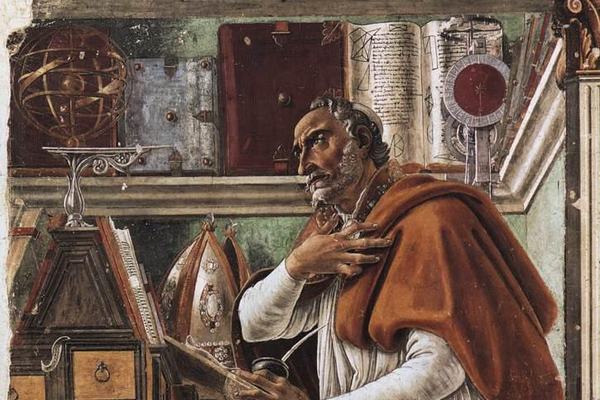
Botticelli · Saint Augustine 397
Augustine’s words
No Gospel without the Church’s authority.
Augustine of Hippo writes: I would not believe the Gospel either, if the authority of the Catholic Church did not move me to it.
Read more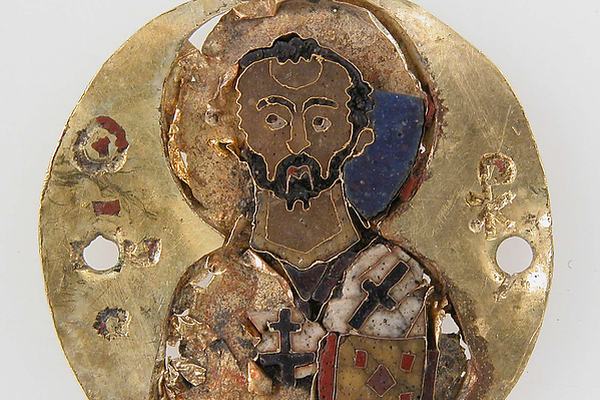
Unknown · Medallion of St. John Chrysostom About 400
Written and unwritten tradition
Written and unwritten tradition together.
John Chrysostom says that the apostles did not hand everything down by letter, that they passed on much without writing, and that both are equally worthy of belief. “It is a tradition; seek no further.”
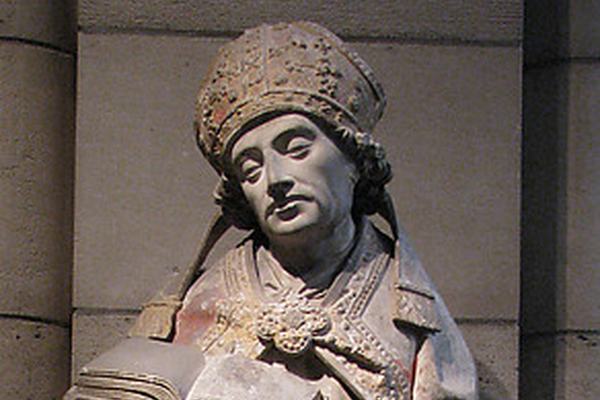
Unknown · Saint Augustine About 427
Perseverance to the end
Perseverance is a grace to be prayed for.
Augustine writes that even someone baptized and born again can lose salvation through grave sin, and that persevering to the end is a further grace that must be asked for.
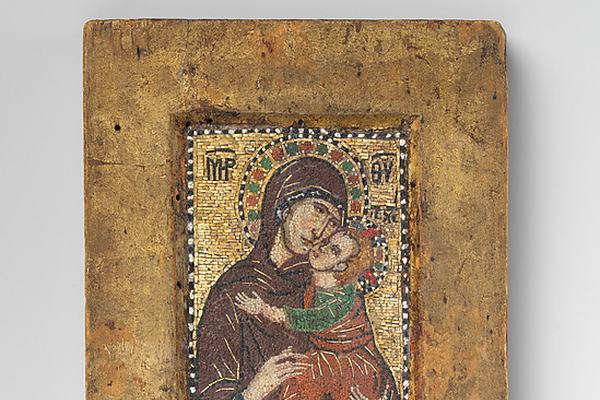
Unknown · Portable Icon with the Virgin Eleousa 431
The Council of Ephesus
Mary is the Mother of God.
The council gathered at Ephesus proclaims that Mary is the “Mother of God” (Theotokos), because the child she bore is Jesus, one single person who is both God and man.
451-1500
The Middle Ages
Rome falls, and the monasteries preserve learning. East and West split in 1054. Thomas Aquinas shows that faith and reason do not conflict.
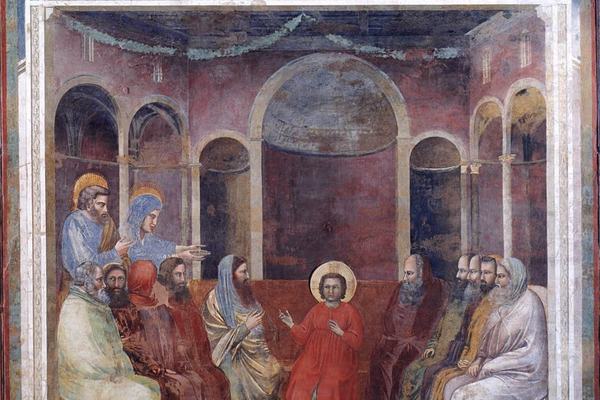
Giotto · Christ among the Doctors 451
The Council of Chalcedon
“Peter has spoken through Leo!”
At Chalcedon, today’s Kadıköy in Istanbul, more than 500 bishops hear Pope Leo’s letter on the two natures of Christ in one person, and cry out: “Peter has spoken through Leo!”
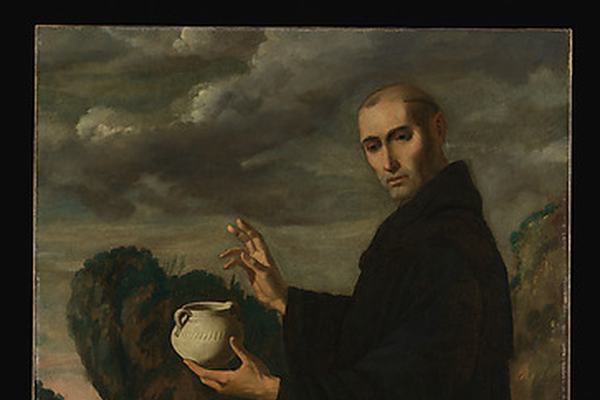
Francisco de Zurbarán · Saint Benedict About 529
Benedict and the monasteries
“Pray and work.”
Benedict of Nursia founds his monastery at Monte Cassino and writes his Rule, built on the principle “pray and work.” After the fall of Rome, monasteries living by this Rule keep books and learning alive in the West for centuries.
Read more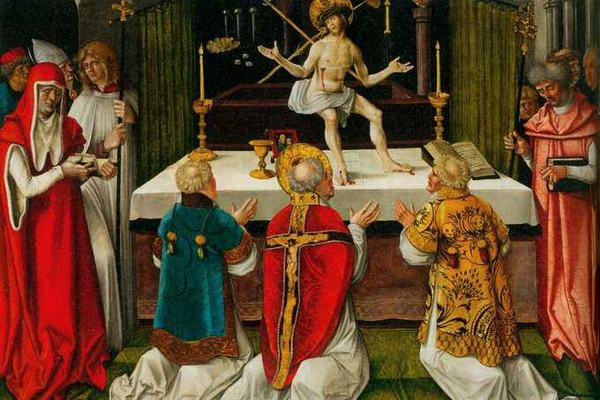
Hans Baldung Grien · The Mass of Saint Gregory 590
Gregory the Great
The pope who held Rome together.
As pope, Gregory holds Rome together through plague and war, has the chants of the liturgy put in order, and in 597 sends missionaries to the English. He calls himself “the servant of the servants of God,” a title the popes still use.
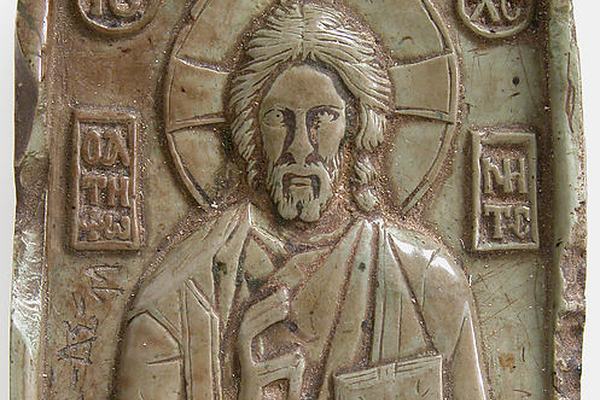
Unknown · Icon with Christ Pantokrator 787
The Second Council of Nicaea
The veneration of icons is defended.
Meeting again at Nicaea, the council defends the veneration of icons: the honor goes not to the image but to the person it shows. Worship belongs to God alone.
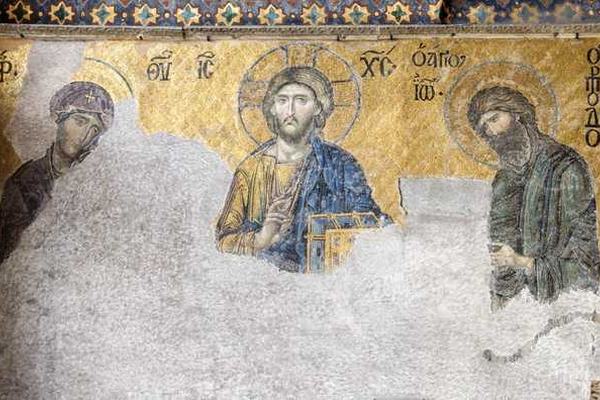
Byzantine mosaicist · The Deësis mosaic 1054
East and West divide
The Great Schism.
Tensions between Rome and Constantinople end in a break, with each side excommunicating the other. The excommunications were lifted in 1965 by Pope Paul VI and Patriarch Athenagoras, and prayer for unity continues today.
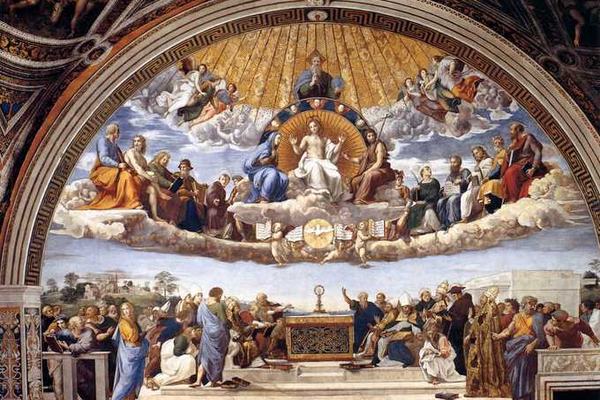
Raphael · The Disputation of the Holy Sacrament 1215
The Fourth Lateran Council
Transubstantiation, and confession once a year.
The council uses the word “transubstantiation” to describe how the substance of the bread and wine is changed into the body and blood of Christ, and asks every Catholic to confess at least once a year and receive Communion at Easter.
Read more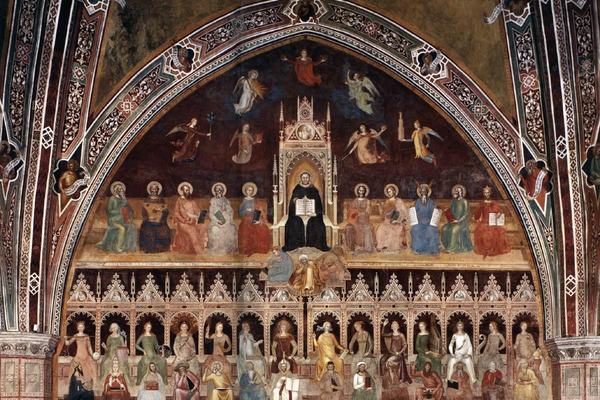
Andrea da Firenze · The Triumph of Saint Thomas Aquinas 1265-1274
The Summa Theologiae
Faith and reason do not conflict.
Thomas Aquinas writes his great work showing that faith and reason do not conflict. Six hundred years later, Pope Leo XIII will make his thought the foundation of Catholic education.
Read more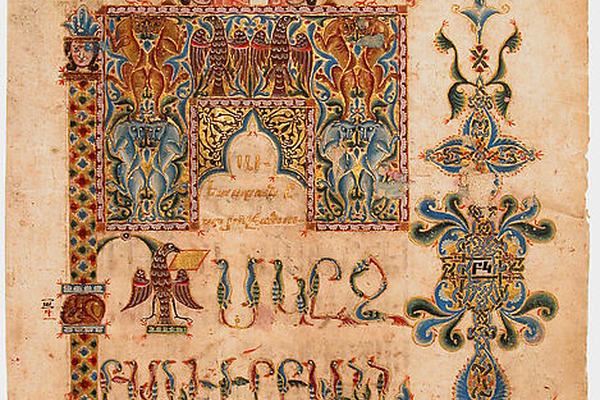
Sargis · Title Page of the Gospel of John 1442
The Council of Florence
The list of 73 books is proclaimed again.
The council lists the books of the Bible one by one: Tobit, Judith, Wisdom, Sirach, Baruch and Maccabees are on the list. So the 73-book Bible was the Church’s official list a century before the Reformation.
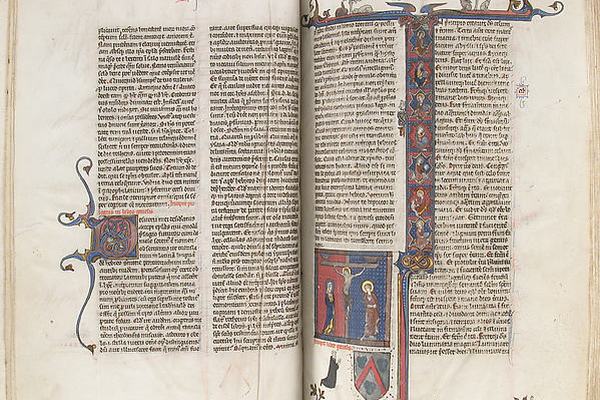
Unknown · Bible About 1455
The Gutenberg Bible
The first great printed book.
The first great book printed on a press is the Latin Vulgate Bible, the Bible of the Catholic Church. The deuterocanonical books are in it too.
1517-1600
The Reformation
Luther’s 95 Theses divide Western Christianity. The Church renews itself at the Council of Trent.
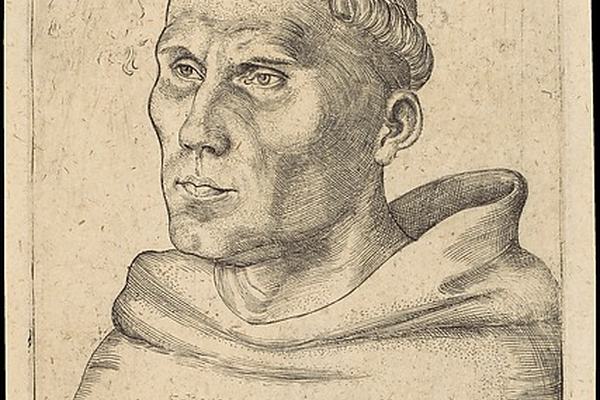
Lucas Cranach the Elder · Martin Luther as an Augustinian Monk 1517
The 95 Theses
The Reformation begins.
The Augustinian priest Martin Luther publishes his 95 theses on indulgences in Wittenberg. What starts as a call to debate ends up dividing Western Christianity.
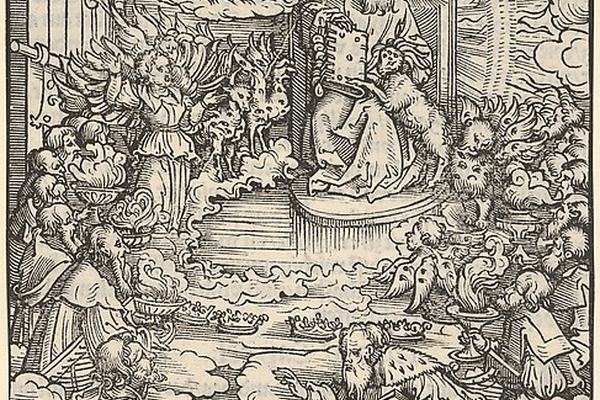
Hans Burgkmair · The Lord on the Throne Surrounded by Four Evangelists, plate 2 from "The Apocalypse" 1522
Luther’s New Testament
Letters moved to the end, “alone” added.
In his German New Testament, Luther calls the Letter of James “an epistle of straw”; he puts Hebrews, James, Jude and Revelation unnumbered at the end of the book. In Romans 3:28 he also adds the word “alone” (allein), which is not in the Greek: “justified by faith alone.”
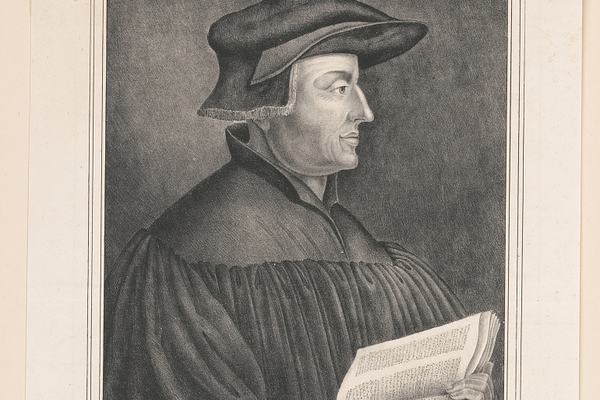
Unknown (Library of Congress) · M. Ulrich Zwingli 1529
Luther and Zwingli
“This is my body.”
At the meeting in Marburg, Zwingli argues that the Lord’s Supper is only a symbol. Luther insists that Christ is truly present in the bread, and chalks on the table: “Hoc est corpus meum,” this is my body.
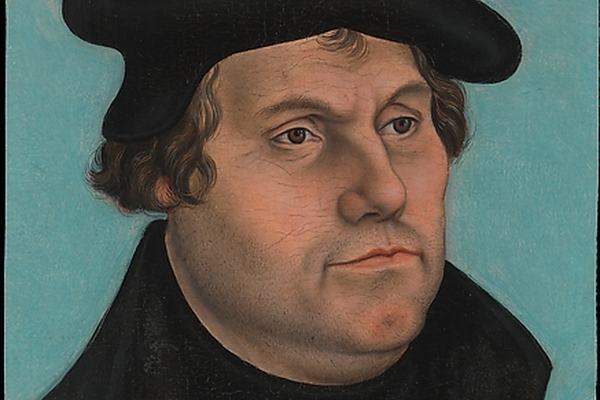
Lucas Cranach the Elder · Martin Luther (1483–1546) 1520s and 1530s
The Reformers and Mary
The Reformers also believed Mary was ever-virgin.
All his life Luther believed that Mary remained a virgin before, during and after giving birth. Zwingli too held that Mary was ever-virgin and called her the “Mother of God.”
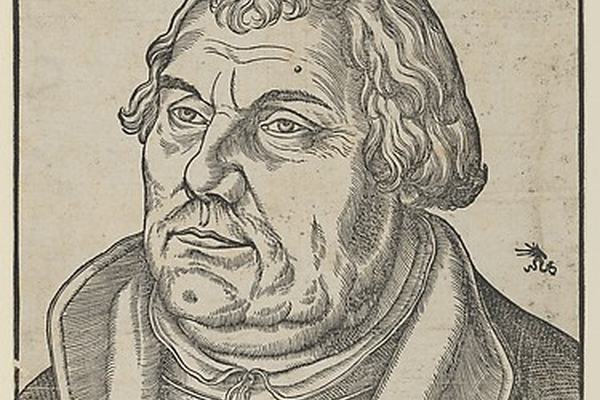
Lucas Cranach the Elder · Martin Luther, Bust to the Left 1534
The Luther Bible
The deuterocanonical books between the Testaments.
Luther’s complete German Bible does not throw out the deuterocanonical books; he places them between the two Testaments under the heading “books not held equal to Holy Scripture, but useful and good to read.”
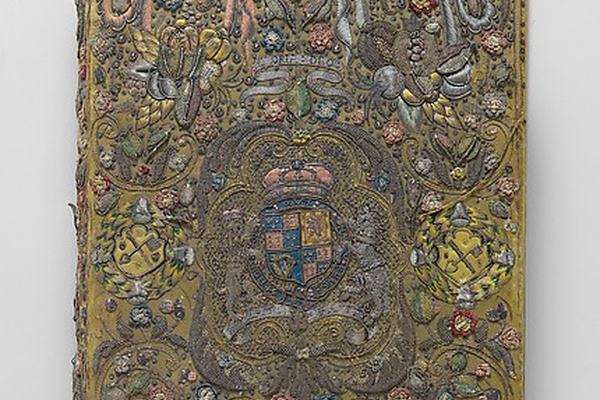
Robert Barker · The Bible, The Book of Common Prayer, The Book of Psalms with Royal Stuart arms 1536
The death of Tyndale
The translator of the English Bible dies.
William Tyndale, who translated the Bible into English, is executed for heresy by imperial authorities at Vilvoorde, in today’s Belgium. Two years earlier England had broken with Rome over Henry VIII’s divorce; Henry too had banned Tyndale’s translation.
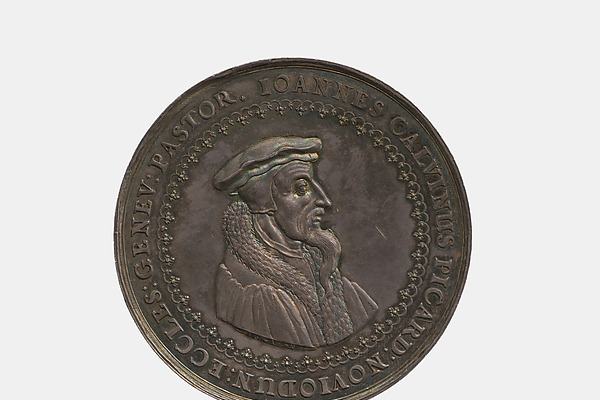
Sebastian Dadler · John Calvin (1509–1564) 1541-1564
Calvin’s Geneva
A city run by strict rules.
Calvin writes that the “brothers” of Jesus were his relatives and that Mary remained a virgin. In Calvin’s Geneva, missing services, dancing or opposing his teaching was punished with fines, prison or exile; Servetus was burned for heresy in 1553.
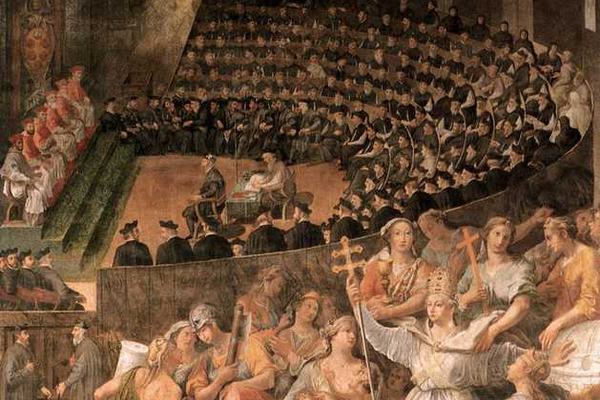
Pasquale Cati · The Council of Trent 1545-1563
The Council of Trent
The Church renews itself from within.
In answer to the Reformation, the Church undertakes a great renewal from within: the 73-book Bible, the seven sacraments and the unity of faith and works are proclaimed again, and seminaries are founded to train priests.
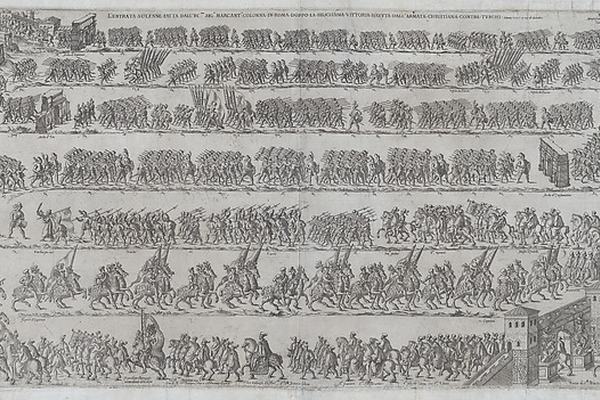
Francesco Tramezzino · The entry of Marcantonio Colonna and the Christian army in Rome after victory at the battl 1571
Lepanto
A victory won with the Rosary.
At the naval battle of Lepanto, Pope Pius V calls on all Christians to pray the Rosary. After the victory he declares 7 October the feast of Our Lady of the Rosary.
Read more
1800-1965
The Modern Age
Two dogmas about Mary are proclaimed, the rights of workers are defended, and totalitarian regimes are condemned. The Second Vatican Council calls everyone to holiness.
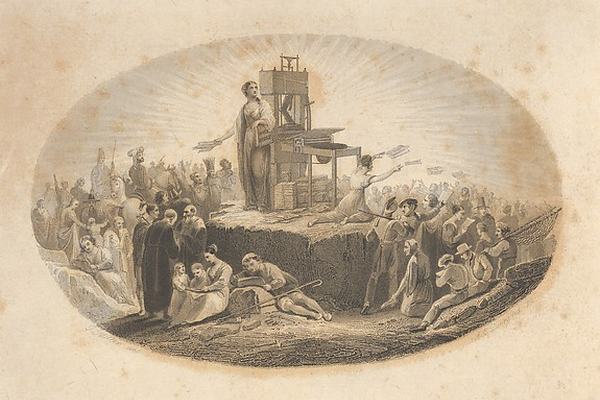
Asher Brown Durand · Certificate of Bible Society 1826
The books taken out of the Bible
The 66-book Protestant Bible.
After a long debate, the largest Bible society in the Protestant world decides to stop supporting editions that include the deuterocanonical books. From then on, Protestant Bibles are printed with 66 books instead of 73.
Unknown (Library of Congress) · Cardinal John Henry Newman, 1801-1890 1845
Newman becomes Catholic
To know history is to cease to be Protestant.
John Henry Newman, one of Anglicanism’s most brilliant defenders, becomes a Catholic while studying the early Church, and writes: “To be deep in history is to cease to be a Protestant.”
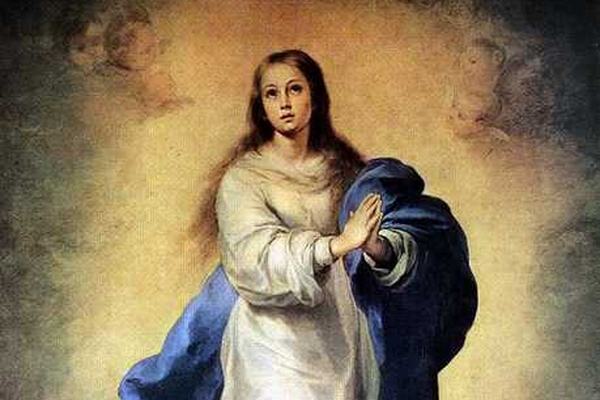
Murillo · The Immaculate Conception 1854
The Immaculate Conception
Mary was preserved from original sin.
Pope Pius IX proclaims as a dogma that Mary was preserved from every stain of original sin from the first moment of her conception. Four years later at Lourdes, Mary introduces herself to Bernadette: “I am the Immaculate Conception.”
Read more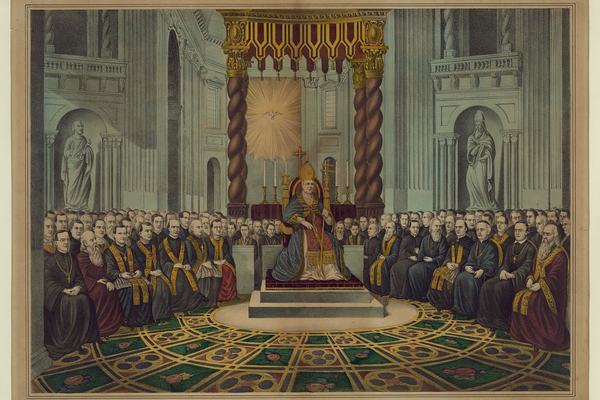
Unknown (Library of Congress) · The oecumenical council of the Vatican, convened December 8th 1869 1870
The First Vatican Council
Papal infallibility is defined.
The council defines papal infallibility: the pope is protected from error only when, from the chair of Peter, he proclaims a teaching on faith or morals that binds the whole Church. His personal opinions and everyday decisions are not covered.
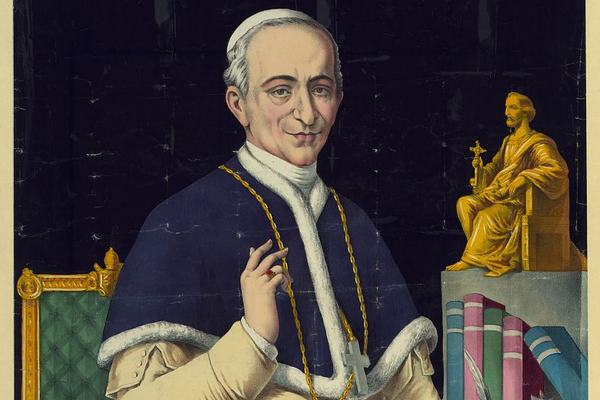
Henry Schile · Pope Leo XIII 1879
Aeterni Patris
Thomas Aquinas back at the center.
Pope Leo XIII makes the philosophy of Thomas Aquinas the foundation of seminary training and of the defense of the faith once again.
Read more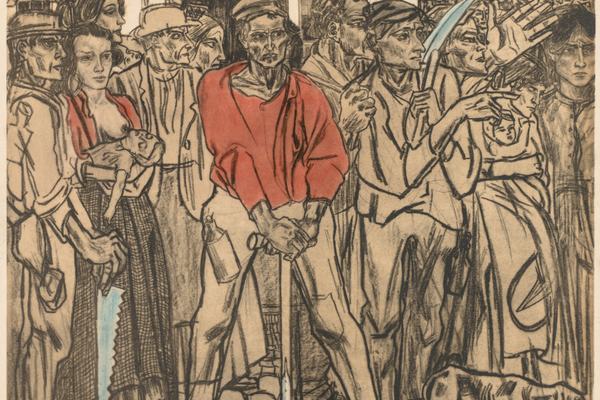
Jan Toorop · A Group of Laborers 1891
Rerum Novarum
Catholic social teaching begins.
This encyclical of Leo XIII begins Catholic social teaching: it defends workers’ right to a just wage and to organize, and rejects both unbridled capitalism and state socialism.
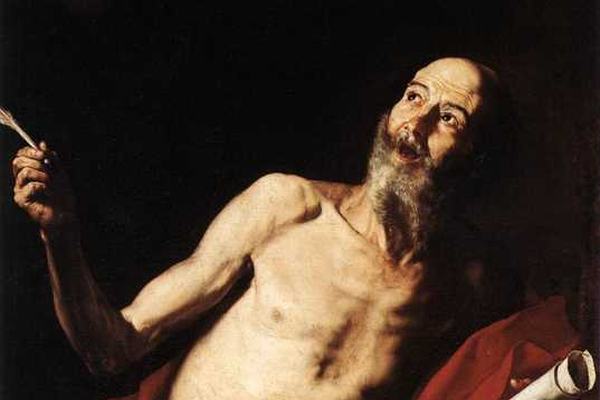
Ribera · Saint Jerome 1893
Providentissimus Deus
Scripture is inspired and without error.
Leo XIII calls Catholic Bible scholars to engage with the historical and linguistic studies of the age, while restating that Scripture is inspired and without error.
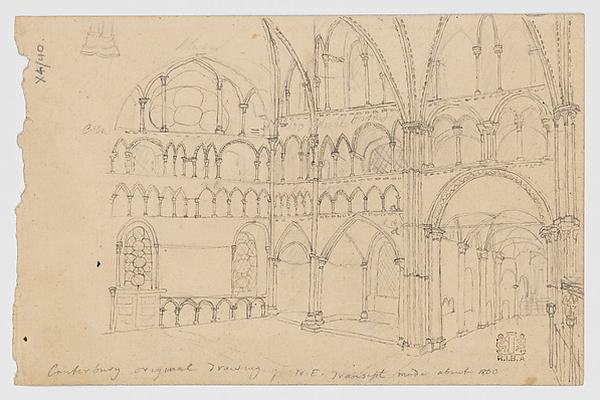
Anonymous English painter · Northeast Transept of Canterbury Cathedral (recto); Architectural Details (verso) 1896
Apostolicae Curae
Anglican orders are declared invalid.
Leo XIII declares Anglican orders “absolutely null and utterly void” because of the changes made to the form and intention of the rite of ordination during the English Reformation.
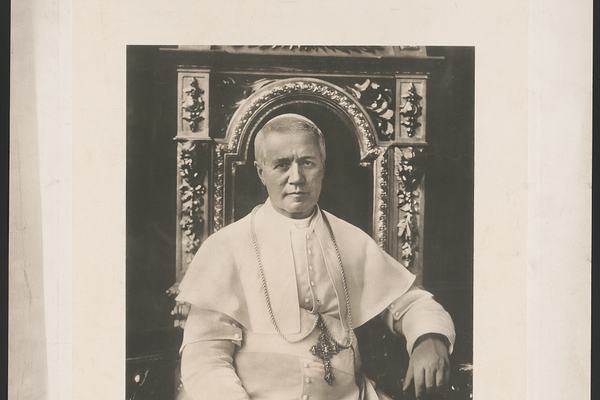
Unknown (Library of Congress) · Pope Pius X 1910
The Oath against Modernism
Against watering down the faith.
Pope Pius X asks priests, pastors and teachers of theology to swear an oath of loyalty to the faith against Modernism, which treated doctrine as something that changes with the times.
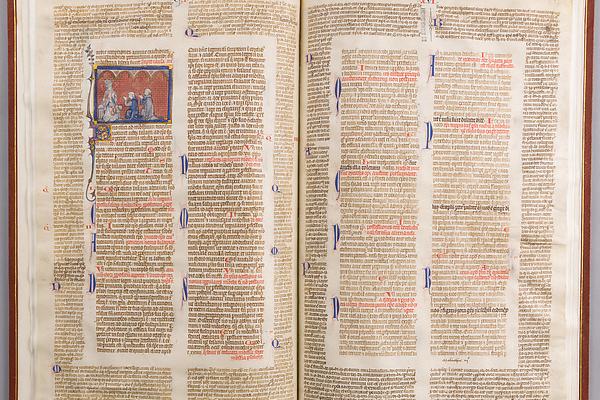
Master Honoré · Bifolium with the Decretals of Gratian 1917
The Code of Canon Law
The Church’s first single book of law.
Replacing centuries of scattered rulings, the Church’s first single book of law (Codex Iuris Canonici) is published.
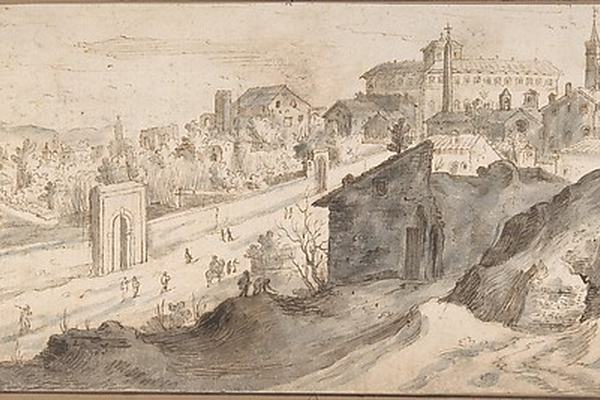
Gillis van Coninxloo · View of St. John Lateran, Rome 1929
The Lateran Treaty
Vatican City becomes a state.
The treaty signed between the Holy See and Italy establishes Vatican City as an independent state and settles the “Roman Question” that began with the fall of the Papal States in 1870.
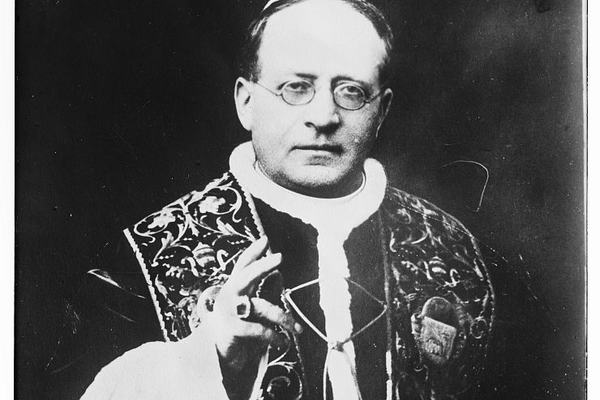
Bain News Service · Pope Pius XI 1931
Vatican Radio
The pope’s voice around the world.
Vatican Radio, founded by Guglielmo Marconi, carries the voice of Pope Pius XI to the whole world with no government in between.
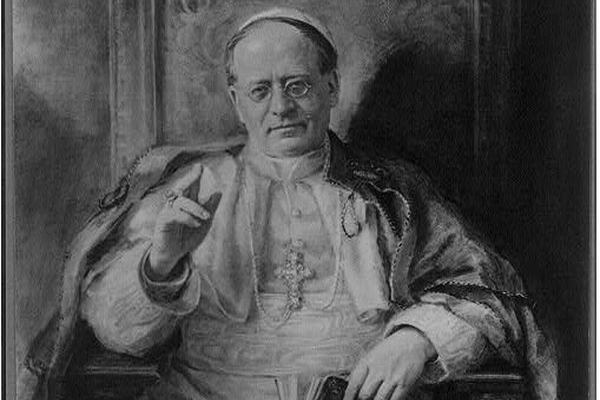
Unknown (Library of Congress) · Pius XI, Pope, 1857-1939 (Achille Ratti - Pope, 1922-39) 1937
Mit brennender Sorge
An open condemnation of Nazi racism.
Pius XI has the encyclical, written in German rather than Latin, smuggled into Germany and read in every Catholic church on the same Sunday. It openly condemns Nazi racism and the totalitarian state.
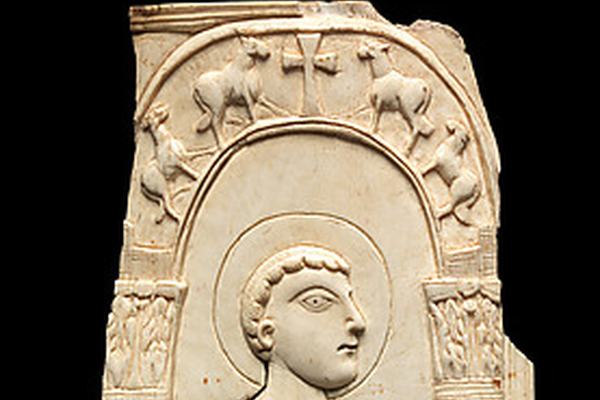
Unknown · Ivory Panel with Saint Peter 1939-1950
Peter’s tomb is found
Peter’s tomb beneath the high altar.
Excavations under St Peter’s Basilica uncover, right beneath the high altar, the 2nd-century monument and the inscriptions written in his honor. In 1950 Pope Pius XII announces that Peter’s tomb has been found.
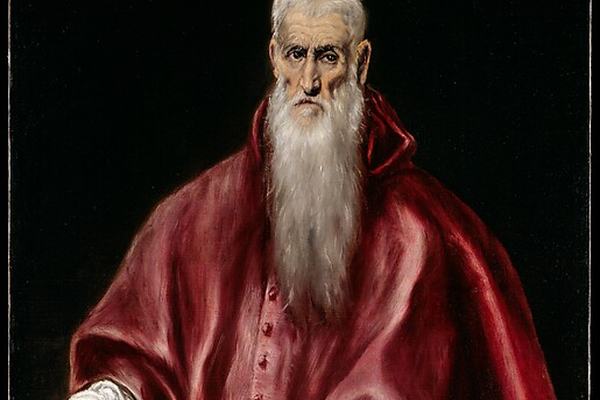
El Greco · Saint Jerome as Scholar 1943
Divino Afflante Spiritu
The Bible is studied in its original languages.
Pope Pius XII encourages Catholic scholars to study the Bible in its original languages, using the methods of archaeology, linguistics and history.
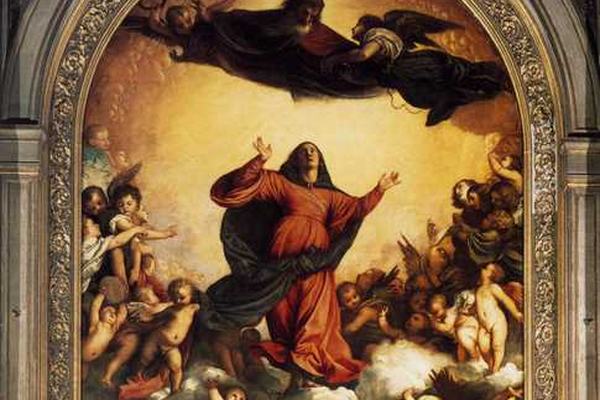
Titian · The Assumption of the Virgin 1950
The Assumption of Mary
Mary is taken up body and soul into heaven.
Pius XII proclaims as a dogma that at the end of her earthly life Mary was taken up body and soul into heavenly glory.
Read more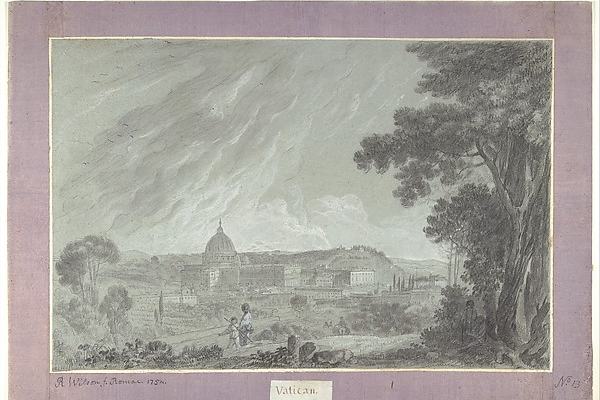
Richard Wilson · View of St. Peter's and the Vatican from the Janiculum 1962-1965
The Second Vatican Council
Everyone is called to holiness.
Bishops from all over the world allow local languages in the liturgy, strengthen dialogue with other Christians and stress that everyone is called to holiness.
The story goes on in the lives of the saints.