Gregory XIII
The 226th Pope1572 to 1585
About
Gave the world the Gregorian calendar (1582) and founded the Gregorian University.
His gift to the ChurchHis calendar still orders the year for most of the world, and the colleges he founded trained priests for the whole Church.
- Pope
- 13 May 1572 to 10 April 1585
- Born
- 7 January 1502, Bologna
- Died
- 10 April 1585
- Secular name
- Ugo Boncompagni
- Buried
- St. Peter’s Basilica
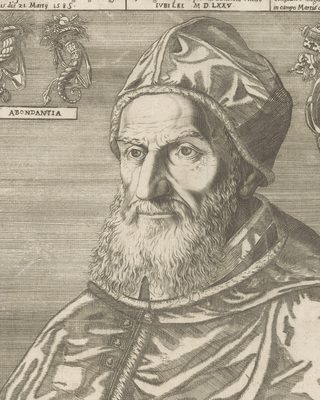
Portrait: Rijksmuseum, public domain, Europeana
Life
Hugh, a law professor and former member of the Council of Trent, became a reformer after ordination. He introduced the Gregorian calendar in 1582, dropping ten days to bring Easter back in line with the seasons. He founded the Roman College (now the Gregorian University) and many national colleges for training priests, including the German and English Colleges, and expanded the network of nuncios. He also ordered a Te Deum after the St. Bartholomew’s Day Massacre (1572), a lasting stain on his memory.
Key moments
- 7 January 1502Ugo Boncompagni is born at Bologna
- 1531Teaches law at the University of Bologna
- 1561Serves as an expert in canon law at the Council of Trent
- 1565Created a cardinal
- 13 May 1572Elected pope
- 1573Refounds the German College in Rome
- 1579Founds the English College in Rome
- 24 February 1582Inter gravissimas announces the new calendar
- 4 October 1582Thursday 4 October is followed by Friday 15 October
- 1584Builds a new home for the Roman College, later named the Gregorian University after him
- 10 April 1585Dies in Rome
Did you know?
- The Gregorian calendar is named after him; Gregorian chant is named after Gregory I.
- Turkey adopted his calendar in 1926; Britain and its colonies had waited until 1752.
- The Tower of the Winds in the Vatican was built in his time for the astronomers working on the calendar.
- The dragon of his coat of arms can be spotted on buildings all over Rome.
His legacy
- Gregorian calendar (1582)
- Founded the Gregorian University and the national colleges in Rome