St. Celestine V
The 192nd Pope1294
About
The hermit pope who resigned after five months; a saint.
His gift to the ChurchA holy hermit called from his mountain to the papacy, he had the humility to lay it down, and left the Church a lasting gift of pardon.
- Pope
- 5 July 1294 to 13 December 1294
- Born
- c. 1215, Molise
- Died
- 19 May 1296
- Secular name
- Pietro Angelerio (Pietro da Morrone)
- Buried
- Basilica of Santa Maria di Collemaggio, L’Aquila
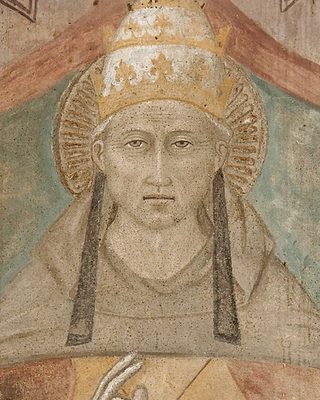
Portrait: Wikimedia Commons, public domain, file page
Life
After a vacancy of over two years, the cardinals chose Peter of Morrone, an 84-year-old hermit and founder of the Celestine monks, after he wrote warning them of God’s judgment. Out of his depth and manipulated by Charles II of Naples, he issued a decree confirming a pope’s right to resign and then did so on 13 December 1294. His successor kept him confined at Fumone, where he died in 1296. He was canonized in 1313. He also established the Perdono of L’Aquila, a plenary indulgence still celebrated.
Key moments
- c. 1215Pietro Angelerio is born in Molise, the eleventh of twelve children
- c. 1240Lives as a hermit on Mount Morrone, near Sulmona
- c. 1250Gathers the hermits later called the Celestines
- April 1292Pope Nicholas IV dies; the see stays vacant for over two years
- 5 July 1294Elected as an aged hermit, after writing to warn the cardinals of God’s judgment
- 29 August 1294Crowned at L’Aquila; grants the Perdono, the pardon of Collemaggio
- 13 December 1294Resigns the papacy
- 19 May 1296Dies at Fumone
- 5 May 1313Canonized by Clement V
- 28 April 2009After the L’Aquila earthquake, Benedict XVI prays at his tomb and leaves his own pallium on it
Did you know?
- Benedict XVI left his pallium on Celestine’s tomb in 2009, four years before he resigned himself.
- He rode into L’Aquila for his coronation on a donkey.
- The Perdono he granted is still celebrated every August at Collemaggio, and is listed by UNESCO as intangible heritage.
- The rule he issued, that a pope may freely resign, was kept by his successor and remains in Church law.
His legacy
- Resigned the papacy (1294), after confirming a pope may do so
- Founded the Celestine monks; established the Perdono of L’Aquila