Boniface VIII
The 193rd Pope1294 to 1303
About
Proclaimed the first Jubilee (1300) and issued Unam Sanctam; humiliated at Anagni.
His gift to the ChurchHe began the Holy Years that still bring millions of pilgrims to Rome, and gave the Church a major book of law and the University of Rome.
- Pope
- 24 December 1294 to 11 October 1303
- Born
- c. 1235, Anagni
- Died
- 11 October 1303
- Secular name
- Benedetto Caetani
- Buried
- St. Peter’s Basilica
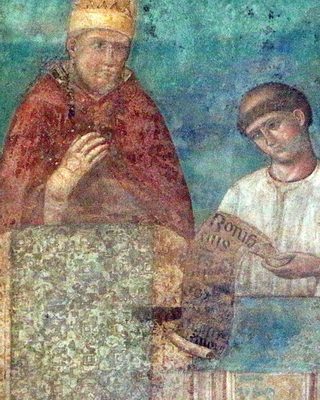
Portrait: Wikimedia Commons, public domain, file page
Life
Benedict, a brilliant canon lawyer, proclaimed the first Holy Year in 1300, drawing huge crowds of pilgrims to Rome. He published the Liber Sextus of canon law and founded the University of Rome (La Sapienza, 1303). He clashed with King Philip IV of France over taxing the clergy, issuing the bull Unam Sanctam (1302), which asserts that submission to the Roman Pontiff is necessary for salvation. Philip’s agents seized him at Anagni in September 1303; he was freed by the townspeople but died weeks later.
Key moments
- c. 1235Benedetto Caetani is born at Anagni
- 1281Created a cardinal
- 13 December 1294Pope Celestine V resigns
- 24 December 1294Elected at Naples
- 1296Clericis laicos forbids rulers to tax the clergy without the pope’s consent
- 1297Canonizes King Louis IX of France
- 1298Publishes the Liber Sextus of canon law
- 22 February 1300Proclaims the first Holy Year
- 18 November 1302Unam Sanctam
- 20 April 1303Founds the University of Rome
- 7 September 1303Seized at Anagni by agents of King Philip IV
- 11 October 1303Dies in Rome
In his words
We declare, say, define and pronounce that it is altogether necessary for salvation for every human creature to be subject to the Roman Pontiff.
Did you know?
- The Holy Year he began in 1300 continues: the Church kept its most recent Jubilee in 2025.
- A fresco of him proclaiming the first Jubilee, attributed to Giotto, survives in the Lateran Basilica.
- He canonized St. Louis IX, the grandfather of the king who later had him seized.
- The university he founded is today La Sapienza, one of the largest in Europe.
His legacy
- First Jubilee Year (1300)
- Bull Unam Sanctam (1302)
- Founded the University of Rome (1303)