Bl. Pius IX
The 255th Pope1846 to 1878
About
The longest documented reign; defined the Immaculate Conception and held the First Vatican Council.
His gift to the ChurchIn the longest certain reign in history he saw the end of the Papal States and gave the Church two lasting gifts: the dogma of the Immaculate Conception and the First Vatican Council.
- Pope
- 16 June 1846 to 7 February 1878
- Born
- 13 May 1792, Senigallia, Marche
- Died
- 7 February 1878
- Secular name
- Giovanni Maria Mastai-Ferretti
- Buried
- San Lorenzo fuori le Mura, Rome
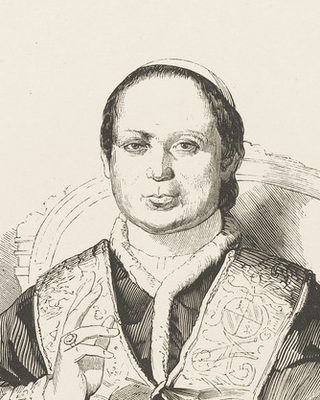
Portrait: Leipzig University Library, public domain, Europeana
Life
Pio Nono began as a reformer welcomed by liberals, but the revolution of 1848, the murder of his minister Pellegrino Rossi and his flight to Gaeta changed him. He defined the dogma of the Immaculate Conception (Ineffabilis Deus, 1854) and issued the Syllabus of Errors with Quanta cura (1864). He restored the Catholic hierarchy in England (1850) and the Netherlands (1853). The First Vatican Council (1869-1870) defined papal primacy and infallibility (Pastor Aeternus) and taught on faith and reason (Dei Filius). Italian troops took Rome on 20 September 1870, ending the Papal States, and Pius lived as a “prisoner in the Vatican.” His reign of 31 years and 7 months is the longest documented in history. He was beatified in 2000.
Key moments
- 13 May 1792Giovanni Maria Mastai-Ferretti is born at Senigallia
- 10 April 1819Ordained a priest after recovering from epilepsy
- 1823Travels to Chile with a papal mission, until 1825
- 1827Archbishop of Spoleto
- 1840Created a cardinal
- 16 June 1846Elected pope, and welcomed as a reformer
- 24 November 1848After the murder of his minister Pellegrino Rossi, flees Rome in disguise to Gaeta
- 1850Returns to Rome
- 8 December 1854Defines the dogma of the Immaculate Conception
- 8 December 1864Quanta cura and the Syllabus of Errors
- 8 December 1869Opens the First Vatican Council
- 18 July 1870The Council defines papal infallibility (Pastor aeternus)
- 20 September 1870Italian troops take Rome; he calls himself a prisoner in the Vatican
- 7 February 1878Dies after a reign of 31 years
- 3 September 2000Beatified by John Paul II, on the same day as John XXIII
In his words
The most Blessed Virgin Mary, in the first instance of her conception, by a singular grace and privilege granted by Almighty God, in view of the merits of Jesus Christ, the Savior of the human race, was preserved free from all stain of original sin.
Did you know?
- He was the first future pope to set foot in the Americas, on a papal mission to Chile in the 1820s.
- His reign of 31 years and 7 months is the longest of any pope whose dates are certain.
- Four years after he defined the Immaculate Conception, the Lady who appeared at Lourdes told St. Bernadette: “I am the Immaculate Conception.”
- Epilepsy almost kept him from the priesthood; he was ordained only after it eased.
- He was beatified on the same day as John XXIII, the pope who opened the next Vatican Council.
His legacy
- Dogma of the Immaculate Conception (1854)
- First Vatican Council: papal infallibility and Dei Filius (1870)
- Loss of the Papal States (1870)
- Restored the hierarchy in England and the Netherlands
Documents
- Qui pluribus
- Praedecessores Nostros
- Ubi primum
- Ubi primum
- Nostis et nobiscum
- Ex aliis Nostris
- Exultavit cor nostrum
- Nemo certe ignorat
- Inter multiplices
- Neminem vestrum
- Optime noscitis
- Ineffabilis Deus
- Singulari quidem
- Cum nuper
- Amantissimi Redemptoris
- Cum Sancta Mater
- Qui nuper
- Nullis certe
- Amantissimus humani
- Quanto conficiamur
- Incredibili afflictamur
- Ubi urbaniano
- Maximae quidem
- Quanta cura
- Levate
- Multiplices inter
- Dei Filius
- Pastor Aeternus
- Respicientes ea
- Ubi Prima
- Ubi Nos
- Beneficia Dei
- SaepeVenerabiles
- Quartus supra
- Etsi multa
- In magnis illis
- Vix dum a Nobis
- Omnem sollicitudinem
- Gravibus Ecclesiae
- Quod nunquam
- Quae in Patriarchatu