Innocent III
The 176th Pope1198 to 1216
About
The most powerful medieval pope; approved St. Francis and held the Fourth Lateran Council.
His gift to the ChurchHe brought the medieval papacy to its height and, at the Fourth Lateran Council, gave the Church rules of faith and practice that still guide Catholics today.
- Pope
- 8 January 1198 to 16 July 1216
- Born
- 1160, Gavignano, Lazio
- Died
- 16 July 1216
- Secular name
- Lotario dei Conti di Segni
- Buried
- Lateran Basilica (since 1891)
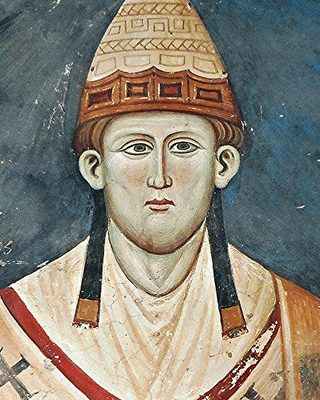
Portrait: Wikimedia Commons, public domain, file page
Life
Lothar was elected at 37 and governed with energy across Christendom. He placed England under interdict until King John accepted Stephen Langton as Archbishop of Canterbury, and he arbitrated disputes among kings. He approved the first rule of St. Francis of Assisi (1209 or 1210) and encouraged St. Dominic. The Fourth Crusade he called turned against Constantinople (1204), which he condemned. The Fourth Lateran Council (1215) defined transubstantiation, required yearly confession and Easter Communion, and reformed clergy. He also launched the Albigensian Crusade against the Cathars.
Key moments
- c. 1160Lotario dei Conti di Segni is born at Gavignano, near Anagni
- c. 1180Studies theology in Paris and law in Bologna
- 1190Made a cardinal by his uncle, Clement III
- 8 January 1198Elected at 37, on the day Celestine III died
- 1204The Fourth Crusade, which he called, sacks Christian Constantinople; he condemns it
- 1208Places England under interdict over the choice of the Archbishop of Canterbury
- c. 1209Approves the way of life of St. Francis of Assisi and his first brothers
- 1213King John of England submits and accepts Stephen Langton
- 1215Annuls Magna Carta; in November opens the Fourth Lateran Council, with over 400 bishops
- 16 July 1216Dies at Perugia
- 1891Leo XIII moves his remains to the Lateran Basilica
In his words
Every Christian of either sex, after reaching the age of discernment, should faithfully confess all his sins at least once a year to his own priest.
Just as the founder of the universe established two great lights in the firmament of heaven, the greater to rule the day and the lesser to rule the night, so he set two great dignities in the firmament of the universal Church.
Did you know?
- He dreamed, the story goes, that the Lateran Basilica was falling and a small poor man held it up. Soon after, Francis of Assisi came to see him. Giotto painted the dream at Assisi.
- The Easter duty, to confess once a year and receive Communion at Easter, comes from his council.
- The night he died, thieves stripped his body of its rich vestments; a visiting bishop, Jacques de Vitry, found it almost naked in the church.
- He wrote a book, On the Misery of the Human Condition, before he became pope.
His legacy
- Fourth Lateran Council (1215): yearly confession, Easter Communion, transubstantiation
- Approved St. Francis’ way of life (1209/1210)
- Called the Fourth Crusade and the Albigensian Crusade