St. Gregory VII
The 157th Pope1073 to 1085
About
Hildebrand, the great reformer, who fought lay investiture and humbled Henry IV at Canossa.
His gift to the ChurchHe fought to free the Church from the control of kings, and his reform still shapes how bishops are chosen.
- Pope
- 22 April 1073 to 25 May 1085
- Born
- c. 1015, Sovana, Tuscany
- Died
- 25 May 1085
- Secular name
- Hildebrand of Sovana
- Buried
- Salerno Cathedral
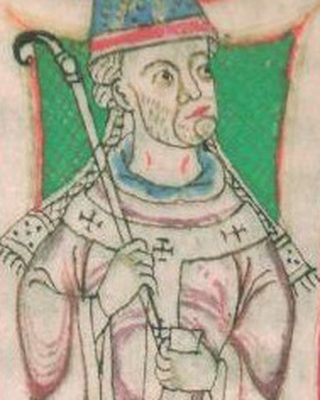
Portrait: Wikimedia Commons, public domain, file page
Life
Hildebrand had served five popes before the Roman crowd acclaimed him pope. He fought simony and clerical marriage and banned lay investiture, the practice by which kings appointed bishops and gave them their ring and staff. Emperor Henry IV declared him deposed; Gregory excommunicated Henry, who came in penance to the castle of Canossa in January 1077 and stood in the snow until absolved. The conflict resumed, Henry took Rome in 1084, and Gregory, rescued by the Normans whose looting turned Romans against him, died in exile at Salerno, saying, “I have loved justice and hated iniquity, therefore I die in exile.” His Dictatus Papae sets out papal claims in 27 short sentences.
Key moments
- c. 1015Hildebrand is born at Sovana in Tuscany
- 1047Goes into exile in Germany with Gregory VI
- 1049Returns to Rome with Leo IX and becomes one of the leaders of the reform
- 1059Helps shape the decree of Nicholas II that gives the election of the pope to the cardinals
- 22 April 1073Acclaimed pope by the crowd at the funeral of Alexander II
- 1075Condemns lay investiture; the Dictatus Papae sets out the rights of the Holy See
- 1076Henry IV declares him deposed; Gregory excommunicates the king
- January 1077Henry waits three days in the snow at Canossa and is absolved
- 1080Excommunicates Henry again; Henry sets up the antipope Clement III
- 1084Henry takes Rome; the Normans rescue Gregory and sack the city
- 25 May 1085Dies in exile at Salerno
- 1606Canonized by Paul V
In his words
I have loved justice and hated iniquity; therefore I die in exile.
That the Roman pontiff alone can with right be called universal.
Did you know?
- He was not yet a priest when the crowd made him pope: he was an archdeacon, and was ordained a priest a month later.
- “Going to Canossa” still means humbling yourself. In 1872 Bismarck told the German parliament: “We will not go to Canossa.”
- The whole eleventh-century renewal of the Church, the Gregorian Reform, is named after him.
- He was buried in Salerno Cathedral, far from Rome, and lies there still.
His legacy
- Banned lay investiture; struggle with Henry IV
- Canossa (1077)
- Gave his name to the Gregorian Reform