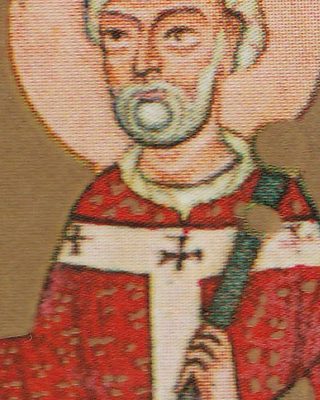
St. Damasus I
The 37th Pope366 to 384
About
Patron of St. Jerome’s Bible, poet of the martyrs, and champion of the Roman See.
His gift to the ChurchHe made Rome a guardian of the faith and of memory: he set St. Jerome to work on the Latin Bible and honored the martyrs whose tombs he restored.
- Pope
- 1 October 366 to 11 December 384
- Born
- c. 305, Rome
- Died
- 11 December 384
- Secular name
- Damasus
- Buried
- Via Ardeatina; relics at San Lorenzo in Damaso
Portrait: Wikimedia Commons, public domain, file page
Life
Damasus’ election was disputed by a rival party and marred by deadly violence. He went on to make the Roman See a center of learning and authority. He commissioned his secretary St. Jerome to revise the Latin Gospels, the start of the Vulgate. He restored the catacombs and wrote verse epitaphs for the martyrs, carved in beautiful letters by Furius Dionysius Filocalus. The Council of Rome (382) under him is associated with a list of the books of Scripture. In 380 Emperor Theodosius made the faith “of Pope Damasus” the religion of the Empire.
Key moments
- c. 305Born, probably in Rome; his father later became a priest
- 1 October 366Elected amid violent strife with the supporters of a rival, Ursinus
- 380Emperor Theodosius makes the faith taught by Damasus the religion of the Empire
- 381The First Council of Constantinople completes the Creed of Nicaea
- 382Council of Rome; St. Jerome comes to Rome as his secretary
- c. 383Asks Jerome to revise the Latin Gospels, the beginning of the Vulgate
- 11 December 384Dies, at nearly 80
In his words
Here, I confess, I, Damasus, wished to lay my body, but I feared to disturb the holy ashes of the saints.
Did you know?
- Many of his marble verse epitaphs for the martyrs can still be read in Rome’s catacombs, carved in the elegant letters of his calligrapher Filocalus.
- He is the patron saint of archaeologists.
- The Bible that served the Latin Church for over a thousand years, the Vulgate, began with his request to Jerome.
- An imperial law of 380, the Edict of Thessalonica, names him personally as a model of the true faith.
His legacy
- Commissioned St. Jerome’s Latin revision of the Bible (the Vulgate)
- Restored the catacombs and wrote epitaphs for the martyrs
- Council of Rome (382) associated with the canon of Scripture